
Free Cease and Desist Letter Template
A Cease and Desist Letter is a formal request for a party to stop specific actions, such as harassment or contract breaches. It serves as a serious warning of potential litigation. However, it is not a court order and is not legally binding. You can use this document to outline grievances and set a clear deadline.

What type of letter would you like to create?
Fill forms in a few steps
Save, print & download
Done in 5 minutes
What Is a Cease and Desist Letter?
A Cease and Desist Letter is a demand that asks another party to stop specified conduct. It may help resolve a dispute between parties. It can also be used as a warning to put an end to committing an abusive action.
A Cease and Desist Letter is not a lawsuit, and it is also neither enforceable nor legally binding.
It is often used before filing a lawsuit if the behavior continues, but it is not a required step.
The sender may request a response by a specific deadline. However, there is generally no legal obligation to respond or to admit or deny the allegations.
If the other party continues the alleged conduct, the sender may consider legal remedies. This can include seeking an injunction or damages, after consulting counsel.
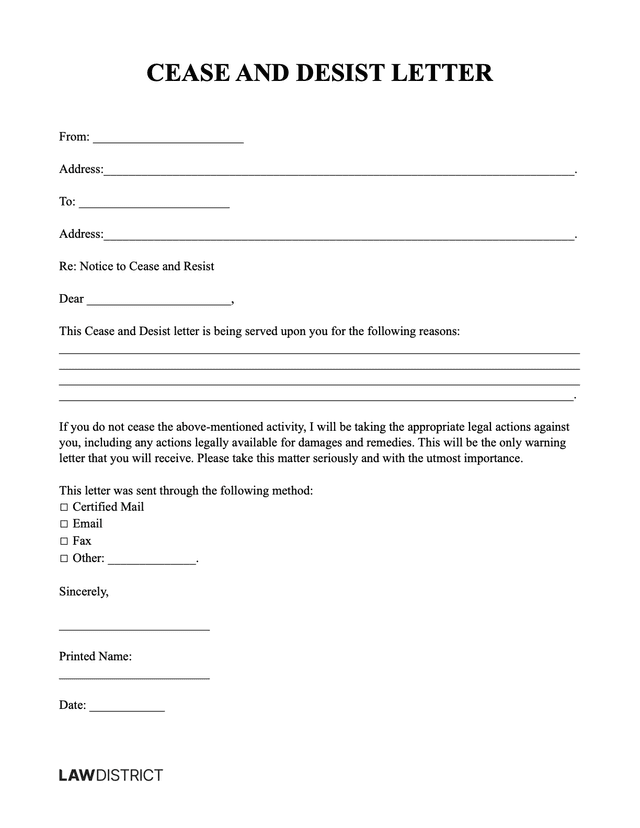
Cease and Desist Letter Sample
Before you begin drafting your Cease and Desist, it’s helpful to know exactly how the document should look. You can review the Cease and Desist example below.
Types of Cease and Desist Letters
There isn’t one specific reason to send a Cease and Desist Letter. You can create this document for various reasons, which means there is more than just one type of letter.
Review the various types of Cease and Desist Letters below.
Harassment
A Cease and Desist Letter for Harassment can be used as a formal final warning that an individual stop harassing or intimidating you before legal action is taken against them.
This document creates a clear paper trail. It shows that you have explicitly withdrawn consent for any further contact or behavior.
Make sure you detail specific instances of unwanted conduct. This can help you demonstrate a pattern of harassment if your case proceeds to court.
Sending this letter is often a strategic precursor to requesting a temporary restraining order or a formal injunction from a judge.
Defamation
Defamation is a false statement of fact about a person or business that harms their reputation; spoken defamation is slander and written defamation is libel.
If defamation is at issue, collect evidence lawfully and consult with an attorney about proper evidence collection methods. Do not record any conversation unless you have obtained all legally required consent and have verified that such recording is legal in your jurisdiction.
An illegal recording may result in criminal penalties and may make the evidence inadmissible in court. States have different rules regarding consent to conversation recordings.
In the following states, each person must consent to the recording:
- California
- Connecticut
- Delaware
- Florida
- Illinois
- Maryland
- Massachusetts
- Michigan
- Montana
- Nevada
- New Hampshire
- Pennsylvania
- Vermont
- Washington
In other states, it's possible to record a conversation if just 1 of the parties knows about the recording.
In some U.S. jurisdictions, all parties must consent to the recording of certain communications. The above list is provided for general informational purposes only and may not be current or complete.
Laws change frequently and contain exceptions, so you must verify current law with a licensed attorney in the relevant jurisdiction before recording any conversation.
Failure to comply with recording consent laws may result in criminal prosecution and civil liability.
Breach of Contract
You can issue this warning if you believe someone is breaching a contract's terms and conditions.
Note that the recipient is not legally required to cooperate or cease their conduct based solely on receiving a cease and desist letter, even if you have proof or evidence of the alleged breach.
A Cease and Desist Letter is not a court order and does not create legal obligations.
Debt Collection
A Cease and Desist Letter can be written if debt collectors are unacceptably harassing you.
It's possible that sending the letter will prevent them from contacting you again.
Trade Infringement
Also known as a Trademark Cease and Desist Letter, this formal notice warns a 3rd party that they are violating a federally registered trademark that does not belong to them.
It’s used to:
- Identify the specific mark being used
- Demand that the recipient stop all activities causing consumer confusion
Sending this letter is a key step in defending your intellectual property.
How To Write a Cease and Desist Letter
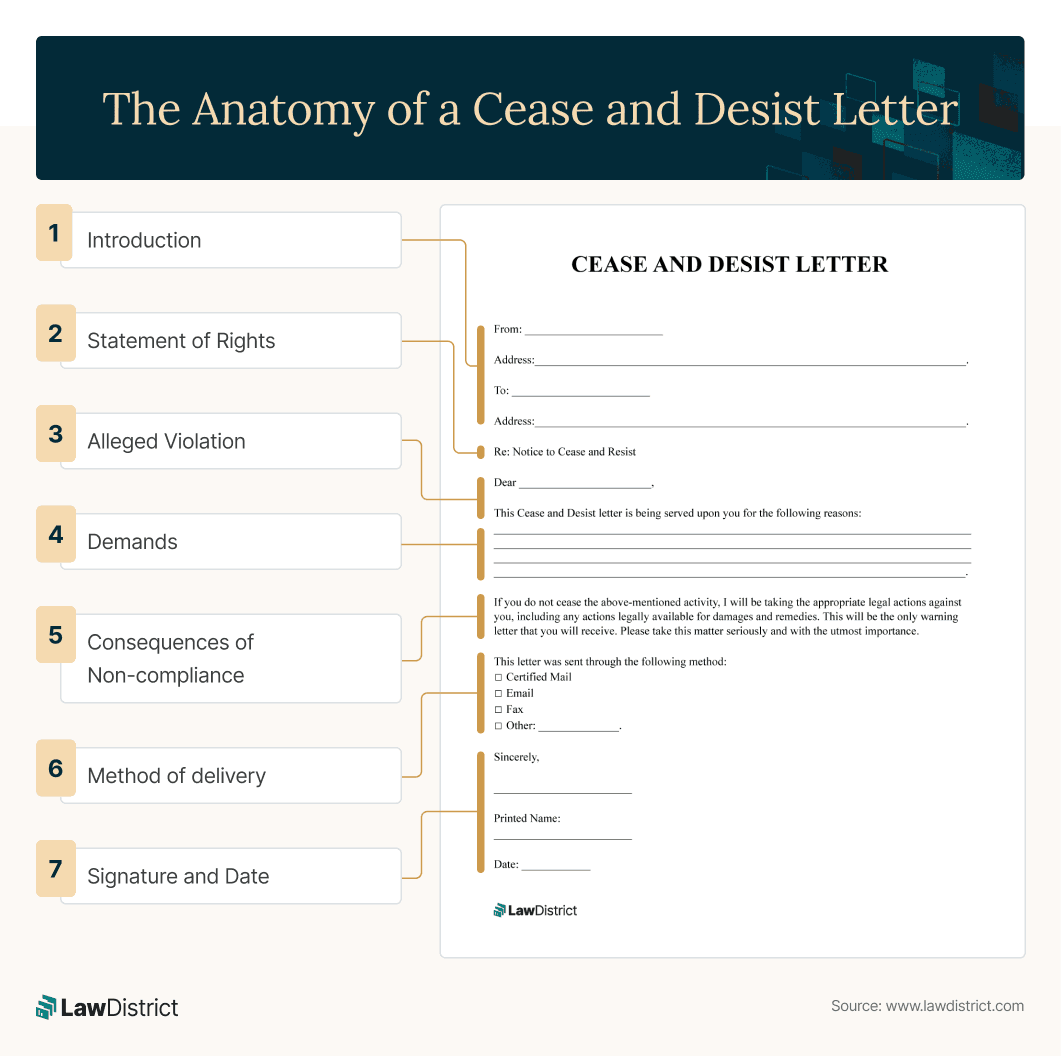
To correctly outline a Cease and Desist Notification, you must understand the specific sections that are part of the letter.
The following step-by-step instructions provide general guidance on how to structure your letter and what to include.
- Determine the type of letter: Base the structure of your letter on the type of abuse the other party is carrying out. It could be a breach of contract, trade infringement, or another type of infraction.
- Include the information of those involved: Fill in your name, the other party’s name, and each of your addresses.
- Fill in the date: When writing your letter, include the date of drafting. The date on the letter, along with proof of mailing and delivery, can be important evidence if you later need to establish a timeline of events in legal proceedings.
Use our Cease and Desist Letter template as a reliable foundation to simplify the process of creating your document. Simply enter the details of your case into our customizable template, and you’ll instantly receive the finished document.
You should consult with a licensed attorney to make sure your Cease and Desist Letter is properly drafted for your specific circumstances and complies with all applicable laws.
Below, you can see what is included in a Cease and Desist Letter to help you understand the structure of the document.
How To Send a Cease and Desist Letter
The proper way to serve your Cease and Desist Letter to another person is to send it by mail.
Follow the steps below to send your document correctly:
| Step | Explanation |
|---|---|
| 1. Use USPS Certified Mail | Skip FedEx or UPS. Instead, use USPS Certified Mail. This is the standard proof of service accepted in court. |
| 2. Request a return receipt | Obtain the recipient's signature upon delivery. This creates a verifiable record that your warning was received. |
| 3. Send online or in-person | Use the USPS online certified services or visit a post office to generate a tracking number and delivery receipt. |
| 4. Verify local requirements | Consult an attorney to confirm your chosen delivery method meets the specific legal standards of your jurisdiction. |
Cease and Desist Letter vs Cease and Desist Order
A Cease and Desist Letter is not the same as an order. One is not as enforceable as the other.
Review the table below to understand the difference between the 2 documents.
| Cease and Desist Order | Cease and Desist Letter |
|---|---|
| A government agency or the court creates and sends it. | Any person or business can write and send it. |
| The offender is required by law to stop harassing or engaging in criminal actions. | The offender is asked to stop harassing or engaging in criminal actions |
| Requires the offender to answer the government agency or court | Does not legally require the recipient to respond to the letter |
| Prevents the offender from continuing their illegal actions. | The offender can continue the same actions. However, it is not advisable. |
Cease and Desist Letter FAQs
To avoid any confusion, make sure to go over the answers to these commonly asked questions about Cease and Desist Letters.
The replies can help you make the process of creating your document even simpler.
The price of creating a Cease and Desist Letter can vary depending on your circumstances. You can use our specialized advice and legal template to simplify the process, which can then be reviewed by a legal professional.
While some recipients may respond within 5 to 10 business days, there is no legally required response timeframe unless specified by statute or court order. The response time may vary depending on the complexity of the matter and the recipient's circumstances.
If the recipient does not respond within your specified timeframe or continues the allegedly unlawful conduct, you may wish to consult with an attorney about your legal options, which may include filing a lawsuit.
The decision to pursue litigation should be made in consultation with legal counsel after considering the costs, benefits, and likelihood of success.
The optimal time to send the letter is when you have evidence of the infraction.
Even if you do not, you should send a letter if the illegal or harassing activity continues, and you feel it needs to end.
That depends on the type of letter you have received. A letter has no legal force behind it, so you don't have to reply or do anything. The sender can still sue you, though. A court order is a different story, as it's binding, and ignoring one can land you in contempt of court.
Try Lawdistrict Now
Instant and complete access to our entire library of legal forms
Edit, download and print in PDF from any device
Save time and money on legal document creation