
Bill of Sale Templates
A Bill of Sale Form is a legal document that records the transfer of ownership of goods or property from a seller to a buyer. It includes details about the item sold, the purchase price, and the identities of both parties, serving as a record of the transaction and protecting both buyer and seller.

What type of property are you selling?
Fill forms in a few steps
Save, print & download
Done in 5 minutes
What Is a Bill of Sale?
A bill of sale is a legal document that records the transfer of certain types of property. This creates an official certificate that describes the change in ownership and the nature of the sale of the item being sold [1].
There are different types of bills of sale, and these legal documents are used to show the terms of the deal that has been struck between the buyer and the seller. It also provides important information about the item being sold and its features and state at the time of purchase.
A valid bill of sale is often used to protect the buyer and the seller in the event of any future disputes. It also shows that both parties have formally consented to the sale under these agreements.
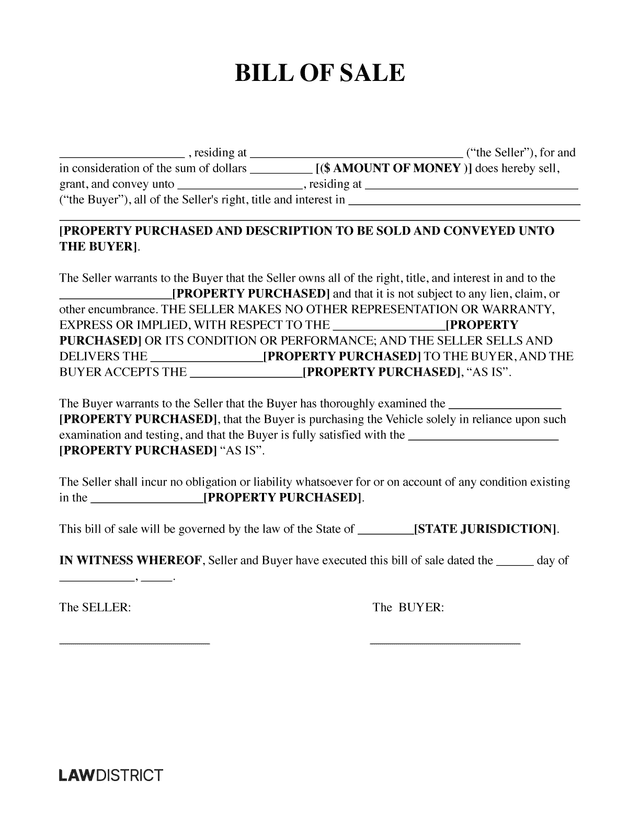
Bill of Sale Sample
Before starting your own printable bill of sale, it can help to see what a real sample of this transactional document looks like. Find out how a bill of sale should appear on paper with our example below.
Bill of Sale by State
Types of Bill of Sale
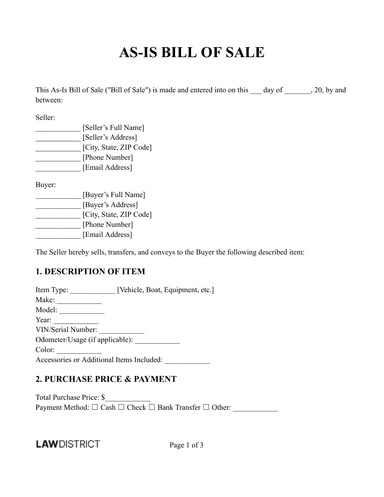
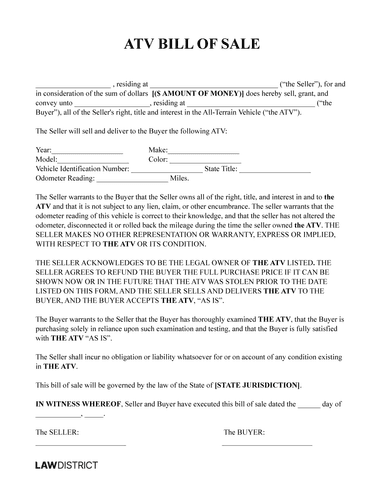
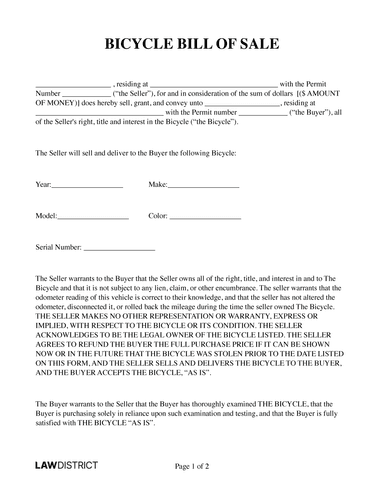
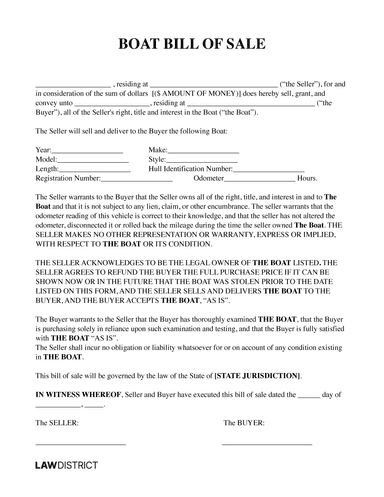
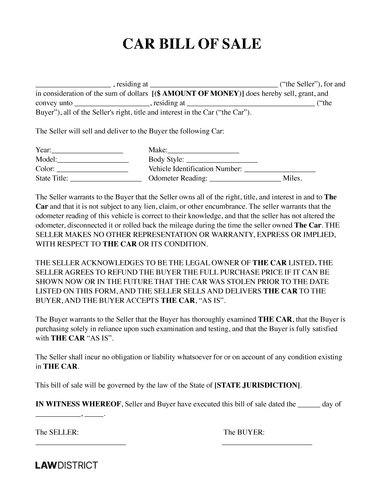
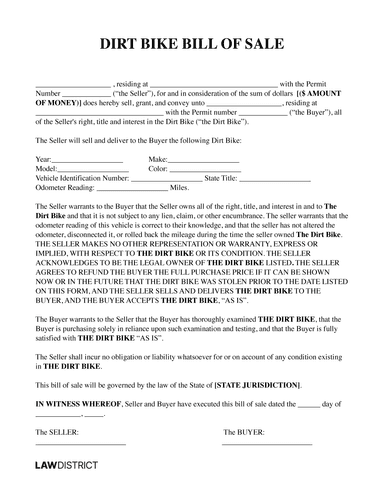
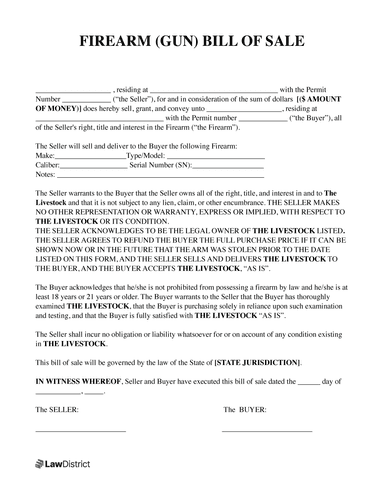
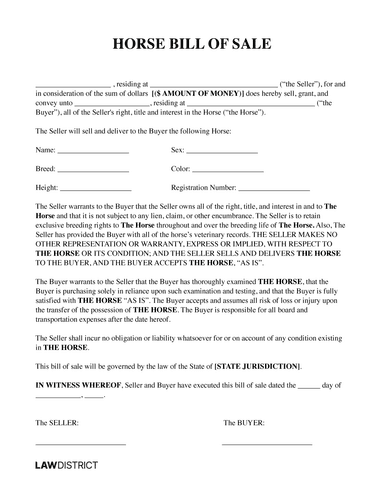
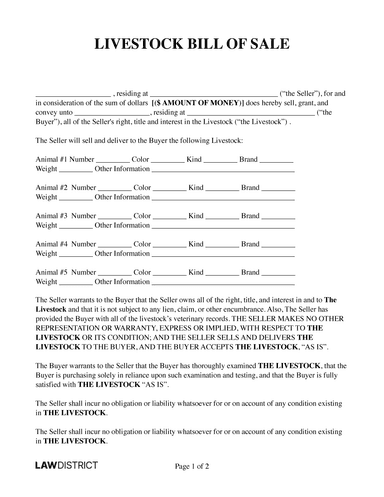
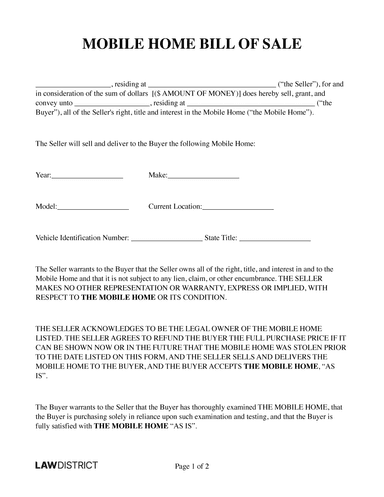
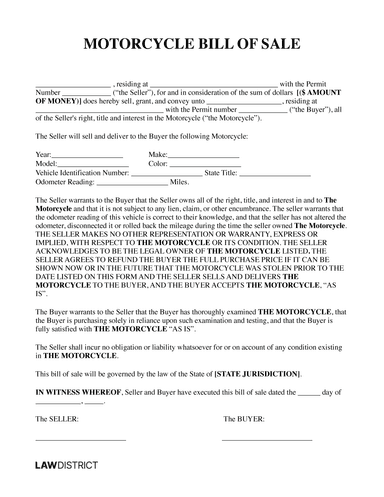
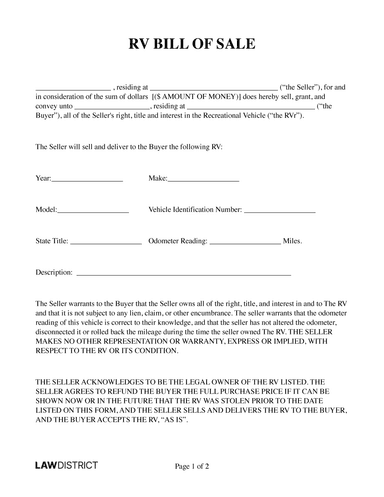
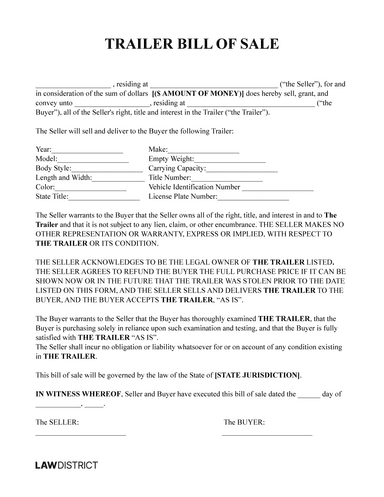
Depending on the item you’re trying to sell, your bill of sale could vary. When creating your document, you may need to add special information for it to be valid.
This can often be to satisfy the necessities of a government agency such as the Department of Motor Vehicles (DMV) or to conform to state law.
Below, we’ve listed some specificities you’ll find on different kinds of bills of sale.
How To Write a Bill of Sale
Writing a bill of sale is a focused yet undemanding task to complete. A printable Bill of Sale template can help you make this job much easier.
When you start building your own document to sell an item of property, you will need to complete the following steps. You can then have it reviewed by a legal professional to make sure it’s correctly written.
1. Choose the Type of Document You’re Creating
Depending on whether you’re selling a car, motorcycle, trailer, or animal, you will need to adjust your document to reflect the nature of the item for sale.
If you’re creating your own document either with an online template or by yourself, make sure to either use the correct form for your needs or to add the necessary sections required.
2. Name Both the Buyer and Seller
Your document must include the details of both, the buyer and seller. To do so you will need to include the names and addresses of both parties. If necessary you can add the information of any additional buyers and sellers if the item is or will be jointly owned.

3. Describe the Item Being Sold in Detail
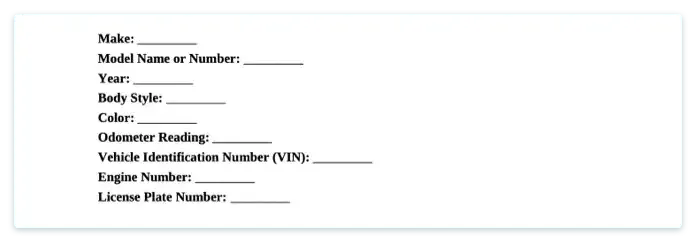
The type of bill of sale for your item will normally require a description of its various features to be provided.
For example, if you’re selling a horse, you will need to provide its age, sex, breeding association certification (if any), and information on its coloration.
If you sell a car, you will need to provide the mileage, color, etc.
4. Provide the Transactional Information
When you have described the item being sold, you will then need to explain the key details about the transaction. You must provide the method of payment, explain whether taxes apply to the final price, and if the amount will be paid at once or in installments.

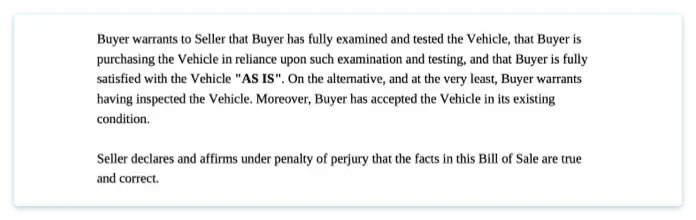
5. Make Any Warranties or Guarantees
You have the option to make warranties on your bill of sale. The property can either be sold “as is” with no warranties.
If, however, you do make a warranty on the item you can make a sworn statement that the item being sold is as described, is in full working order, and that it has no liens or claims against it.
6. Explain How the Item Will be Transferred to the New Owner
A bill of sale will normally require the writer to detail where the item is being held prior to sale and where it can be collected from or how it can be transferred. In some cases, however such as horses or livestock, you may need to provide the exact details of transportation.
7. Sign the Bill of Sale
When the form is completed and both the buyer and seller are satisfied with the terms of the agreement, the bill of sale can be signed. In some states, this will need to be notarized or witnessed for the document to be fully valid.
From this moment on, it becomes legally binding.
Notarized Bill of Sale
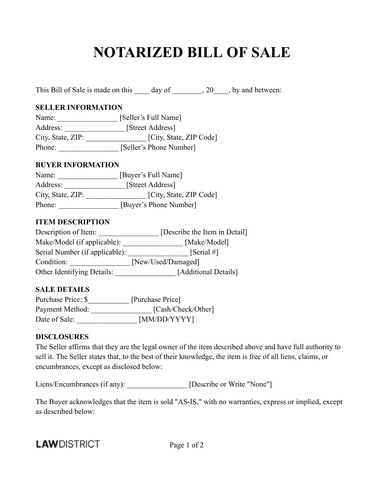
While notarizing your Bill of Sale is not legally required in most states, there are some exceptions. The following states require a bill of sale be notarized to be considered valid:
- Louisiana
- Maryland
- Montana
- Nebraska
- New Hampshire
- West Virginia
- Wyoming
Regardless of state requirements, having a notary public confirm the authenticity of your Bill of Sale will add more protection to the transaction and will help you keep away from legal conflict.
DMV Offices in the U.S.
Beware that to transfer ownership of a car you will need to go to your state’s Department of Motor Vehicles or equivalent agency [2].
Less than half of the states in the U.S. demand a Bill of Sale to change the title. In the following table, you can find a comprehensive list clarifying which states do and which do not:
Bill of Sale FAQs
If you’re having doubts about whether a bill of sale is right for your buying or selling needs we have the answers you’re looking for.
Simply browse through our bill of sale FAQs below to learn more about this type of legal document.
A bill of sale is a requirement in many states. Where this applies, the buyer and seller must create a bill of sale and complete a title transfer form in order for the sale of the vehicle to be fully valid and registered.
However, even when this is not a legal requirement of your state, it is sensible to complete a bill of sale when selling a car and having it reviewed by a lawyer. This can help to avoid disputes over ownership further down the line.
A bill of sale will normally have to contain the details of the buyer and seller, a description of the item for sale, the transactional information, any warranties permitted, and the signatures of both parties.
In some states, you will also need a notary or witness signature for this document to be final and binding.
The new owner of the property will normally keep the original copy of the bill of sale as proof of purchase.
However, the seller can also keep a duplicate copy of the document for their item for their records should they need to prove the sale is completed and final.
If it has been completed correctly a bill of sale can be valid permanently. However, if the item of property is resold and a new bill of sale is completed to reflect this, it will render the older document null and void.
Additionally, a bill of sale could be overturned if the transfer of ownership terms are breached, thus nullifying the sale agreement.
Try Lawdistrict Now
Instant and complete access to our entire library of legal forms
Edit, download and print in PDF from any device
Save time and money on legal document creation