
Affidavit Form
Affidavit forms are sworn statements, usually signed under oath, and used in legal proceedings to provide verified information or testimony. They serve as evidence in various personal and family matters.

Will this affidavit be used in a court case?
Fill forms in a few steps
Save, print & download
Done in 5 minutes
What Is an Affidavit?
An Affidavit is a voluntary sworn statement, which is given in writing. It allows people to make legally binding promises and declarations that can be used for business, personal, or legal purposes [1].
Affidavits will often be admitted in law settings, for example, as evidence in court cases, although they can also be used in personal or business transactions and government forms when extra assurance is required. Signing an Affidavit ultimately binds the signatory to the veracity of their statement.
These essential legal documents can be known by many different names such as:
- Affidavit Letter
- Sworn Affidavit
- General Affidavit
- Sworn Statement
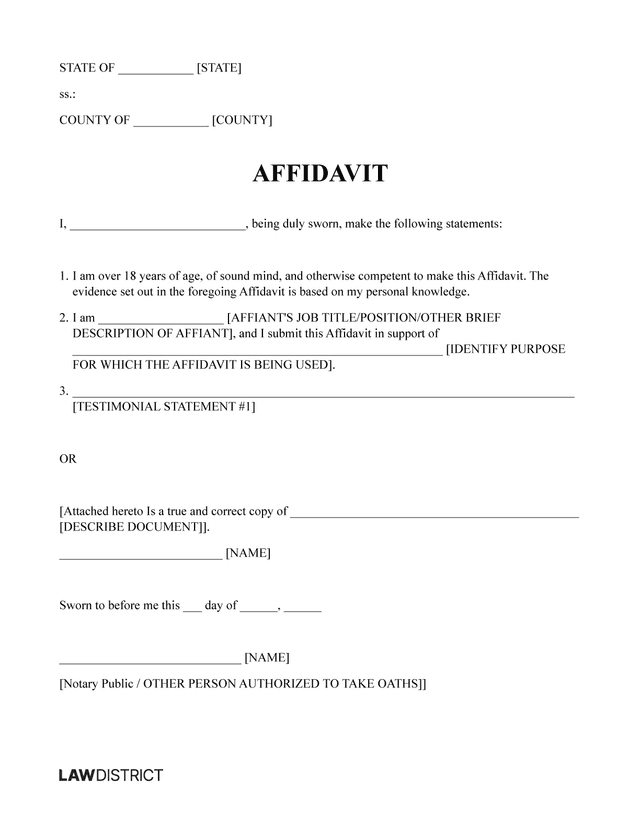
Affidavit Sample Form
An affidavit format can be crucial to complete a legal process and must be completed correctly. To avoid issues when filling in and customizing your own document, take a look over our Affidavit formal sample form before you start.
What Is The Purpose of an Affidavit?
An Affidavit is a voluntary sworn statement, which is given in writing. It allows people to make legally binding promises and declarations that can be used for business, personal, or legal purposes [1].
Affidavits will often be admitted in law settings, for example, as evidence in court cases, although they can also be used in personal or business transactions and government forms when extra assurance is required. Signing an Affidavit ultimately binds the signatory to the veracity of their statement.
These essential legal documents can be known by many different names such as:
- Affidavit Letter
- Sworn Affidavit
- General Affidavit
- Sworn Statement
When To Use an Affidavit Template
An Affidavit is necessary when a party needs a sworn statement of the truth. This can be for any purpose either legal or personal [2].
You may be required to use an Affidavit if you are creating any of the following legal forms:
- Quitclaim deeds
- Power of Attorney
- Eviction notices
- Promissory notes
- Residential lease agreements
- Last will and testaments
In general, there are many different situations where an Affidavit may be practically used. However, some of the most frequent reasons for using this essential legal document are as follows:
- Divorce: To help settle the assets of each individual spouse
- Real Estate: To establish cases of property transfer
- Debt: Clarifying the level of debt and the circumstances that have led to it
- Court cases: To provide evidence in an ongoing criminal or civil litigation
Types of Affidavit Forms
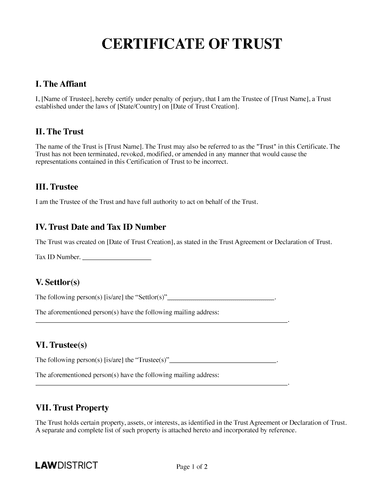
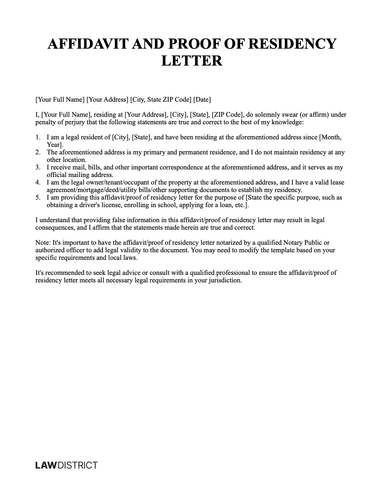
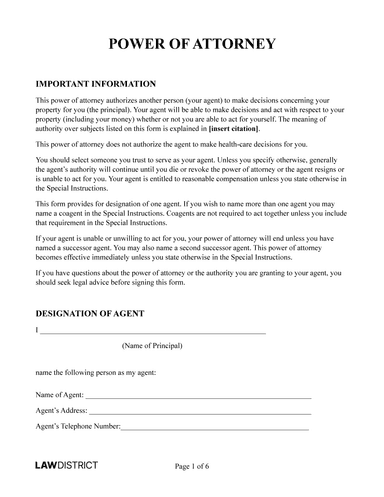
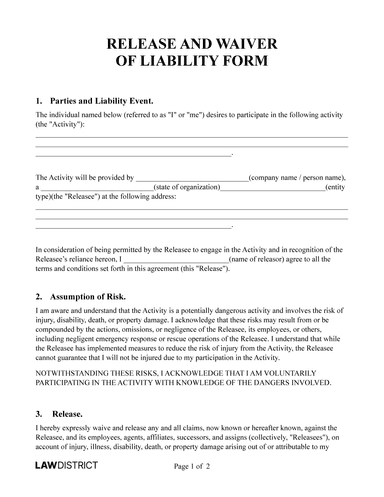
Other Types of Affidavit Forms
There are other types of sworn statement forms that can be created, depending on their intended use. Below we’ve detailed some of the most common forms of Affidavits that you may come across.
General Affidavit
A general Affidavit is a simplified statement of veracity that can be used for a variety of purposes. They can be specifically customized to be used for almost any precise legal need.
Affidavit of Heirship
An Affidavit of Heirship is used to identify the legal heirs of someone who has died. It helps transfer ownership of property to them. In some states, it can allow heirs to receive real estate without going through a lengthy probate process.
Affidavit of Support
An Affidavit of support is a legal document used during the immigration process. In this case, they are signed by the spouses of non-citizen green card applicants to guarantee the financial support of the prospective cardholder [3].
Small Estate Affidavit
Small estate Affidavits are necessary in some states when the representatives or executors of an estate wish to show that the deceased’s property doesn’t exceed small estate law threshold amounts. This can be done to ensure that the holdings can be quickly and simply distributed.
How To Write an Affidavit
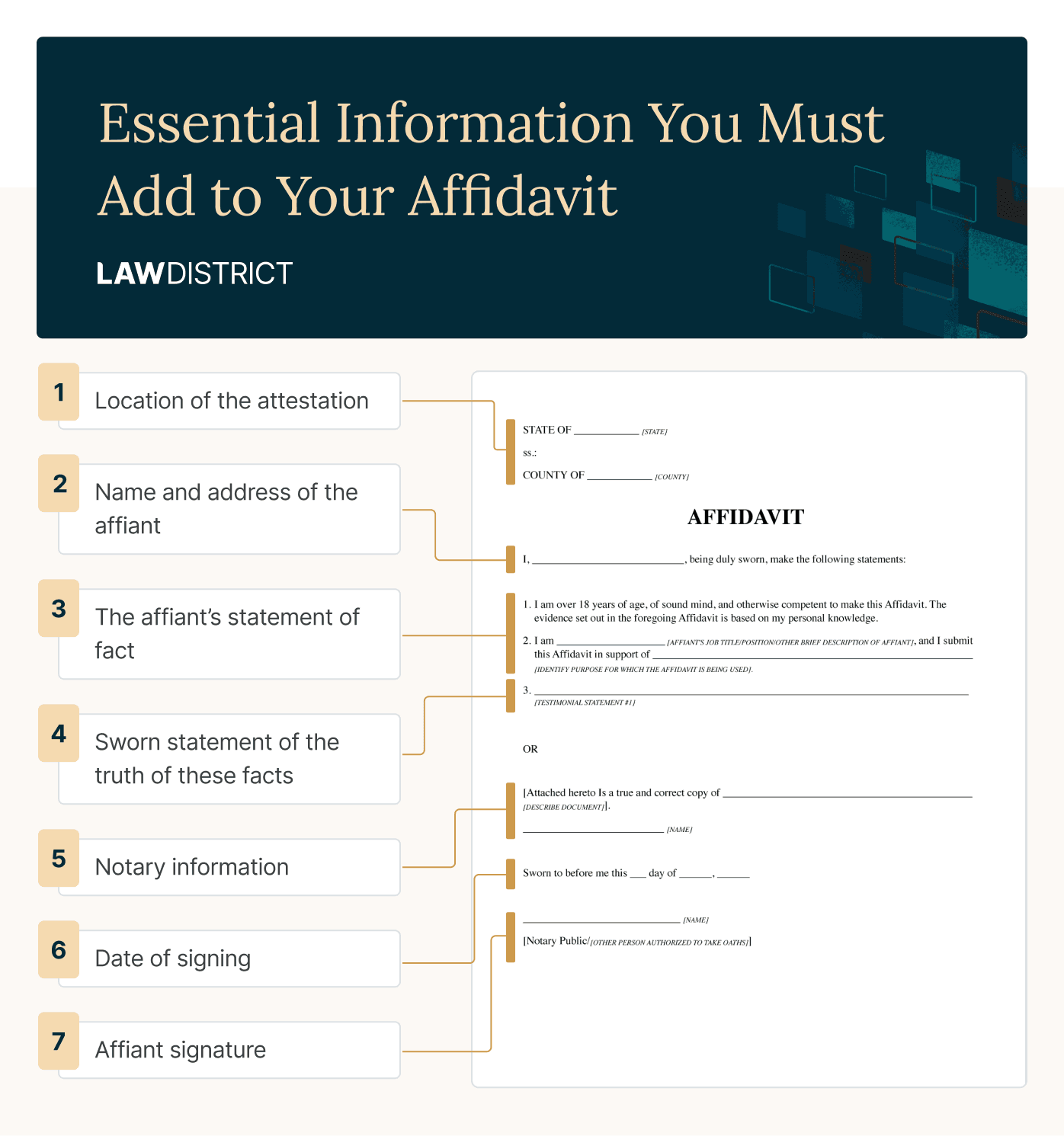
Like any authoritative legal instrument, it is important to know how to complete an affidavit following some formal rules when writing a document of this type. There are several parts of an affidavit that must be included. These are as follows:
- A statement from the affiant whereby they swear an oath of truthfulness and personal knowledge for the information contained within the affidavit
- A written account of the facts or events being described, with the key information that the affiant is swearing to be true
- A perjury statement confirming that false information may be punishable by law
- The affiant’s signature
- The formal attestation of an official who may administer oaths (e.g. a notary public)
- Any supporting documents attached to support the statements made in the Affidavit, where needed
If you are writing an affidavit for yourself or on behalf of another person, it is important to remember the following writing tips:
- Write in short sentences
- Avoid excessive legal jargon
- Organize your thoughts carefully on paper
- Keep the document as short as possible
- Avoid ambiguity
- Check the document carefully for any spelling or grammatical errors
- Avoid terms such as “always” or “never
How To Sign and Notarize an Affidavit Template
Signing and notarizing an Affidavit is a crucial step in ensuring the document's legal validity. Whether you're affirming a statement or providing evidence in a legal matter, following the correct procedure is essential:
- Complete the Affidavit template: Begin by filling out all necessary sections of your template. Ensure all information is accurate and complete as this document will be used as legal evidence.
- Sign the Affidavit: Once the Affidavit is fully completed, sign it in the designated space. It is important to do this in the presence of a notary public to verify your identity and the authenticity of your signature.
- Notarize the document: Take the signed Affidavit to a notary public. The notary will confirm your identity, witness your signature, and apply their official seal to the document.
By following these steps, you can ensure your Affidavit is properly signed and notarized, ready for use in any legal proceedings.
What Are the Penalties of Lying on an Affidavit?
One of the most important factors about an Affidavit is that it must tell the truth. Making false statements on this kind of legal form can lead to many negative legal ramifications.
As the document is legally binding once signed and is done so under oath, anyone caught lying on an Affidavit can be tried for perjury.
This is a criminal offense that carries heavy penalties, including fines and imprisonment. In federal cases, individuals found guilty of perjury can face up to 5 years in prison.
Beyond legal penalties, lying on an Affidavit can severely damage your credibility in any future legal proceedings. Courts take false statements seriously, and such actions can have long-lasting effects on your legal standing.
Be sure that any claims made on your legal document are true before signing it.
Sources: [1] Legal Requirements of an Affidavit. NIJ.
[3] Affidavit of Support. U.S. Citizenship and Immigration Services.
Sworn Statement or Affidavit
A sworn declaration is functionally similar to an Affidavit. Here are some of the differences:
| Document | Sworn Statement | Affidavit |
|---|---|---|
| Format | Usually a written and signed statement | A written statement of facts |
| How it is made | Signed by the person making the statement | Signed under oath by the affiant |
| Witness or notary | Usually not notarized | Usually signed before a notary or authorized official |
| Legal wording | Includes language saying the information is true under penalty of perjury | Includes an oath confirming the facts are true |
| Use | Can be used in legal proceedings as evidence | Can be used in legal proceedings as evidence |
| Formality | Less formal | More formal |
| Court preference | May be accepted, depending on the case | Often preferred by courts |
Affidavit FAQs
Affidavits are highly important documents in several different processes. To find out more about how and when they can be used browse our FAQs below for a better understanding of these forms.
An affidavit form can be completed 100% online. Using our online template and customization tools you can create your own affidavit in minutes from home.
Note: Our templates complement but do not replace legal advice.
Yes, once an affidavit has been signed it is legally binding. There are strict penalties if you lie on these legal documents as it is considered perjury. Getting caught lying can result in a charge of perjury and jail time if the case is serious enough.
The most important party that appears on an affidavit is the signatory (known as the affiant). However, some other parties may appear such as the third party whose information is being confirmed by the affiant. These may include authorizing individuals such as notary publics, court officials, or other government representatives who may legally administer an oath.
Once you’ve created your Affidavit form with all the information required and have had it signed and notarized it can be put into use. This requires filing the document with the company or government agency that requires your sworn statement.
Filing your Affidavit will normally be a requirement if your statement is being used in court or during an eviction process. To do this, you must visit your local courthouse and present the document and any other legal paperwork required to progress your case.
Try Lawdistrict Now
Instant and complete access to our entire library of legal forms
Edit, download and print in PDF from any device
Save time and money on legal document creation