
Residential Lease Agreement Template
Residential Lease Agreements are vital legal contracts for managing real estate. This contract is used to set the terms and responsibilities of both the landlord and tenant(s) of a rental property that must be fulfilled during the lease period. It usually will also include security deposit information and specific rules that the tenant must follow.

What type of property will you rent?
Fill forms in a few steps
Save, print & download
Done in 5 minutes
What Is a Lease Agreement?
A Lease Agreement is a legally binding contract that outlines the terms and conditions under which one party (the tenant) agrees to rent property owned by another party (the landlord).
Leases are usually longer-term contracts covering many months or years, and they have set terms that cannot be changed frequently.
A Rent Agreement typically specifies details such as:
- Fees
- Duration of the lease
- Security deposit details
- Specific rules regarding the property
While Lease Agreements are for a fixed term, it’s possible for either party to terminate or alter the conditions of a month-to-month lease (with notice).
On the other hand, neither party can change nor end a standard lease early.
Lease Agreement Sample
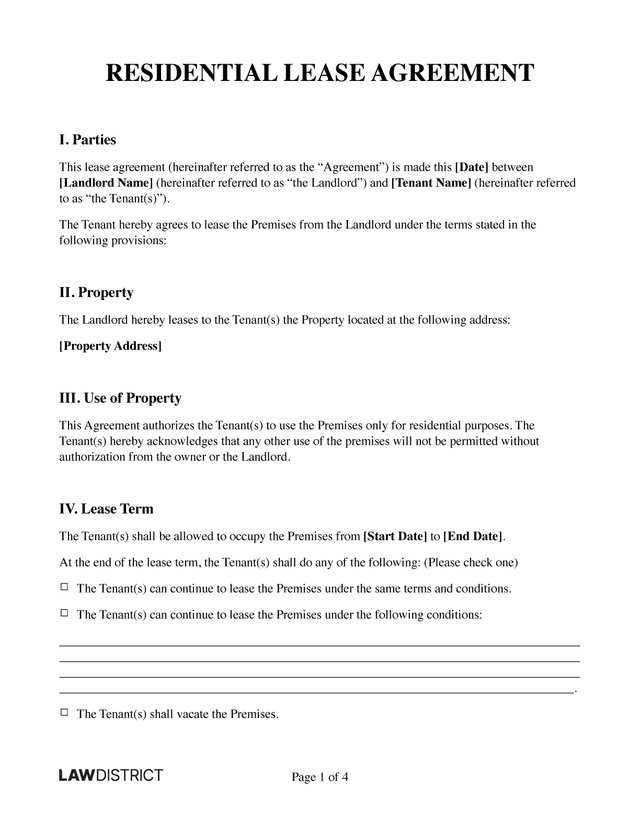
When you prepare your Residential Lease Agreement, it can be hard to know where to begin if you don’t have a clear idea of what the final document will look like. That’s why it’s a good idea to review a Rental Agreement sample.
For a little extra guidance on how your final contract will appear, simply review our sample contract of a lease for a residential property below.
Types of Leases
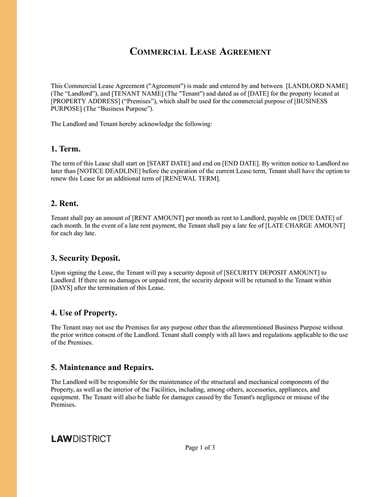
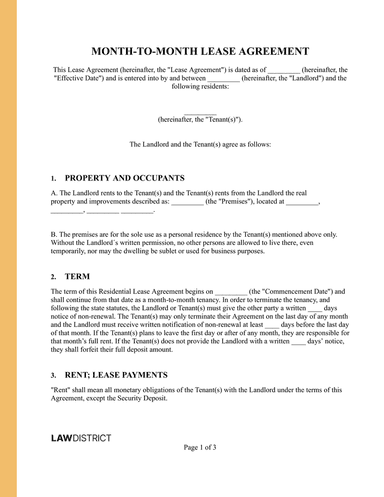
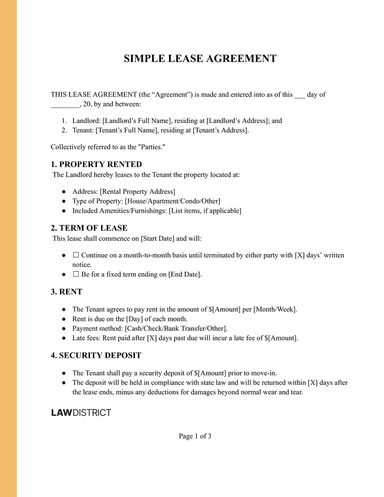
Various types of leases can be used depending on the type of property being offered to renters, including industrial, advertising, and rent-to-own leases.
Review various types of agreements below that can be created based on specific circumstances.
Lease Agreement Templates by State
How To Write a Rental Agreement
A Residential Lease Agreement for tenants or a Rental Agreement can potentially run for many months or years.
Therefore, in your Lease Agreement format, it is essential not to leave out any terms, conditions, or information when you draft your document. Failing to include any of these details could lead to problems such as nonpayment of rent or evicting the tenant for whatever motive.
To correctly draft your document, you must include the following details:
- The names and addresses of the parties involved
- The location and description of the residential premises that are to be leased
- The duration of the lease
- How often rent must be paid and the amount, including for each new term
- Details on how much must be paid for the security deposit
- The key terms outlining how the property may and may not be used, e.g., whether pets can be kept
- Information on which party is responsible for repairs and maintenance
- Any additional fees or service payments
- The rules on how either party must act if the agreement ends early. For example, if an eviction notice is served
Remember, a Rental or Lease Agreement must conform to the landlord tenant laws in your state. When filling out the template, remember to keep this in mind.
Use our step-by-step Rental and Lease Agreement template tool help you create the correct form for your state and circumstances before having it reviewed by a legal professional.
Parties in a Lease Agreement
There are usually 2 key parties bound by an apartment lease. The landlord and the tenant. However, there are occasionally other stakeholders who might need to be factored in.
One such example is a property manager or rental agent. Landlords with multiple properties or rental units will often entrust the administration of their portfolio to a third party. These professionals act as an intermediary between the landlord and the tenant.
In some cases, if the property is managed by an agency or hired employee of the landlord, it will also be necessary to include them in the Lease Agreement. They will often sign the contract on behalf of the landlord if they have been authorized to do so.
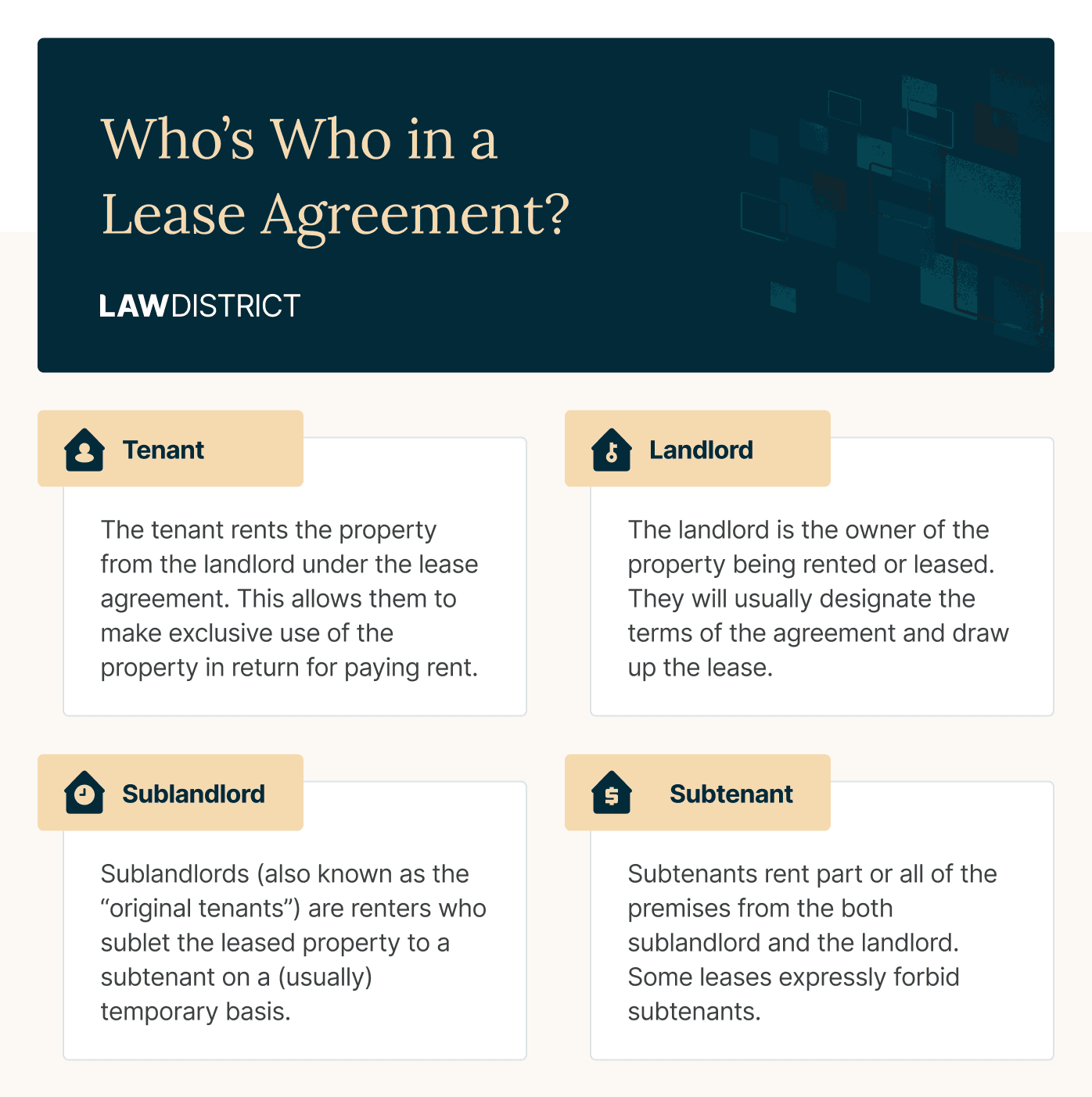
In some cases, a lease will be guaranteed by another individual who has strong credit (oftentimes, a parent will guarantee a lease for an adult child without much credit history). It is important to include any information about guarantors on the lease as well.
Landlord Obligations
Landlords have several key obligations they must fulfill to ensure the property is livable and that the rights of tenants are respected.
These obligations can vary by state and local laws but generally include the following:
- Maintain a safe environment: Landlords must guarantee the rental property is in a safe and habitable condition. This includes maintaining structural integrity, ensuring proper sanitation, and providing adequate water, heat, and electricity.
- Repairs: Landlords are responsible for repairing any damage that affects the livability of the property. This includes problems such as fixing broken appliances.
- Right to privacy: Landlords must provide notice before entering the property, typically 24 to 48 hours, unless in the case of an emergency [1].
- Security deposits: Landlords must handle security deposits according to state laws, which may include holding the deposit in a separate account, providing a receipt, and returning the deposit after the lease ends, minus any deductions for damage.
- Disclosures: Landlords are required to disclose specific information to tenants, such as the presence of lead-based paint in properties built before 1978 and any known hazards or conditions that could affect the tenant's health or safety.
- Anti-discrimination: Landlords must adhere to the Fair Housing Act, which prohibits discrimination against tenants based on race, color, national origin, religion, sex, familial status, or disability.
- Following eviction rules: Landlords must follow state and local laws when evicting a tenant. It is important to include specific information on what to expect if lease terms are breached.
These obligations are designed to protect tenants and ensure that rental properties are safe, healthy places to live.
Failure to meet these obligations can result in legal action against the landlord, including fines, penalties, and potentially being ordered to compensate the tenant for damages.
Tenant Obligations
Tenants have specific obligations they must adhere to, ensuring a respectful and lawful tenancy.
These obligations are designed to protect the property, ensure safety for all parties involved, and maintain a harmonious living environment.
Below are some of the key obligations typically expected of tenants:
- Pay rent on time: Tenants must pay their rent in full by the due date specified in the lease agreement. Late payments may incur additional fees and can lead to eviction proceedings.
- Keep the property clean and undamaged: Tenants are expected to maintain a clean living environment and prevent any damage to the property. Normal wear and tear are expected, but significant damage caused by negligence or abuse is the tenant's responsibility to repair.
- Abide by lease terms: All terms outlined in the lease agreement, such as restrictions on pets, smoking, or alterations to the property, must be strictly followed.
- Respect noise ordinances: Tenants should respect local noise ordinances and the peaceful enjoyment of their neighbors. This includes limiting loud activities to appropriate times of the day.
- Notify the landlord of repairs needed: It's the tenant's responsibility to promptly notify the landlord of any repairs or maintenance issues that arise, preventing minor problems from becoming major ones.
- Use property for intended purpose: The rental property should be used solely for residential purposes (unless otherwise specified in a commercial lease) and not for illegal activities.
- Provide proper notice before leaving: Tenants must give the landlord proper notice before vacating the property, as specified in the lease agreement. Failure to do so may result in financial penalties or legal action.
Understanding and fulfilling these obligations is crucial for tenants to ensure a stable and positive rental experience, avoid legal issues, and maintain a good relationship with their landlord.
Common Lease Terms and Essential Clauses
Lease terms set out the rights and responsibilities of landlords and tenants. Both parties should review them carefully before signing.
Common terms include:
| Lease term | What it covers |
|---|---|
| 1. Tenant names and occupancy | Who may live in the property |
| 2. Lease duration | Start and end dates, renewals, and move-in or move-out dates |
| 3. Rent | Amount, due date, payment method, and late fees |
| 4. Deposits and fees | Required amounts and refund conditions |
| 5. Maintenance | Responsibility for repairs, cleaning, and damage |
| 6. Utilities | Services included in the rent and those paid by the tenant |
| 7. Property access | When the landlord may enter and what notice is required |
| 8. Property rules | Policies on pets, smoking, noise, parking, and subletting |
You may also include termination terms, legal disclosures, and state or local requirements.
How Base Rent and Payment Dates Are Determined
Base rent is the fixed amount charged for occupying the rental property. It’s amount of rent due before separate costs such as utilities and parking
For residential properties, you typically determine it based on the following factors:
- Location
- Size
- Condition
- Amenities
- Comparable rental prices in the area
The Lease Agreement should state the agreed amount and payment date. The payment date is often the first day of the month, but a different date may be agreed.
Security Deposit Laws (by State)
Most rental properties are secured by a monetary deposit made by the tenant at the start of the agreement. Each state has its own rules on what landlords may and may not charge for this security payment.
Below you’ll find information on how much a landlord can legally demand in a deposit by state and how quickly they must return the down payment once the agreement reaches its natural end or is terminated by agreement.
| State | Maximum Deposit Amount | Return Time |
|---|---|---|
| Alabama | 1 month’s rent | 60 days from termination and delivery of possession Law: § 35-9A-201 |
| Alaska | 2 months’ rent | 14 days if the tenant moves out on time, 30 days if not Law: § AS 34.03.070 |
| Arizona | 1.5 months’ rent | 14 days from move-out inspection (excluding weekends and holidays) Law: § 33-1321 |
| Arkansas | 2 months’ rent | 60 days from termination Law: § 18-16-304 |
| California | 2 months’ rent (unfurnished), 3 months’ rent (furnished) | 60 days from the move-out date Law: § 1950.5(c) |
| Colorado | No limit | 1-month if mentioned in the lease, 2 months if not Law: § 38-12-103 |
| Connecticut | 1 month’s rent (62 years or older) 2 months’ rent (less than 62 years old) | 30 days from the move-out date or 15 days from receiving the tenant’s new address Law: § 47a-21(b) |
| Delaware | 1 month’s rent (1-year leases), no limit (all non-1-year leases) | 20 days from termination Law: § 5514(a)(2) |
| Florida | No limit | 30 days if deductions, 15 days if no deductions Law: § 83.49 |
| Georgia | No limit | 1 month from termination Law: § 44-7-30 |
| Hawaii | 1 month’s rent (excluding pet fee) | 14 days from termination Law: § 521-44(5)(b) |
| Idaho | No limit | 30 days if stated in the lease, 21 days if not Law: § 6-321 |
| Illinois | No limit | 30 days if deductions, 45 days if no deductions |
| Indiana | No limit | 45 days from termination Law: § 32-31-3-12 |
| Iowa | 2 months’ rent | 30 days after the tenant has vacated Law: § 562A.12(1) |
| Kansas | 1 month’s rent (unfurnished), 1.5 months’ rent (furnished) | 30 days from termination Law: § 58-2550 |
| Kentucky | No limit | 60 days from the lease termination date Law: § 383.580 |
| Louisiana | No limit | 1 month from termination Law: § RS 9:3251 |
| Maine | 2 months’ rent | 30 days if the lease is fixed-period, 21 days if tenancy-at-will Law: § 6032 |
| Maryland | 2 months’ rent | 45 days from termination Law: § 8-203(i)(3) |
| Massachusetts | 1 month’s rent | 30 days after the tenant has vacated Law: § 15B(b)(3) |
| Michigan | 1.5 months’ rent | 30 days from move-out Law: § 554-602 |
| Minnesota | No limit | 3 weeks from termination Law: § 504B.178 |
| Mississippi | No limit | 45 days from the end of tenancy Law: § 89-8-21 |
| Missouri | 2 months’ rent | 30 days from the termination of tenancy Law: § 535.300 |
| Montana | No limit | 30 days if deductions, 10 days if no deductions Law: § 70-25-201 |
| Nebraska | 1 month’s rent (excluding pet fee) | 14 days from move-out Law: § 76-1416 |
| Nevada | 3 months’ rent | 30 days from the end of tenancy Law: § 118A.242 |
| New Hampshire | 1 month’s rent or $100, whichever is greater | 30 days, 20 days if the property is shared with the landlord Law: § 540-A:6(1)(a) |
| New Jersey | 1.5 months’ rent | 30 days from termination Law: § 46:8-21-2 |
| New Mexico | 1 month’s rent (leases of 1-year and under), no limit (leases more than 1-year) | 30 days from termination Law: § 47-8-18(1) |
| New York | 1 month’s rent unless the deposit or advance is for a seasonal use dwelling unit | 14 days from move-out Law: § 7-108 |
| North Carolina | 2 months’ rent, for tenancy-at-will only 1.5 months’ rent | 30 days if no deductions, if deductions then an additional 30 days Law: § 42-51(b) |
| North Dakota | 1 month’s rent (no pets) 2 months’ rent (with pets) | 30 days from termination Law: § 47-16-07.1 |
| Ohio | No limit | 30 days from termination Law: § 5321-16 |
| Oklahoma | No limit | 45 days from termination Law: § 415-115 |
| Oregon | No limit | 31 days from termination Law: § 90-300 |
| Pennsylvania | 2 months’ rent | 30 days from termination Law: § 250.511a |
| Rhode Island | 1 month’s rent | 20 days from termination Law: § 34-18-19 |
| South Carolina | No limit | 30 days from termination Law: § 27-40-410 |
| South Dakota | 1 month’s rent | 14 days if no deductions, 45 days if deductions Law: § 43-32-24 |
| Tennessee | No limit | 30 days from termination Law: § 66-28-301 |
| Texas | No limit | 30 days from move-out Law: § PROP 92-102 |
| Utah | No limit | 30 days from termination Law: § 57-17-1 |
| Vermont | No limit | 14 days, 60 days if a seasonal property Law: § 4461 |
| Virginia | 2 months’ rent | 45 days from termination or the date the tenant vacates the dwelling unit, whichever occurs last Law: § 55.1-1226(A) |
| Washington | No limit | 21 days from move-out Law: § 59.18.280 |
| West Virginia | No limit | 60 days unless the property is re-rented within 45 days, then immediately Law: §37-6A-1 |
| Wisconsin | No limit | 21 days from vacancy date Law: § 704.28 |
| Wyoming | No limit | 30 days from lease termination or 15 days from receiving the tenant’s forwarding address, whichever is lesser Law: § 1-21-1208 |
Lease Disclosures and Addendums
Before the tenant’s occupancy begins, you may be obligated to disclose certain information to them.
For example, if the rental property was constructed before 1978 you must provide a Lead Based Paint Disclosure Form to the incoming renter if the substance is found on the property.
You can also add changes (or addendums) to the contract, for example, raising the price of rent.
During the tenancy, if the tenant fails to make rental payments, you can take action. Send a Late Rent Notice to the tenant and if they continue to fail to pay, you can begin eviction proceedings.
Some states and cities require specific notices to be provided to tenants if they fail to pay rent before an eviction can be commenced. [2].
Lease Agreement FAQs
Residential Lease Agreements contain many intricate details and must be written with care. If you’re still unsure of what steps you may need to take to complete your document or what info you need to get down on paper, read our FAQs below for more information.
When tenants violate a lease, landlords may terminate the agreement and issue an eviction notice. Typically, a "cure or quit" notice is required, giving tenants a chance to rectify the issue or vacate.
For severe violations like property damage or illegal activities, some states allow immediate contract termination. It's crucial to consult local laws to understand the specific conditions for contract cancellation and required notice periods.
Most state and federal laws don't require notarization or witnesses for a Residential Lease Agreement, but it's recommended to combat fraud.
Having the agreement signed in the presence of witnesses or a notary public verifies the identities of both tenant and landlord and confirms their understanding of the contract terms. It also enhances the document's authenticity, making it more difficult to falsify signatures or dispute the agreement's validity.
Most state and federal laws don't require notarization or witnesses for a Residential Lease Agreement, but it's **recommended to combat fraud**. Having the agreement signed in the presence of witnesses or a notary public verifies the identities of both tenant and landlord, confirms their understanding of the contract terms, and enhances the document's authenticity, making it more difficult to falsify signatures or dispute the agreement's validity.
Upon a Residential Lease's conclusion, landlords and tenants may renew or terminate their agreement. Landlords can modify terms, like rent, offering tenants the choice to accept or vacate.
If a landlord opts not to continue renting to the tenant, a lease termination notice is typically issued.
However, accepting rent after a lease ends creates a holdover situation, preventing legal eviction until the paid rental term concludes.
To end a rental contract, landlords should send a lease termination letter to the tenant, stating the intent to terminate the tenancy.
This letter must include the contract's start and termination dates, notice period, reason for non-renewal, and details on the security deposit return (if applicable).
Both landlords and tenants can initiate termination, but tenants may be bound to the full term unless early termination clauses exist.
Our free Lease Agreement form can be customized and completed online, which can be used to complement the document creation process.
Also, remember to follow your state's laws and enter the necessary information for your rental property and prospective tenant.
A lawyer can verify the information on your completed Lease Agreement document.
Try Lawdistrict Now
Instant and complete access to our entire library of legal forms
Edit, download and print in PDF from any device
Save time and money on legal document creation