
Free Mechanic's Lien Form
Whether you're a property owner, contractor, or supplier, protect your interests in the construction sector by using a Mechanic's Lien. Get payment for labor and materials and safeguard your rights.

Fill forms in a few steps
Save, print & download
Done in 5 minutes
What Is a Mechanic’s Lien?
A Mechanic's Lien is a legal claim by contractors, subcontractors, and suppliers against a property they've worked on, but weren't paid for their labor, services, or materials.
This legal document gives the unpaid party a financial interest in the property equal to the debt owed.
Placing a lien on a property makes it hard for the owner to sell or refinance until they clear the debt, encouraging them to settle the amount owed.
Types of Mechanic Liens
Mechanic's liens differ by filer and unpaid service or material. Types include:
- Construction liens: Filed by general contractors, subcontractors, and laborers for construction-related activities.
- Supplier's liens: For those who provide materials but haven't received payment.
- Design professional's liens: Can be used by architects and engineers.
When To Use a Mechanic’s Lien
Mechanic's liens are particularly useful in several situations:
| Reason | Description |
|---|---|
| Unpaid Work | For unpaid work or materials provided. |
| Legal Leverage | Complicates property transactions until debt is settled. |
| State Requirements Compliance | Necessary preliminary notices to preempt debt settlement. |
Filing a Mechanic's Lien varies by state. If you need to know how to file a mechanic's lien for unpaid construction work, it usually requires submitting the lien form to a local office soon after work is complete or the last materials are supplied.
Mechanic's Lien Sample
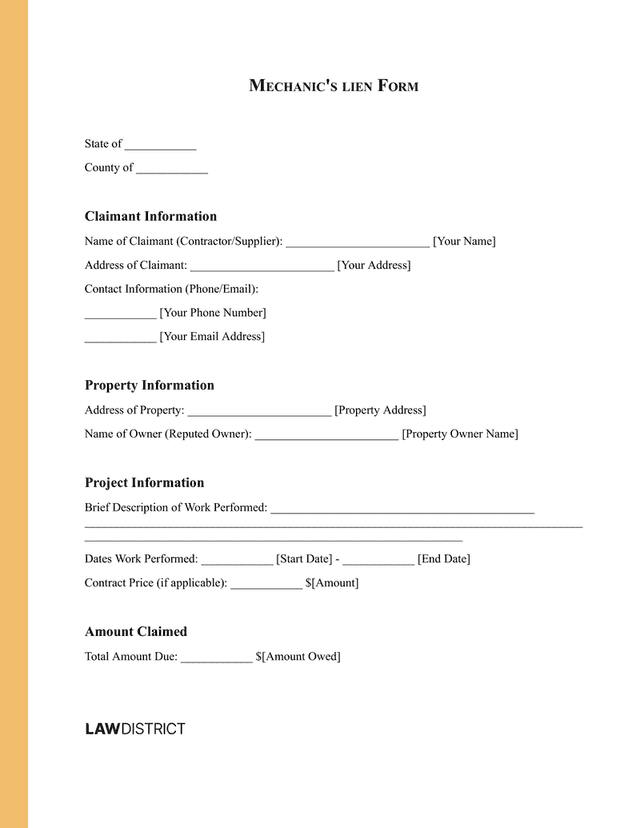
Take a look at our example document to understand the formatting and specific terms used in a Mechanic's Lien.
This sample will help you learn the proper structure and key elements needed for your lien.
How Does a Mechanic's Lien Work?
Contractors need to send a preliminary notice to the property owner soon after they begin the work. Many states require this step.
How To File a Mechanic's Lien
- Filing the lien: If unpaid, file the lien at the local government office, noting the amount due and detailing the provided work or materials
- Notice of the lien: After filing, send a copy to the property owner to confirm the lien is recorded.
- Enforcement: Start a foreclosure lawsuit if the debt remains unpaid within the set period to enforce the lien.
- Resolution: The issue is resolved when the owner pays off the debt, releasing the lien, or it may end with a court-ordered sale of the property.
- Expiration: Liens expire if not enforced within their legally defined duration.
Each state has its own rules about who can file a Mechanic's Lien and how to do it. Make sure you know and follow your state's laws to file it correctly and on time.
Concerned about overlooking important details in your Mechanic's Lien? Our step-by-step template acts as a smart legal solution to help you throughout the document creation process.
What To Include in a Mechanic's Lien
When writing a Mechanic's Lien, include these key details to make it legal and enforceable:
- Claimant's info: Full name and contact details of the filer.
- Property owner's info: Name and address of the owner during the project.
- Property description: Detailed and specific legal description.
- Amount due: Total unpaid amount for labor, services, or materials.
- Labor/materials description: Clear description of the work performed or materials provided.
- Dates of service: Dates when labor or materials were supplied.
- Signature and notarization: Must be signed and notarized to verify authenticity.
You´ll need to adhere to any additional requirements specific to the state where the property is located. These might include preliminary notices or other procedural steps that must be taken before filing the lien.
Mechanic's Lien Laws by State
This table outlines the specific Mechanic's Lien laws applicable in each state:
Mechanic's Lien FAQs
For a better understanding of Mechanic's Liens, check out our FAQ section. It answers common questions and helps you confidently navigate the filing process.
You can use a Mechanic’s Lien Form template as a reliable foundation to help you draft the document with the necessary information.
To make sure it is correctly written, it is recommended to then have it reviewed by a legal professional.
Yes, most places require a Mechanic's Lien to be notarized to confirm the signer’s identity and ensure its court validity.
Notarization makes the lien official and enforceable, and helps prevent fraud.
To place a Mechanic's Lien on a vehicle, follow these steps: First, confirm you have grounds for the lien, like unpaid repairs. Then, file the lien as per your state's laws.
This often requires submitting a lien form to a local or state agency, outlining the owed amount and services.
A payment bond ensures subcontractors and suppliers are paid, keeping property titles clear for smooth project flow. Conversely, a Mechanic's Lien attaches to the property, which could complicate sales or refinancing until disputes are resolved.
Both methods secure payment, but bonds provide wider protection without burdening the property.
Try Lawdistrict Now
Instant and complete access to our entire library of legal forms
Edit, download and print in PDF from any device
Save time and money on legal document creation