
Free Rent-to-Own Contract Template
Simplify your lease-to-purchase process with our Rent-to-Own Lease Agreement template. Craft a clear and formal agreement, ensuring both parties are on the same page.

Fill forms in a few steps
Save, print & download
Done in 5 minutes
What Is a Rent-to-Own Agreement?
A Rent-to-Own Agreement, also known as a Lease-to-Own Agreement, is a legal document that outlines the arrangement between a landlord or potential seller and a tenant or potential buyer [1].
This contract is useful if you are a seller looking to receive rental payments before selling the property to the tenant/buyer.
However, there are different types of agreements, and, depending on the one you choose, it will ensure the tenant:
- Has the option to buy the property at the end of the lease
- Stays committed to buying the property from the seller
Lawdistrict provides a Rent-to-Own Contract template. By using our outline, you can create your legal document in minutes to make a detailed agreement with your tenant.
Rent-to-Own Agreement Sample
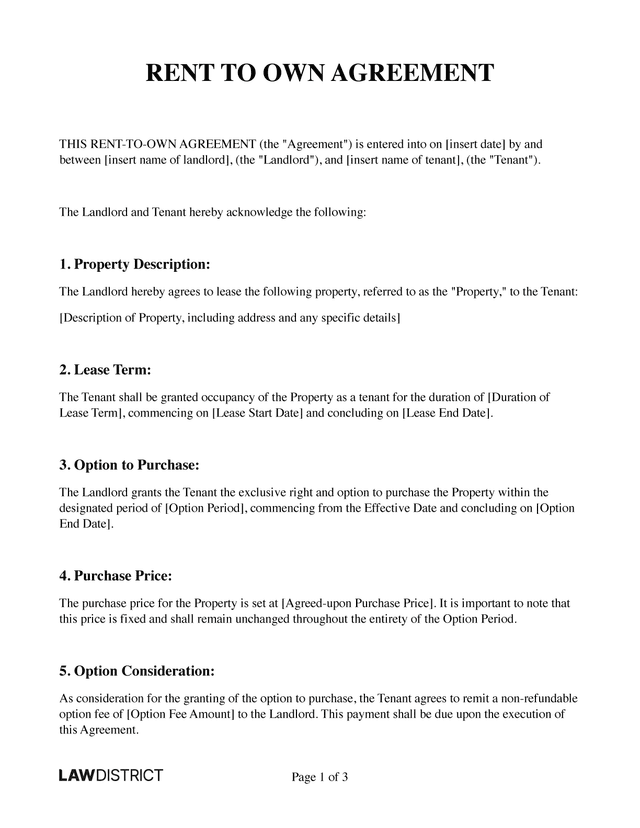
To create a Rent-to-Own Purchase Agreement it’s essential to review the correct structure before adding your terms and information.
Review the same document below to better understand how to draft your legal document.
How Does a Rent-to-Own Work
A Rent-to-Own Lease Agreement combines elements of a typical lease agreement with a real estate purchase agreement.
To make sure your document will work the way you want, you’ll need to cover each of the following areas:
- Agreement types: You and the tenant will need to choose between a flexible lease option or a binding lease-purchase agreement.
- Price: The purchase price is agreed upon either at the lease's start or its end, so make sure to add this to your agreement and not leave this open-ended.
- Financial aspects: Tenants pay a nonrefundable option fee (usually 1%-5% of the final price) and a portion of their rent, typically set above market rate, contributes to the property's eventual purchase.
- Maintenance and final steps: Responsibilities for property upkeep are set. Tenants should also thoroughly review the contract and conduct a home inspection.
These obligations are often spelled out in state or local law, and rent-to-own contracts are often not able to contract around these provisions. It is crucial to be aware of state or local laws on this, as in many jurisdictions, the owner is still responsible for maintenance in a rent-to-own situation [2].
Rent-to-Own Contract by Type
Depending on the type of long-term commitment you and the other party are comfortable with, you will need to choose the agreement that works best.
You can choose between one of these primary types of Rent-to-Own Agreements:
- Lease-Option Agreement: This agreement offers flexibility to the tenant. They have the right to purchase the property at the end of the lease but are not obligated to do so. If the tenant decides not to buy, they can simply end the lease and move on.
- Lease-Purchase Agreement: This is a more binding agreement. The tenant commits to buying the property at the end of the lease term, barring specific conditions like a breach of contract or inability to secure financing. Both the landlord and tenant are bound to the sale and purchase.
Rent-to-Own Pros and Cons
If you’re looking to sell or buy a home, a Rent-to-Own Agreement can offer plenty of benefits over other real estate documents.
However, there are some negatives for both parties, so you should be aware of both the positives and drawbacks to make an agreement that best fits your needs.
Seller:
| Pros | Cons |
|---|---|
| Potential for a higher sales price if the market goes down. | The tenant usually gets an exclusive option. |
| Tenants are more invested, leading to better property care. | No large lump sum payment at the end. |
| Steady income due to longer rental term. | Cannot sell the home during the lease term. |
Buyer:
| Pros | Cons |
|---|---|
| Potential for a lower sales price if the market goes up. | Might not qualify for a loan. |
| Ability to “test out” the home and neighborhood. | Risk of a higher sales price if the market goes down. |
| More freedom to make improvements to the home. | Risk of losing the option if rent payments are missed. |
What To Include in a Rent-to-Own Agreement Form
Various terms, prices, and information must be included to avoid any confusion. When drafting a Rent-to-Own Agreement, ensure it encompasses the following:
- Parties involved: The names and addresses of each party should be mentioned in the agreement.
- Property details: A description of the property, along with the address, must be added.
- Financial terms: Details must be listed regarding the price of rent, the security deposit, any due date, late fees, and option details.
- Option to purchase: The grant of an option to purchase and how much the tenant will pay you must be specified.
- Lease specifics: Information concerning the start and end dates, property use, maintenance responsibilities, and property rules (e.g., smoking policies, pet allowances, etc.).
- Legal provisions: The governing law has to be taken into account as well as other provisions such as dispute resolution methods, default consequences, and required disclosures.
Once these key details have been added to your document, and you have come to a full agreement with the other party you can then sign and make it official.
Some jurisdictions may require a cancellation period or specific terms regarding default and cancellation. It is important to make sure that these terms are fair to both parties to avoid legal complications.
How To Set Up a Rent-to-Own Proposal
Once you are sure what terms and information to add, include them in your Rent-to-Own Contract.
Simply follow the steps below to complete your document and set up an agreement that protects your interests.
- Specify the effective date: Select the date when the agreement becomes active.
- Provide details of parties involved: Include names and addresses of the landlord/seller and tenant/buyer.
- Describe the property: Add both the physical address of the property and the legal description.
- Detail the lease term: Include both the start and end dates of the lease.
- Set rent and payment terms: Mention the rent amount, due date, and any other fees involved.
- Include the options: Specify all the details about the option to purchase, including the price and terms.
- List any miscellaneous details: Mention any other provisions or details specific to the agreement.
Additionally, make sure to include a space for the date and signatures of both parties.
Take advantage of our Rent-to-Own Lease Agreement template to ensure all of these critical terms are added to your document.
Rent-to-Own FAQs
Making and using a Rent-to-Own Agreement can be tricky. To help you, we have answered some of the most typical questions concerning this document.
Review the answers below to make certain the document you create works the way you want it to.
The most common way people get a Rent-to-Own Agreement is by going to a real estate attorney. The attorney creates the document for a fee, which can be hundreds of dollars. The process can also take a lot of time depending on the lawyer’s schedule.
However, you can make your document for much less with much less time by using our free Rent-to-Own Agreement template.
Yes, a Rent-to-Own Contract is legally binding once signed by both parties. However, with a lease option instead of a lease-purchase agreement, the tenant is not obligated to buy the property.
It's also worth noting that while written contracts are enforceable, a verbal Rent-to-Own Agreement may be difficult to prove in court and will not be enforceable in most jurisdictions. For more clarity and legal protection, it’s recommended to opt for a written agreement.
Entering a Rent-to-Own agreement in itself does not hurt your credit. However, it won’t directly improve it either. Usually, consistent payments aren’t reported, meaning <u>your credit score</u> won’t get better.
However, in a typical Rent-to-Own Agreement, if a renter misses a payment, it could negatively impact their credit score if the contract specifies that rent payments will be reported to credit bureaus.
This means simply trying to avoid late payments, and your agreement should not hurt your credit.
Try Lawdistrict Now
Instant and complete access to our entire library of legal forms
Edit, download and print in PDF from any device
Save time and money on legal document creation