
Free Reference List Template
A Reference List provides contact information for people who can speak to your skills, experience, or character. Employers, landlords, and other organizations may request one during an application process.

Fill forms in a few steps
Save, print & download
Done in 5 minutes
What Is a Reference List Template?
A Reference List template is a ready-made employment form that helps you quickly and easily organize your references. These templates are used in many areas, like:
- Job applications
- Research papers
- Rental or loan applications
Using a Reference List template saves time and reduces errors. It also enables you to focus more on selecting the most suitable references for your specific situation.
Pick references that match your application and can give valuable information about your skills or character.
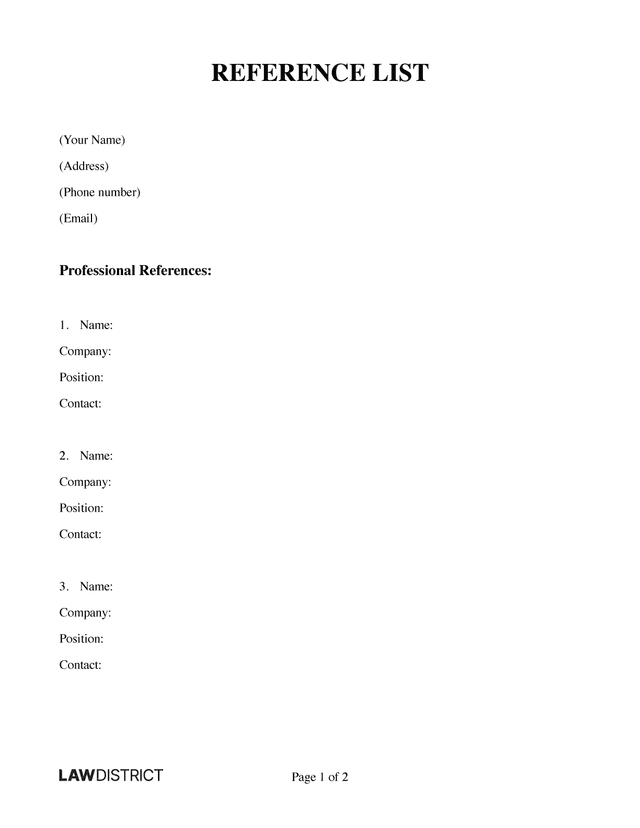
Sample Reference List for Employment
To create an effective Reference List, it is beneficial to refer to a well-written sample beforehand.
Below is an example you can use as a guide.
Types of Reference List
There are different types of Reference Lists to choose from, depending on your needs and the context.
Find below some common types and a brief description of what they entail.
Reference List for employment
This list may consist of past supervisors, colleagues, or clients. They can speak to your skills, work ethic, and accomplishments.
It helps potential employers gauge your professional capabilities and reliability.
Academic Reference List
This type of Reference List is often used for academic programs, scholarships, or academic positions. It may include professors, advisors, or mentors.
These references highlight your academic achievements and potential for future success.
Character Reference List
This type of list consists of individuals who can provide insights into your personal qualities and integrity.
It is often used in situations where personal character is a key consideration, such as volunteer positions or community roles.
Landlord Reference List
When signing a residential lease agreement, potential landlords often ask previous landlords for references to see if you would be a reliable a tenant.
This list can help demonstrate your history of timely payments and good property care.
Personal Reference List
In some cases, you may be asked to provide references who can vouch for your character and personal attributes.
These lists may include individuals who can provide a personal perspective on your qualities. However, it's generally recommended to avoid using close family members as references.
Professional Network Reference List
This type of Reference List includes people in your professional network. They may not have worked with you directly, but they can speak about your industry knowledge and reputation.
It is useful for networking and career advancement opportunities.
Combination Reference List
Depending on the situation, you may have to create a combination Reference List. This includes references from various categories mentioned above.
This offers a well-rounded view of your skills, character, and professional background.
How To Format a Reference List
It's crucial to format a Reference List clearly and professionally when presenting it to potential employers or landlords.
Find below an example of how to format personal and professional references:
| Personal | Professional |
|---|---|
| Name
Relationship Duration of relationship Phone number Describe relationship | Name
Company Job title Phone number Describe relationship |
Organize your Reference List alphabetically by last name or organization name.
What To Include in a Professional Reference List
A detailed list can boost your credibility, whether you're applying for a job, a program, or a project.
Here are key elements to include:
| Element | What to include |
|---|---|
| 1. Contact information | Add the reference's full name, job title, organization, email address, and phone number. |
| 2. Relationship | Explain how you know the reference and your professional relationship. For example, they may be a supervisor, colleague, mentor, teacher, or client. |
| 3. Professional qualifications | Briefly explain why the reference can speak about your skills or experience. Include only relevant background information. Make sure to get their consent before sharing personal details. |
| 4. Relationship duration | State how long you have known or worked with the reference. |
| 5. Additional notes | Add any useful context about the reference. This may include projects you worked on together, their role, or relevant experience they can discuss. |
Maintaining strong relationships with your references is important. Keep them updated on your progress, and express gratitude for their support.
Reference List Tips
When creating, follow these tips to ensure it is effective and provides the necessary information for potential employers, landlords, or contacts:
- Title your reference page: Begin your list with a clear and concise title, such as "Professional References for [Your Name]". This helps the reader easily identify and navigate through your references.
- Select appropriate references: Choose individuals who can attest to your character, skills, or qualifications. Ideally, include former supervisors, managers, colleagues, or mentors who know you.
- Seek permission: Before including someone as a reference, always obtain their explicit permission in writing, inform them about potential reference checks.
- Follow formatting guidelines: Make sure to follow any formatting instructions from the employer or institution.
Reference List Template FAQs
To help clarify any doubts, check out these answers to the most common questions about Reference Lists.
A Reference List can provide educational institutions, potential employers, or landlords with insights and perspectives on your capabilities and character.
When selecting references, it is important to choose individuals who have had direct professional or personal interactions with you. They should offer feedback that supports your application.
You can use our Reference List template to quickly make a comprehensive document ready to be sent. Simply enter the relevant details and you'll instantly receive the finished document.
Make sure you get consent before sharing personal information. You should also check that your Reference List follows applicable privacy and data protection laws.
The length of a Reference List can vary. In general, it is recommended to include at least 3 to 5 references, unless specific requirements state otherwise.
Make sure to follow all applicable laws and rules. This includes privacy and anti-discrimination laws, and any limits on the references you can request.
Also follow any guidelines provided by the person or organization requesting the list.
Try Lawdistrict Now
Instant and complete access to our entire library of legal forms
Edit, download and print in PDF from any device
Save time and money on legal document creation