



Takeaways
- Statutes of limitations define the legal timeframe creditors can sue you.
- The time limit for debt collection varies by state and debt type.
- Debt collectors can still request payment even after the statute expires.
- You can legally require creditors to verify debts using validation letters.
- Do not ignore lawsuits regarding debt; always provide an affirmative defense.
Most consumers may not be aware that their debts and loan agreements have an expiration date.This is known as a statue of limitation.
Even though understanding the statute of limitations on debt can be complicated, paying or not paying your debt doesn't prolong the time it stays on your credit report.
This article will explain more about the statute of limitations and what time-barred debt means and outline your state's statute of limitation for various debts.
What Is the Statute of Limitations on Debt?
The statute of limitations on debt is the period a creditor has to sue you for an outstanding debt. The length of time depends on several factors:
- The state you reside
- The type of debt
- When the last payment was made
The period for a debt collector to sue you typically runs for three to six years. However, some states have longer periods extending to ten or fifteen years. Once the debt expires, a creditor cannot seek to garnish your wages, put a lien on your property, or access your bank account.
However, the creditor still has a legal right to contact you requesting that you resume payments, but they must not violate your consumer rights outlined in the Fair Debt Collection Practices Act (FDCPA).
How to Use a Debt Validation Letter to Protect Yourself
If a collector contacts you about a debt, you have the right to request proof that the debt is real and legally yours.
A debt validation letter, formally requires the collector to verify the debt before continuing collection efforts. Key points to be aware of when using this type of letter:
- Send the letter within 30 days of the collector's initial written notice to legally require them to pause collection until they respond.
- If they cannot validate the debt, they must stop all collection activity.
- Sending the letter does not erase the debt if it is confirmed valid.
What Is Time-Barred Debt?
A time-barred debt is a debt that has passed the time limit outlined in your state laws so that a creditor can take you to court for it. This provision doesn't mean you are exempt from paying the debt.
The creditor can take other actions, such as contacting you indefinitely. In this situation, send a cease and desist letter demanding they stop contacting you. Creditors can add the debt to your credit report, which will likely cause your credit score to drop.
Debt collectors may still try to sue you for a time-barred debt, hoping you do not know the timelines. In this case, you must respond to the lawsuit with an Answer and state your affirmative defense. The affirmative defense would be that the statute of limitations has passed.
The creditor will either withdraw the case or the court will rule in your favor. Do not ignore the lawsuit and assume the court will figure out the debt has expired. Respond to it and go to court to defend yourself if the creditor doesn't drop the suit after receiving your Answer.
Types of Debts
Acquiring a debt can occur in different settings, and the law addresses the different methods consumers enter into debt. The following are the main debt categories:
- Open-ended: These are revolving debts that you borrow and pay, borrow again, and pay up to a specific limit set by the lender.
- Written: Most loans fit in this category, where you receive a fixed debt amount and clearly defined repayment terms in the loan agreement.
- Oral: This is a type of debt entered into over a conversation in which you make a verbal agreement or shake hands.
- Promissory notes: A promissory note, commonly used by individuals or non-financial organizations, contains information on the debt taken and the payment arrangements.
Get a Promissory Note Template Now
Statute of Limitations on Debt By States
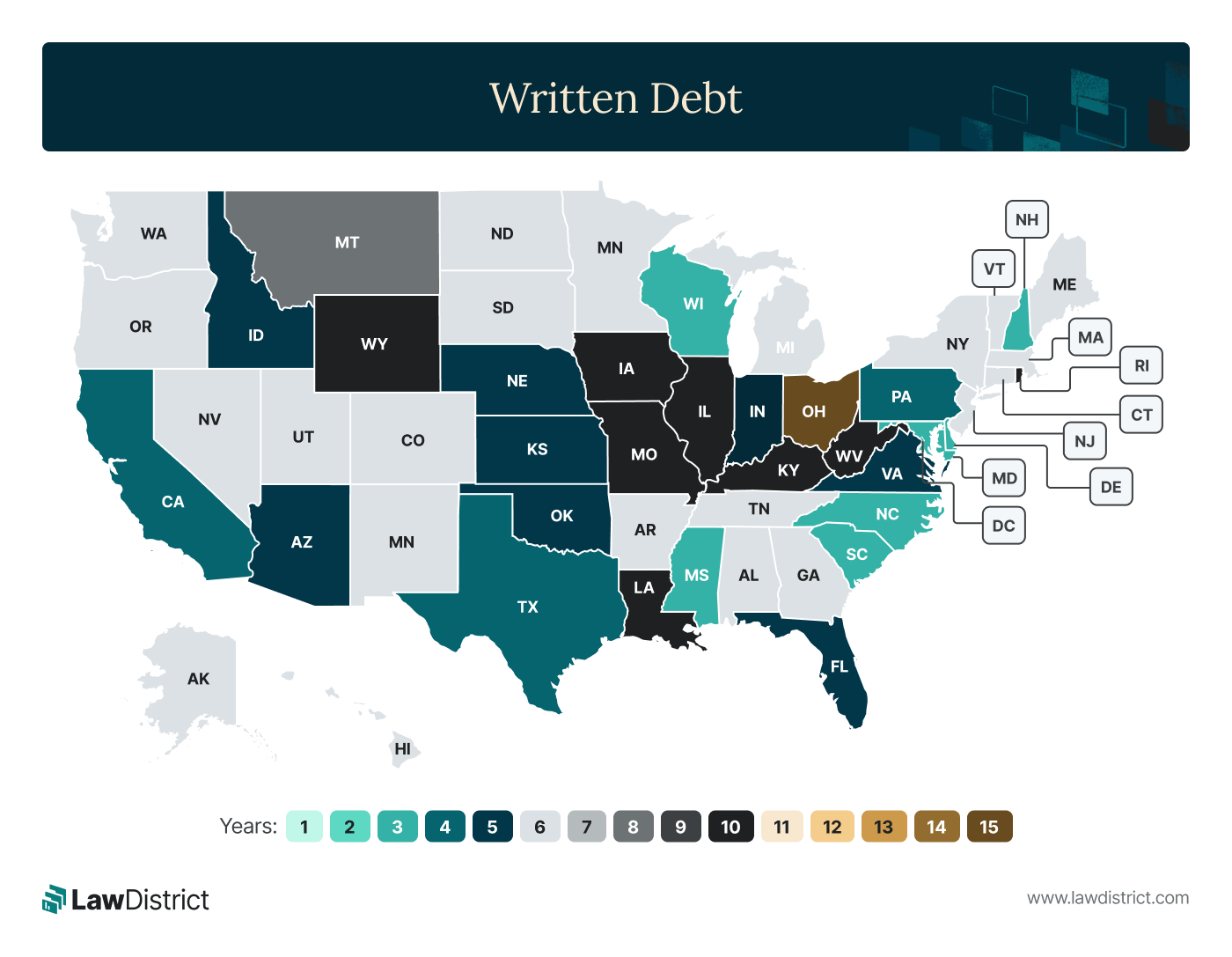
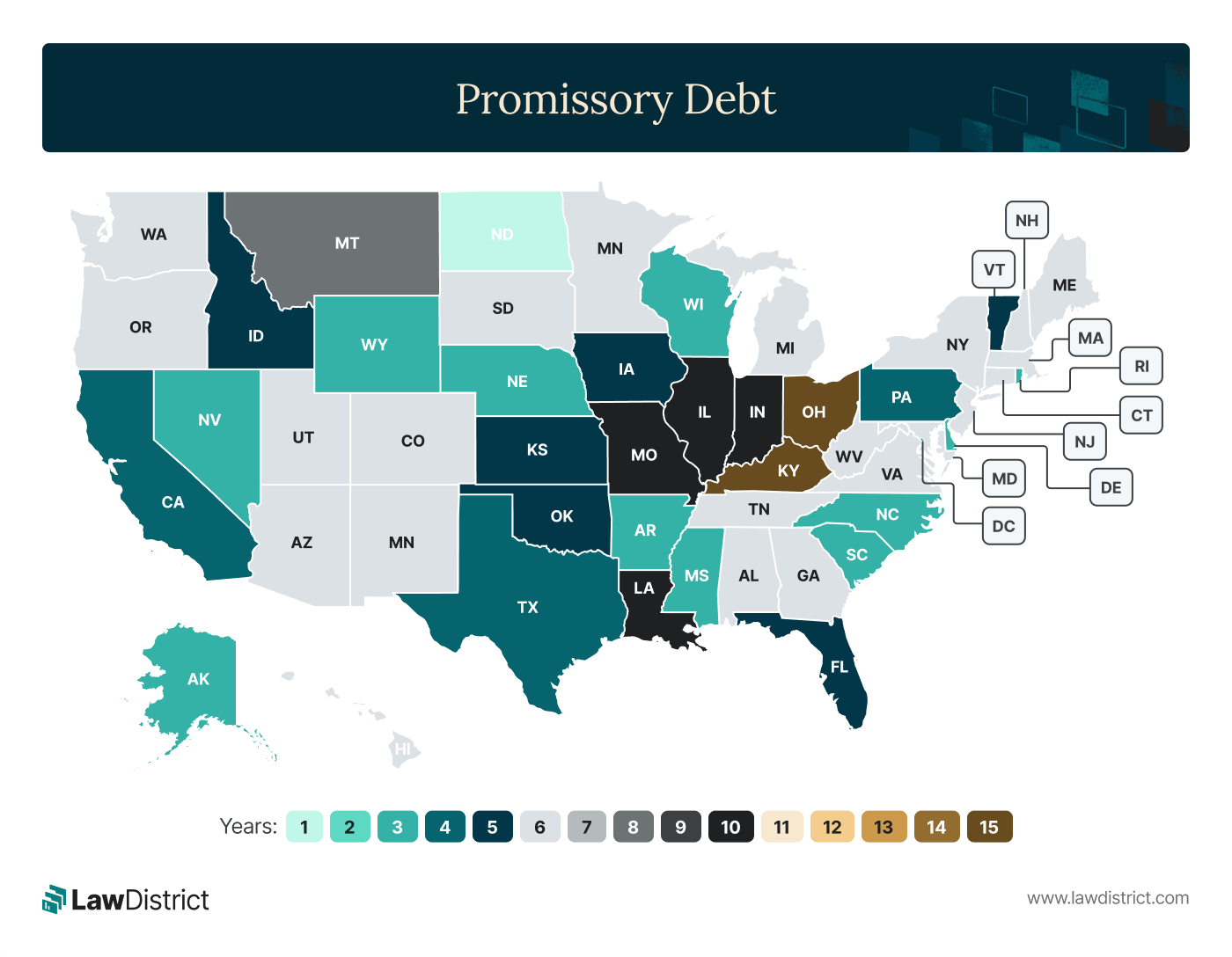
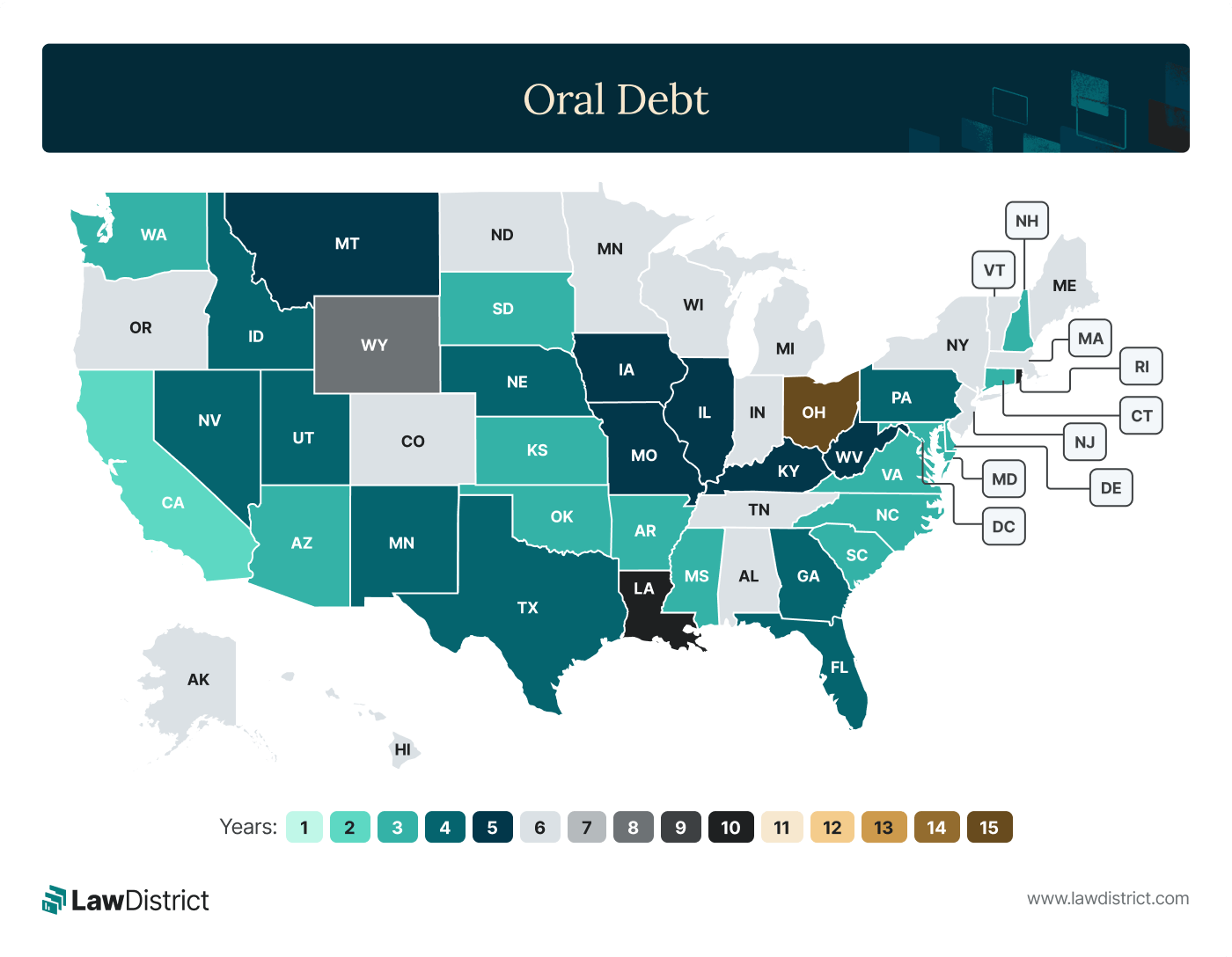
The following mapsoutline the statute of limitations by state for the four types of debt. Note that laws change, and you need to confirm with your county office for any updates.
Statutes of Limitations of Written Debt
Statutes of Limitations of Promisory Debt
Statutes of Limitations of Oral Debt
Statutes of Limitations of Open-Ended Debt
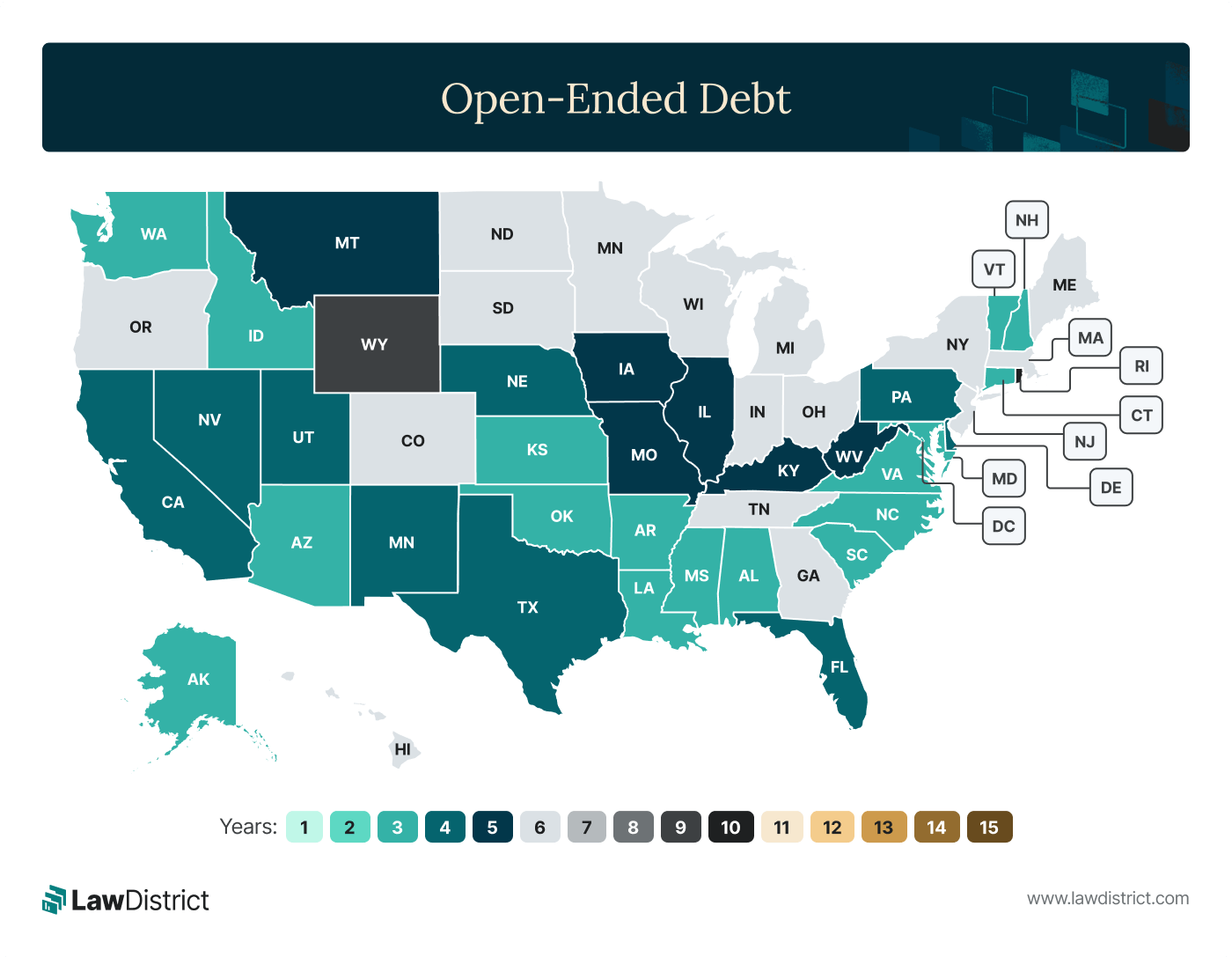
Whether the debt is defined in an IOU, promissory note, or loan agreement, make sure you know how many years your state defines as the statute of limitations.
Helpful Resources:
Federal Trade Commission - Fair Debt Collection Practices Act
Frequently Asked Questions About Statutes of Limitations on Debts
-
When does the statute of limitations timeline begin for debt?
The statute of limitations period starts the moment you miss a payment. In other states, it begins when you make the most recent payments or acknowledge on record you owe the debt to a creditor.
-
Can I still be sued for debt after it passes the statute of limitation?
Yes, debt collectors may sue you for an expired debt, hoping you do not know the timeline. They also hope you will make a payment that may reset the clock.
-
Should I pay a debt after the statute of limitation passes?
If the debt is legitimately yours and the creditor follows up on it, it may be in your best interest to pay the debt or negotiate for settlement and pay less than you owe. Paying will likely improve your credit score. You will also build your credibility, increasing your chances of getting reasonable financing in the future.
Takeaways
- Statutes of limitations define the legal timeframe creditors can sue you.
- The time limit for debt collection varies by state and debt type.
- Debt collectors can still request payment even after the statute expires.
- You can legally require creditors to verify debts using validation letters.
- Do not ignore lawsuits regarding debt; always provide an affirmative defense.
Most consumers may not be aware that their debts and loan agreements have an expiration date.This is known as a statue of limitation.
Even though understanding the statute of limitations on debt can be complicated, paying or not paying your debt doesn't prolong the time it stays on your credit report.
This article will explain more about the statute of limitations and what time-barred debt means and outline your state's statute of limitation for various debts.
What Is the Statute of Limitations on Debt?
The statute of limitations on debt is the period a creditor has to sue you for an outstanding debt. The length of time depends on several factors:
- The state you reside
- The type of debt
- When the last payment was made
The period for a debt collector to sue you typically runs for three to six years. However, some states have longer periods extending to ten or fifteen years. Once the debt expires, a creditor cannot seek to garnish your wages, put a lien on your property, or access your bank account.
However, the creditor still has a legal right to contact you requesting that you resume payments, but they must not violate your consumer rights outlined in the Fair Debt Collection Practices Act (FDCPA).
How to Use a Debt Validation Letter to Protect Yourself
If a collector contacts you about a debt, you have the right to request proof that the debt is real and legally yours.
A debt validation letter, formally requires the collector to verify the debt before continuing collection efforts. Key points to be aware of when using this type of letter:
- Send the letter within 30 days of the collector's initial written notice to legally require them to pause collection until they respond.
- If they cannot validate the debt, they must stop all collection activity.
- Sending the letter does not erase the debt if it is confirmed valid.
What Is Time-Barred Debt?
A time-barred debt is a debt that has passed the time limit outlined in your state laws so that a creditor can take you to court for it. This provision doesn't mean you are exempt from paying the debt.
The creditor can take other actions, such as contacting you indefinitely. In this situation, send a cease and desist letter demanding they stop contacting you. Creditors can add the debt to your credit report, which will likely cause your credit score to drop.
Debt collectors may still try to sue you for a time-barred debt, hoping you do not know the timelines. In this case, you must respond to the lawsuit with an Answer and state your affirmative defense. The affirmative defense would be that the statute of limitations has passed.
The creditor will either withdraw the case or the court will rule in your favor. Do not ignore the lawsuit and assume the court will figure out the debt has expired. Respond to it and go to court to defend yourself if the creditor doesn't drop the suit after receiving your Answer.
Types of Debts
Acquiring a debt can occur in different settings, and the law addresses the different methods consumers enter into debt. The following are the main debt categories:
- Open-ended: These are revolving debts that you borrow and pay, borrow again, and pay up to a specific limit set by the lender.
- Written: Most loans fit in this category, where you receive a fixed debt amount and clearly defined repayment terms in the loan agreement.
- Oral: This is a type of debt entered into over a conversation in which you make a verbal agreement or shake hands.
- Promissory notes: A promissory note, commonly used by individuals or non-financial organizations, contains information on the debt taken and the payment arrangements.
Get a Promissory Note Template Now
Statute of Limitations on Debt By States
The following mapsoutline the statute of limitations by state for the four types of debt. Note that laws change, and you need to confirm with your county office for any updates.
Statutes of Limitations of Written Debt
Statutes of Limitations of Promisory Debt
Statutes of Limitations of Oral Debt
Statutes of Limitations of Open-Ended Debt
Whether the debt is defined in an IOU, promissory note, or loan agreement, make sure you know how many years your state defines as the statute of limitations.
Helpful Resources:
Federal Trade Commission - Fair Debt Collection Practices Act
Frequently Asked Questions About Statutes of Limitations on Debts
-
When does the statute of limitations timeline begin for debt?
The statute of limitations period starts the moment you miss a payment. In other states, it begins when you make the most recent payments or acknowledge on record you owe the debt to a creditor.
-
Can I still be sued for debt after it passes the statute of limitation?
Yes, debt collectors may sue you for an expired debt, hoping you do not know the timeline. They also hope you will make a payment that may reset the clock.
-
Should I pay a debt after the statute of limitation passes?
If the debt is legitimately yours and the creditor follows up on it, it may be in your best interest to pay the debt or negotiate for settlement and pay less than you owe. Paying will likely improve your credit score. You will also build your credibility, increasing your chances of getting reasonable financing in the future.
Most Popular Posts

Some states require a motor vehicle bill of sale form; others do not. Even if only for your personal records, anyone who buys or sells a vehicle needs

If you plan to travel with a minor, whether or not you are their parent, you can minimize inconveniences by carrying a few necessary documents...