
Business Contract Template
A Business Contract is a legally binding agreement that sets out the rules governing a business agreement between two or more parties. It explains who is responsible for certain actions, what consideration each party receives in exchange for those actions, and the terms they must follow.

Excellent 4.5 out of 5
Fill forms in a few steps
Save, print & download
Done in 5 minutes
What Is a Business Contract?
A Business Contract is a formal agreement between two or more parties. You generally use this legal document to set out in writing each partys’ obligations when making a business arrangement.
It’s often used when:
- Selling goods
- Providing services
- Leasing space
- Forming new partnerships
- Hiring new employees
- Making new ownership arrangements
A legally binding contract requires:
- An offer
- Acceptance
- Consideration (something of value exchanged)
- Mutual intent to be legally bound
- A lawful purpose
According to U.S. state contract law, a contract may not be enforceable without these elements.
Types of Business Contracts
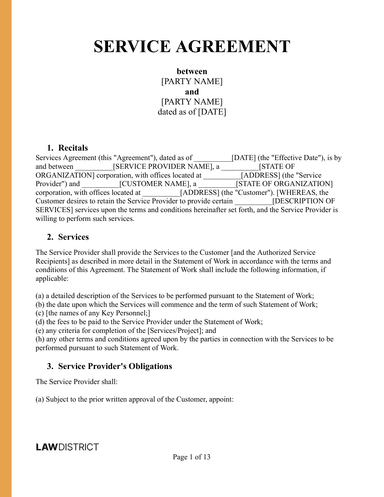
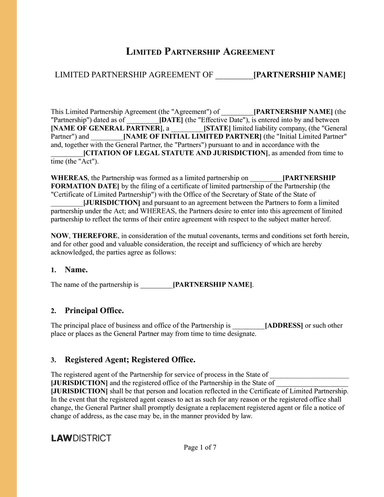
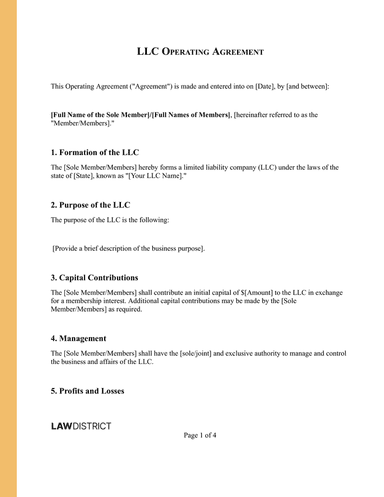
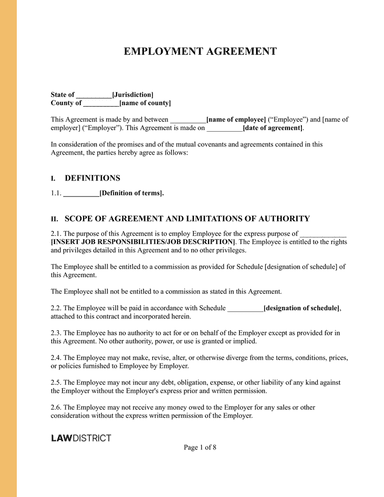
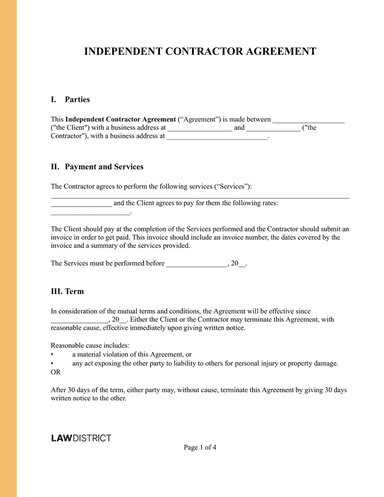
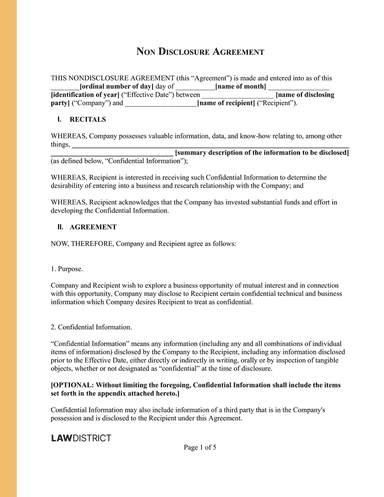
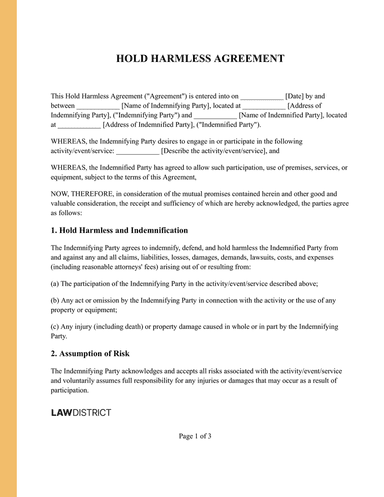
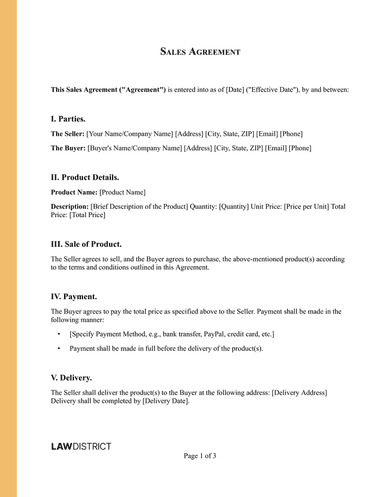
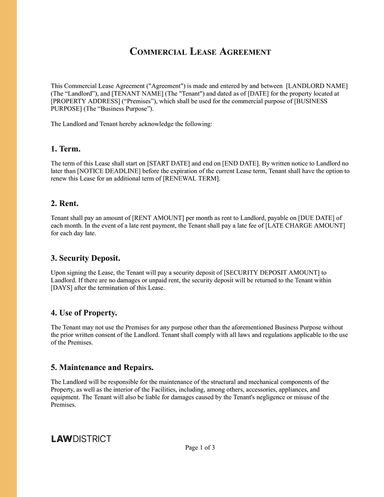
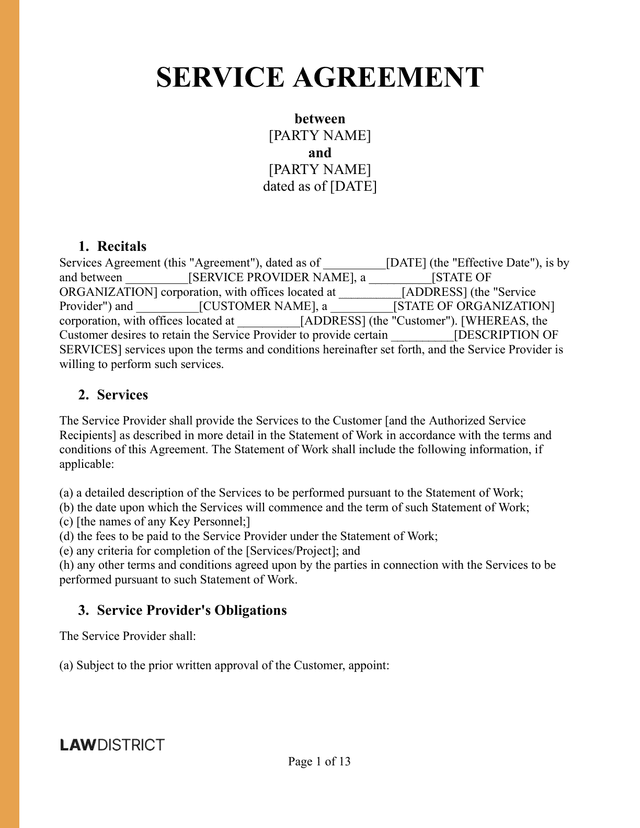
Business Contract Sample
Before you begin drafting your own document, take a look at the finished Business Contract example below. It can help you understand the general structure and key clauses of this type of contract:
When To Use a Business Contract?
A Business Contract is needed if you’re exchanging:
- Money
- Services
- Goods
- Real estate
Here are some of the most common situations when you would use this document:
Here are some of the most common situations when you would use this document:
| Situation | Why a Contract Is Needed |
|---|---|
| Hiring a service provider | Defines scope of work and payment terms |
| Selling goods | Confirms quantity, price, delivery, and risk of loss |
| Forming a partnership | Establishes profit sharing and duties between partners |
| Leasing space | Sets the duration and rent due |
| Buying/selling a business | Records the purchase terms, assets or ownership interests transferred and closing requirements |
| Hiring employees | Sets role, salary, and termination terms |
| Protecting confidential data | Prevents unauthorized disclosure |
| Licensing intellectual property | Allows a party to use software, trademarks or other protected materials |
How does a Business Contract work in these situations? It's simple: it sets written terms that each party agrees to follow.
If one of the parties breaches the contract, the other parties may be entitled to seek legal remedies under applicable law.
Why Is It Important to Use a Business Contract?
Using a clear, written Business Contract can help you avoid misunderstandings. It sets the expectations for each of the parties, so they know exactly what their obligations and remedies are.
You can refer back to this document if disputes arise and resolve them more efficiently than without a business contract or with a poorly drafted one.
How To Write a Business Contract
You need to make sure that each term of your Business Contract is easy to understand. You should remove any ambiguity to help you limit the likelihood of any disputes.
1. Identify the Parties Involved
Firstly, you need to name the parties involved. Confirm whether they are individuals or business entities.
If they are individuals, then use their full legal name and state where they are a resident. If they are entities, then clearly state the type of entity (e.g., limited liability company, corporation) and the jurisdiction of formation.
Accurate identification prevents future disputes about responsibility.
2. Define the Scope of Work or Sale
Describe exactly what goods or services are being provided. Include:
- Quantities
- Quality standards
- Timelines
Make sure you go into detail about exactly what is expected. If you're too vague, you risk disputes later on.
3. Responsibilities
Include what each party to the contract must provide or accomplish in exchange for the consideration they are receiving.
4. Set Payment Terms
Next, include any payment terms. This typically includes:
- The total amount
- Payment method
- Due dates
- Any penalties for late payment
If payments are to be made in installments, make sure you include a payment schedule. Conditions for payment release should also be clearly stated.
5. Include Term and Termination Conditions
Specify the exact time the contract begins and ends. You should also explain how and under what conditions a party may end the agreement. Termination may result in certain actions being taken or release a party from taking certain actions.
Include notice requirements and consequences of early termination.
6. Add Legal Protections
Common legal protections included in a simple Business Contract cover:
- Dispute resolution
- Governing law
- Representations and warranties
- Indemnification
- Confidentiality
- Liability limitations (e.g., cap on financial exposure)
- Force majeure
- Insurance requirements
These protections should be tailored to the specific transaction. Their wording determines which risks each party accepts and how much protection the contract provides to them.
You can easily create a comprehensive version of this document tailored to your situation using our free Business Contract template. Simply fill in your details and receive the finished document instantly.
Key Terms and Clauses in a Business Contract
Most Business Contracts contain standard provisions. These are included so that both parties understand their responsibilities and to make the contract enforceable.
| Clause | Purpose |
|---|---|
| Parties | Identifies who is legally bound |
| Scope of Work / Description of Goods | Defines obligations |
| Payment Terms | Explains compensation structure |
| Term & Termination | Sets duration and exit rights |
| Confidentiality | Protects sensitive information |
| Indemnification | Allocates financial risk |
| Limitation of Liability | Caps potential damages |
| Governing Law | Determines which state law applies |
| Dispute Resolution | Sets mediation or arbitration process |
You need to write each clause so that it’s specifically tailored to the transaction. You can easily do this with the help of our printable Business Contract template.
Other Business Documents
If you’re drafting your own Business Contract, the following documents may also be useful:
FAQs About Business Contracts
Here are answers to common questions regarding the use of Business Contracts.
A Business Contract can be canceled, but only if the contract allows termination or both parties agree. Otherwise, cancellation may be a breach of the terms of the contract.
The four broad categories of general Business Contracts are:
- General Business Contracts: Set the rules for how parties work together during business transactions.
- Sales-related Contracts: Cover the sale of goods or services, including price, delivery.
- Employment-related Contracts: Define the work relationship, such as duties, duration and pay.
- Commercial Lease Agreement Contracts: Outline the terms for renting property for business purposes, including lease duration, authorized use and rent payment terms.
Each type serves a different commercial purpose but follows the same legal principles.
Generally, the parties can agree to change a business contract, subject to applicable law and the contract’s requirements. Document changes in a written amendment signed by the parties whose agreement is required. A party is not obligated to agree to an amendment of a business contract unless the original agreement requires such agreement based on the circumstances.
Failing to meet a business contract’s obligation may constitute breach. Depending on the contract, applicable law and the materiality of the breach, the counterparty may be entitled to compensation, termination or another remedy allowed under applicable law. Review any notice requirements and opportunity to correct the problem before taking action.
Try Lawdistrict Now
Instant and complete access to our entire library of legal forms
Edit, download and print in PDF from any device
Save time and money on legal document creation