
Free Engagement Letter Template
An Engagement Letter explains the working relationship between a business and a client. It sets out key terms both parties agree to, such as fees and scope of work details.

Fill forms in a few steps
Save, print & download
Done in 5 minutes
What Is an Engagement Letter?
A Letter of Engagement used by professionals to define their relationship with a client. It is details the payment terms and the agreed scope of work. They are typically used by providers of professional services.
Engagement Letter Types
Engagement letters vary depending on the professional service provided. Common types of Letters of Engagement include:
- Lawyer Engagement Letter: Used to define services such as legal advice, contract drafting, litigation support, dispute resolution, and compliance guidance.
- Accountant/Bookkeeper Engagement Letter: Outlines services such as financial audits, tax preparation, bookkeeping, financial planning, and advisory services.
- Consultant Engagement Letter: Typically defines services such as strategic planning, financial advisory, human resources, IT consulting, marketing and sales, and operations management consulting.
Each type serves to formalize the business relationship, set expectations, and prevent misunderstandings.
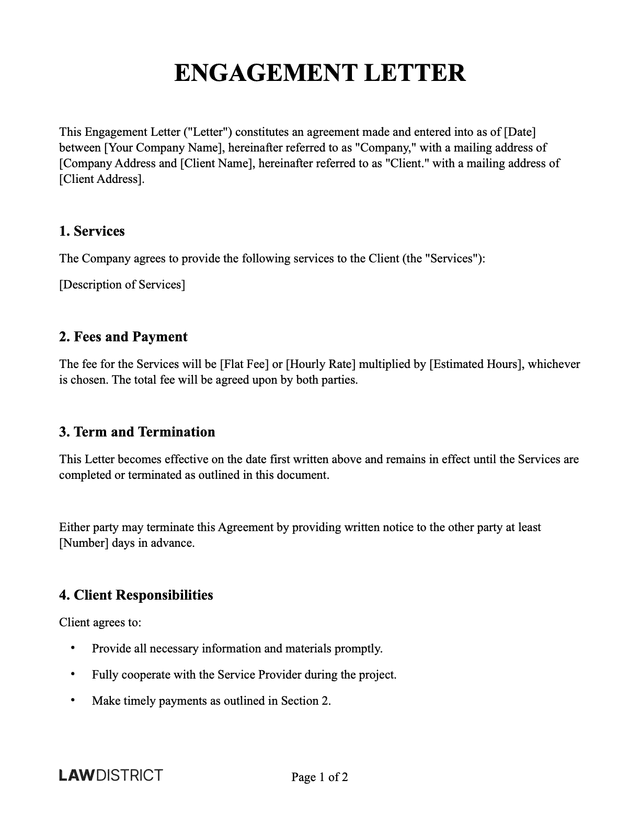
Engagement Letter Sample
You can use the sample Engagement Letter as a guide when writing your own version. Keep in mind that regulations vary by jurisdiction. It's a good idea to have a legal professional review your letter before signing.
When To Use an Engagement Letter
You should use an Engagement Letter whenever you establish a professional relationship with a client. This includes:
- Starting new projects
- Renewing existing relationships
- Changing the scope of work
By setting out these terms in advance, both the service provider and the client can proceed with confidence.
An Engagement Letter can also help prevent future disputes between the service provider and client.
How Does an Engagement Letter Work?
An Engagement Letter outlines the type of work to be performed by the service provider. This includes any specific services, timelines, and deliverables.
The letter also details the:
- Fee structure
- Payment terms
- Any additional costs that might arise from extra services
This allows both parties to have a mutual understanding of their responsibilities and expectations.
Engagement letters also often include clauses for:
- Confidentiality: Protects sensitive information shared during the engagement.
- Dispute Resolution: Outlines the steps to be taken if disagreements arise.
- Termination Conditions: Describes the circumstances under which the agreement can be ended by either party
Who Creates an Engagement Letter?
The professional service provider usually creates the Engagement Letter.
The client should also review the Engagement Letter and request changes if needed. This helps guarantee that both parties agree on the terms.
Sometimes the client may have a legal professional review the Engagement Letter before they sign it.
Is an Engagement Letter Legally Binding?
Engagement Letters are legally binding contracts when they contain all essential elements required by law. This includes:
- Offer
- acceptance
- Consideration
- Mutual intent to be bound
To be legally binding, both the service provider and the client must sign the letter of engagement. This indicates their acceptance of the conditions laid out.
The Engagement Letter should state which law and jurisdiction apply to disputes. It should also explain if mediation or arbitration are required before going to court.
Because an Engagement Letter is binding, you should review the terms carefully before signing with a legal professional.
What To Include in an Engagement Letter
You must include specific details that make your Engagement Letter meet legal and professional standards. Essential elements to include are:
- Parties involved
- Responsibilities
- Scope and duration of services
- Payment Terms
- Confidentiality and Termination Clauses
- Jurisdiction Governing the Agreement
Including these elements ensures that the Engagement Letter is comprehensive and legally sound.
How To Write an Engagement Letter
When you're drafting your Engagement Letter, follow these steps to help you create your document:
- Include parties involved: Begin with the full names, addresses, and contact details of both the client and the service provider.
- Define scope of services: Clearly outline the specific services to be provided, including tasks, deliverables, and timelines.
- Outline responsibilities: Describe the obligations and duties of both parties involved in the engagement.
- Specify payment terms:Explain how and when the client will pay. Include rates, payment schedules, expenses, late fees, and any possible extra charges. State whether fees are fixed or estimated.
- Expenses: Specify how expenses will be handled during the term of the engagement.
- State duration of the engagement: Indicate the start date, end date, and any conditions for renewal or extension.
- Statements: Explain when and how billing statements will be issued.
- Include confidentiality clauses: Define what information is confidential and how it can be used or shared. Also state whether confidentiality continues after the engagement ends.
- Add termination clause: Define the terms under which the agreement can be terminated by either party.
- Specify governing law: Indicate the jurisdiction governing the agreement.
Using our Engagement Letter template helps set the foundation for a legally sound, comprehensive Engagement Letter.
You can then consult with a legal professional to ensure that the necessary information has been included.
FAQs About Engagement Letters
Drafting an Engagement Letter can be confusing, especially if it's the first time you need to use one.
Here are the answers to a couple of the most commonly asked questions about the process.
In the context of an Engagement Letter, a retainer is a sum of money paid up front by the client to secure the services of a professional.
The letter must specify:
- Whether it is a true retainer (earned upon receipt) or a security retainer (held in trust and billed against)
- How and when retainer funds will be replenished
- State where security retainer funds will be held and make sure the account follows applicable state bar rules.
The retainer fee shall specifically detail which services are covered. This can include:
- Initial consultations
- Research
- Ongoing advisory services
There should be clear itemization of any services that will incur additional charges beyond the retainer amount.
If you're unsure how to start drafting your letter, you can use our fully customizable Engagement Letter template. It allows you to tailor your engagement letter to the specific circumstances of the professional relationship.
After customizing your document, you should have it reviewed by a qualified legal professional licensed in your jurisdiction. They can make sure that it complies with all applicable legal and ethical requirements.
Try Lawdistrict Now
Instant and complete access to our entire library of legal forms
Edit, download and print in PDF from any device
Save time and money on legal document creation