
Free Roofing Contracts Template
A Roofing Contract is a legally binding document used when negotiating a roofing project. It sets the terms and conditions between a property owner and a roofing contractor. The contract typically references the services to be provided. This can include the installation, repair, or replacement of a roof.

Fill forms in a few steps
Save, print & download
Done in 5 minutes
What Is a Roofing Contract?
A Roofing Contract is a formal contract between a client (property owner) and a roofing contractor. Roofing Contracts typically details the services to be provided. It also states the materials to be used in the project, how long it will take to finish, and payment details.
This legal document clearly states the contractor’s responsibilities. This can help prevent misunderstandings throughout the process. A Roofing Contract can also be used to help resolve any dispute that arises during or after the roofing project.
There are many different types, such as Residential Roofing Contracts, Commercial Roofing Contracts and Roof Repair Contracts.
Roofing Contract Sample
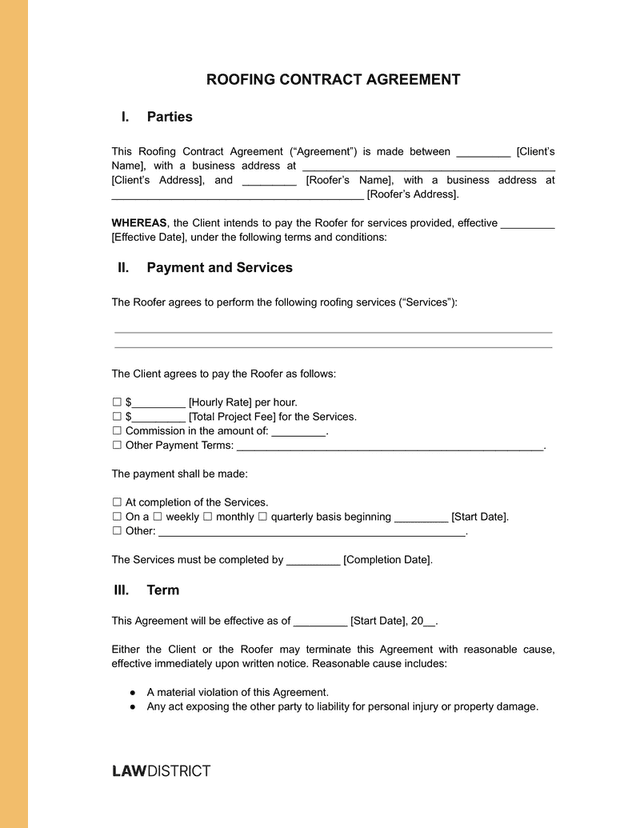
It’s important to include all relevant details in a Roofing Contract. You can look over a sample Roofing Contract below to give you an idea of what to include in your own draft:
It’s a good idea to have a legal professional review your document once you’ve finished drafting it. They can make sure it’s legally binding in your jurisdiction.
When Do You Need a Roofing Contract?
Writing up a formal Roofing Contract can help both parties avoid misunderstandings. This can prevent legal complications. It's advisable to use a Roofing Contract whenever you are:
- Hiring a contractor for roof installation, repair, or replacement.
- Undertaking significant roofing projects that involve substantial investment.
- Trying to set clear terms and protect the contractor and property owner from legal complications or misunderstandings.
You can help both parties understand their rights and responsibilities by using a legally sound and comprehensive contract.
Consequences of Not Having a Roofing Contract
If you decide not to use a contract, you could run into some serious issues throughout the project. Disputes could arise over the project’s scope, price, or timelines. The contractor also faces a financial risk if the client decides not to pay.
However, you can prevent these problems by using this contract. This document helps guarantee that both parties clearly understand their rights and responsibilities.
What To Know Before Creating a Roofing Contract
You should think about the following factors before you create your document:
-
Licensing and certification: In certain states, the contractor must hold a specific license or certification to be able to undertake roofing work. Currently, 32 states require state-level licensure, while others may require licensure at the state, county, or municipal level. For example, in Idaho, you may need both a state and municipal license depending on which town or city you’re based in.
-
Insurance: If you’re a contractor, make sure you have adequate liability insurance and workers' compensation coverage before undertaking any roofing work. This can help protect against potential accidents or damages.
-
Permits: Check if any permits are required in your jurisdiction.
-
Warranties: Both parties must understand the warranties on both materials and workmanship.
If you know these factors before you begin drafting your Roofing Contract, you can avoid misunderstanding and legal problems later on.
How to Write a Roofing Contract
You can create a comprehensive contract for roofing work by following these steps:
-
Identify the contractor and property owner: Include the names of both the client and the contractor. Contact information for both parties should also be included.
-
List the services provided: Include a description of the services to be performed. Mention the materials and techniques that will be used.
-
Establish payment terms: State the total amount to be paid, and when this payment must be made.
-
Outline the timeline of the project: Set the estimated start and completion dates.
-
Detail warranties: Mention any relevant warranties on materials and workmanship.
-
Mention liability and insurance: Clarify insurance coverage and liability responsibilities.
-
Include a termination clause: State the possible reasons for the termination of the contract.
-
Sign the contract: Both parties must sign for it to be considered legally binding.
Other Business Documents
In addition to Roofing Contracts, our website offers various business documents that may be of interest, such as:
These resources can further support your business operations and contractual needs.
FAQs About Roofing Contracts
Below are the answers to some of the most common questions that people have before drafting or signing a Roofing Contract.
A Roofing Contract must contain certain elements to be considered legally binding, such as mutual consent. They must also comply with any local state laws.
Both parties must have the legal capacity to enter into the agreement before they sign.
It’s important to keep a copy of the signed contract for your records. If you’re a contractor, you need to get any necessary permits before you begin working. The client should verify that the contractor's insurance and licenses are valid.
You should also regularly check throughout the project to see if it’s on track. This can help you resolve any problems early, before they become serious. Make sure to keep any proof of payments for your records too.
Try Lawdistrict Now
Instant and complete access to our entire library of legal forms
Edit, download and print in PDF from any device
Save time and money on legal document creation