


Bypass Trust
What Is a Bypass Trust?
A bypass trust (also called an AB trust or a credit shelter trust) is an estate planning tool that allows married couples with substantial assets to minimize or avoid estate taxes when one spouse passes away.
Under this legal arrangement, the surviving spouse may receive income from the trust and utilize trust assets during their lifetime.
However, since the surviving spouse does not own these assets, the assets can be transferred to the couple’s heirs after the surviving spouse’s death without the burden of estate taxes.
How Does a Bypass Trust Work?
To set up a bypass trust, each spouse must establish and fund a trust (within their state’s tax exemption limit) that is intended for their surviving spouse’s benefit.
Here are the typical steps followed in a bypass trust:
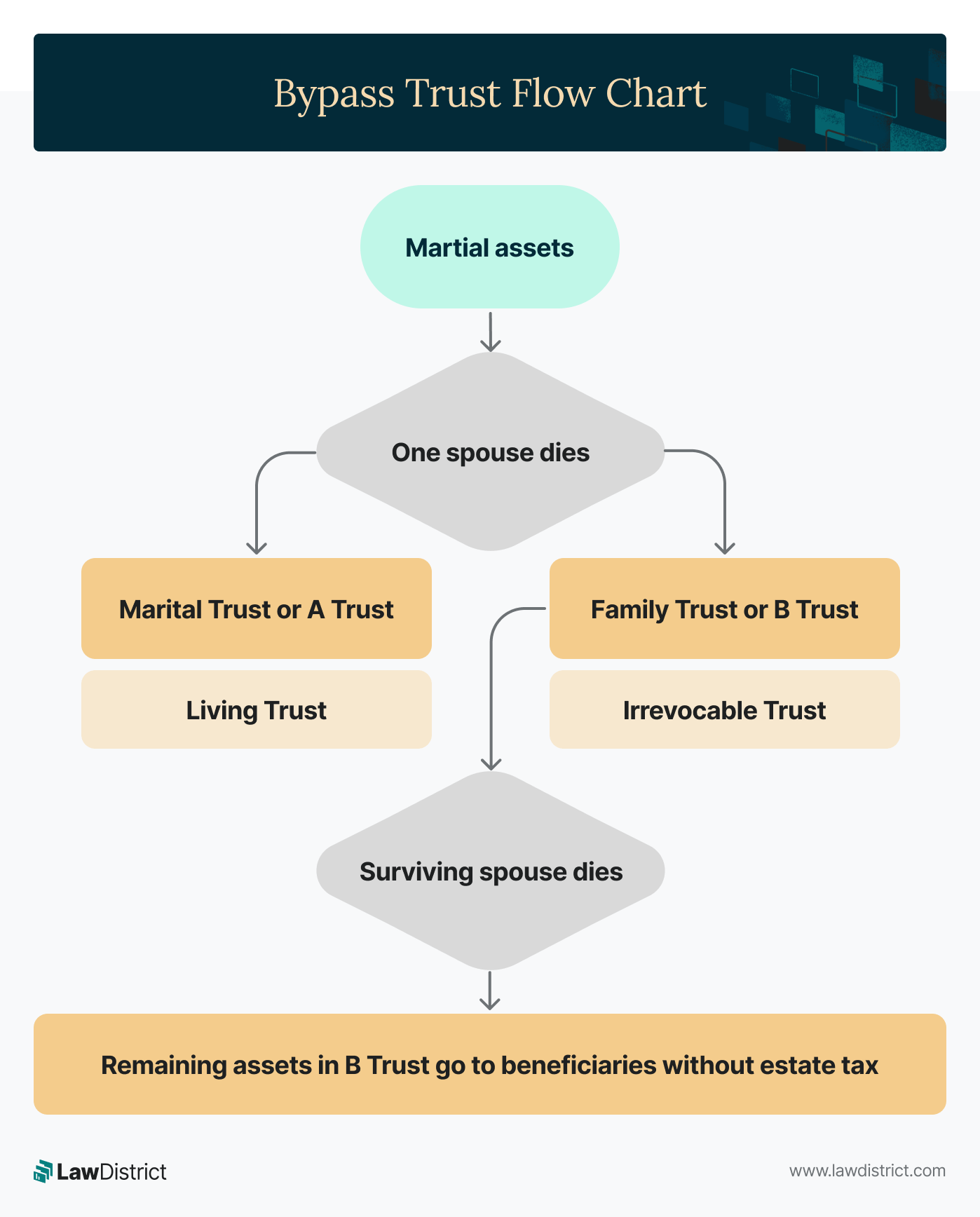
- The estate’s assets move into two separate trusts when one spouse dies. The first one is the marital trust or “A” trust, and the other is the family or “B” trust. The “A” trust is a living trust and, therefore, is revocable, meaning the spouse who set it up can make changes to it during their lifetime. Part “B” is an irrevocable trust, meaning its terms cannot be altered.
- The surviving spouse doesn’t own the assets in the “B” trust but can access its assets and receive income from it. The surviving spouse does have full control over the “A” trust.
- Upon the surviving spouse’s death, any remaining assets in the “B” trust go to the trust’s designated beneficiaries, free from estate tax.
Here is a flow chart representing this process:
Pros and Cons of Bypass Trusts
Like any type of trust, bypass trusts have their advantages and disadvantages. Let’s explore each side.
What are some of the advantages of a bypass trust?
-
The surviving spouse does not need to pay federal or state estate taxes on the assets since they do not own the bypass trust.
-
Assets gained from a bypass trust do not have to go through probate, an often lengthy and costly legal process.
-
The trust shields the assets from any debt their partner may incur if the surviving spouse remarries.
-
The trust also ensures that the surviving spouse’s heirs from another relationship do not receive the trust assets.
What are some of the disadvantages of a bypass trust?
- Beneficiaries of a bypass trust might pay more capital gains tax than if they had inherited the assets from outside the trust.
The IRS tends to view the cost of the assets at their market value on the day the person inherits them rather than what the person who established the trust originally paid for them.
-
Setting up a bypass trust can be a complicated part of an estate plan and usually requires the expertise of an estate planning attorney.
-
A trustee is needed to manage a bypass trust, who oversees asset management according to the terms of the trust.
Many couples use a private trust company, a bank trust department, or a professional fiduciary to serve as the trustee. These professionals typically receive a percentage of the assets as their fee.
State laws vary on estate taxes, and federal estate tax laws are subject to change.
Helpful Resources:
What Is a Bypass Trust?
A bypass trust (also called an AB trust or a credit shelter trust) is an estate planning tool that allows married couples with substantial assets to minimize or avoid estate taxes when one spouse passes away.
Under this legal arrangement, the surviving spouse may receive income from the trust and utilize trust assets during their lifetime.
However, since the surviving spouse does not own these assets, the assets can be transferred to the couple’s heirs after the surviving spouse’s death without the burden of estate taxes.
How Does a Bypass Trust Work?
To set up a bypass trust, each spouse must establish and fund a trust (within their state’s tax exemption limit) that is intended for their surviving spouse’s benefit.
Here are the typical steps followed in a bypass trust:
- The estate’s assets move into two separate trusts when one spouse dies. The first one is the marital trust or “A” trust, and the other is the family or “B” trust. The “A” trust is a living trust and, therefore, is revocable, meaning the spouse who set it up can make changes to it during their lifetime. Part “B” is an irrevocable trust, meaning its terms cannot be altered.
- The surviving spouse doesn’t own the assets in the “B” trust but can access its assets and receive income from it. The surviving spouse does have full control over the “A” trust.
- Upon the surviving spouse’s death, any remaining assets in the “B” trust go to the trust’s designated beneficiaries, free from estate tax.
Here is a flow chart representing this process:
Pros and Cons of Bypass Trusts
Like any type of trust, bypass trusts have their advantages and disadvantages. Let’s explore each side.
What are some of the advantages of a bypass trust?
-
The surviving spouse does not need to pay federal or state estate taxes on the assets since they do not own the bypass trust.
-
Assets gained from a bypass trust do not have to go through probate, an often lengthy and costly legal process.
-
The trust shields the assets from any debt their partner may incur if the surviving spouse remarries.
-
The trust also ensures that the surviving spouse’s heirs from another relationship do not receive the trust assets.
What are some of the disadvantages of a bypass trust?
- Beneficiaries of a bypass trust might pay more capital gains tax than if they had inherited the assets from outside the trust.
The IRS tends to view the cost of the assets at their market value on the day the person inherits them rather than what the person who established the trust originally paid for them.
-
Setting up a bypass trust can be a complicated part of an estate plan and usually requires the expertise of an estate planning attorney.
-
A trustee is needed to manage a bypass trust, who oversees asset management according to the terms of the trust.
Many couples use a private trust company, a bank trust department, or a professional fiduciary to serve as the trustee. These professionals typically receive a percentage of the assets as their fee.
State laws vary on estate taxes, and federal estate tax laws are subject to change.
Helpful Resources: