
Free Resignation Letter Template
A resignation letter serves as a notification to an organization about an employee's decision to terminate their employment. Its aim, besides alerting the company to the employee's departure, is to foster a cordial relationship between both parties.

Select a reason to customize your letter:
Fill forms in a few steps
Save, print & download
Done in 5 minutes
What Is a Resignation Letter?
A Resignation Letter is used to formally tell a company that you are leaving your job.
It's a brief document that explains your decision to quit your job on a certain date, usually with a short reason for the resignation.
Submitting your letter helps your current company manage any disruptions caused by your departure.
By giving them your departure date, they can reallocate resources and start finding your replacement with little disruption.
As always, it is important to review any employment contracts to determine how to appropriately resign.
Resignation Letter Example
Take a look at our example to know exactly what to include in your Resignation Letter.
Use the example to turn in a well-written and professional letter to your employer:
[Your name]
[Address]
[Date]
[Phone number]
[Email address]
[Company Name and Address]
Dear [Name]
I am writing this letter to serve as notice of my resignation from [company name] as of [date].
I have had a fulfilling experience working at [company name] but I have chosen to leave to [reason for resignation]. My last day will be [date of final day].
I would like to take this chance to thank you and [company name] for the opportunity you have given me, as well as for the support that you have provided to me during my time working with you. I wish you both great success moving forward. In the meantime, please let me know if I can assist you in any way during this transition period.
Sincerely,
[Your Name]
Resignation Letter Sample
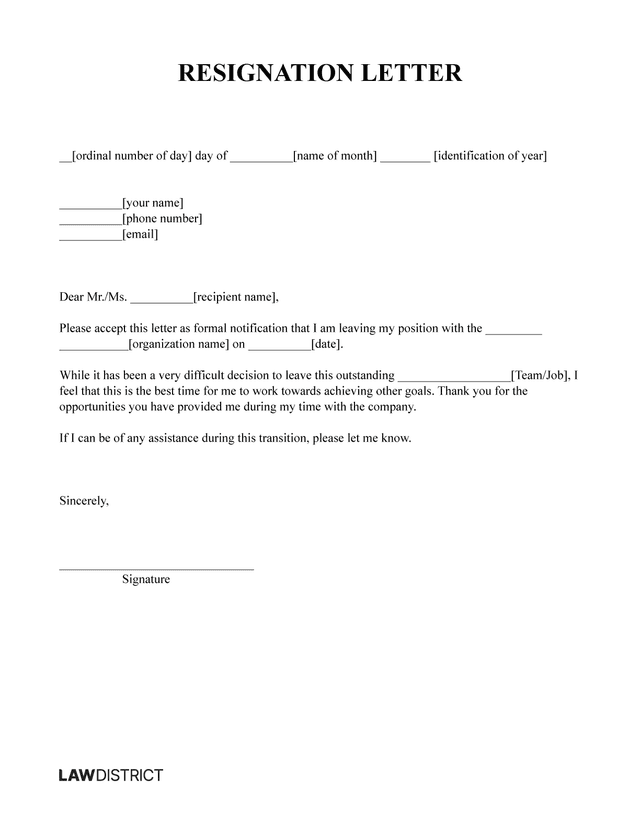
Seeing a finished Resignation Letter can be helpful before you write your own. Review our sample below to understand how a simple template should look when you submit it to your manager.
Resignation Letter Types
There are many types of Resignation Letters you can use. The one you choose will depend on your job, the reason for leaving, and your position level.
Below are some common types of Resignation Letters, along with a brief explanation of their use and benefits.
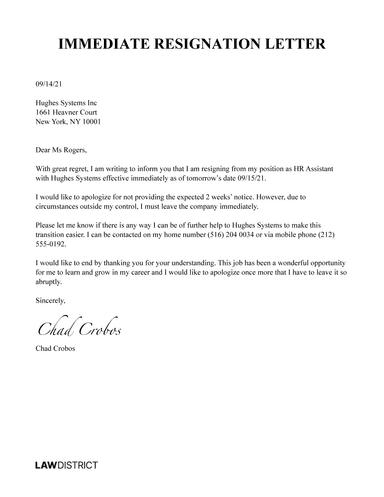
An Immediate Resignation Letter is a formal notice informing an employer of an employee’s urgent departure. It usually states the resignation date and reason for the employee's departure.
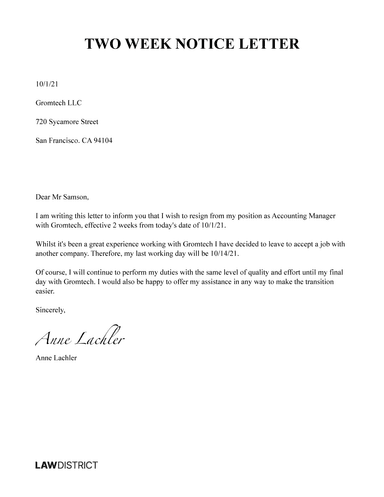
A Two-Week Resignation Letter is a formal notice informing an employer of an employee's departure. Typically, employees express gratitude, state the final workday, and offer to help during the transition.
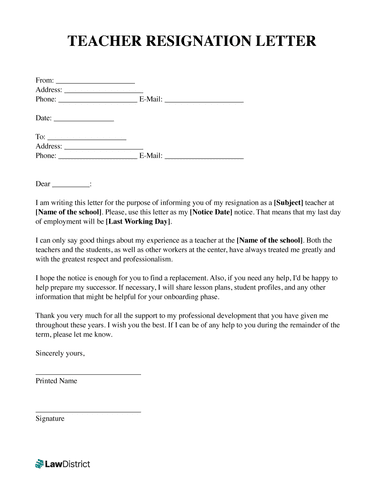
A Teacher Resignation Letter is a formal notice stating a teacher’s decision to leave their job. It serves as official documentation and helps maintain professionalism during the transition.
How To Write a Resignation Letter
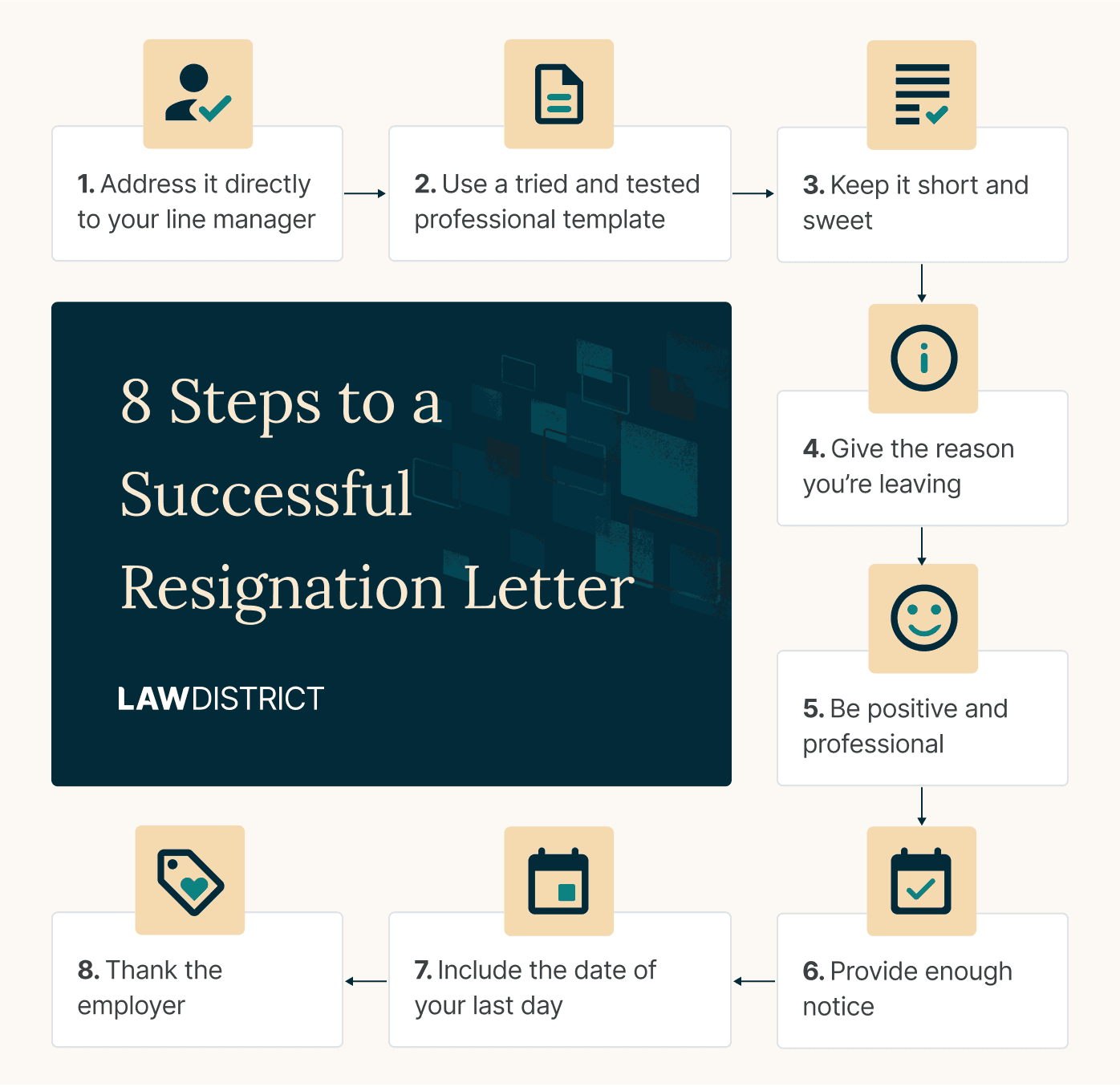
When writing a Resignation Letter, remember to be formal. Whether you liked or disliked your job, you must stay professional.
Use the Correct Tone
It's best to write politely and formally, avoid slang, and use proper titles. Make sure your tone isn't too abrupt.
It’s also a good idea to thank your employer for any support or opportunities.
Keep Your Letter Positive
By staying polite and positive, and focusing on your reasons for leaving, you can end your relationship with the company well.
A Resignation Letter usually goes into your company file and can be important for getting a reference.
Write in Complete Sentences
When drafting your Resignation Letter, write in complete, clear sentences. You don’t need a long, detailed explanation of why you are leaving. Keep it short and simple.
Limit it to One Page
A Resignation Letter usually fits on one page. To keep it readable and neat, use a clear 10-12 point font like Times New Roman or Arial.
While your letter doesn’t need to be very long or complicated, it will need to include several key features. It is important to avoid unnecessary detail and only include relevant and specific information. We’ll explore the key features below.
What To Include in a Resignation Letter
The most important part of a Resignation Letter is to state that you are leaving the company and when.
However, you should include some details. Resignation Letters usually cover the following topics:
- A statement that you are resigning
- The start date of your notice period
- Your last day at work
- A brief reason for leaving
- A short thank you to your manager or company
This list is not complete, but it includes key elements most employers expect. You could also ask for a reference letter or offer to help with the transition.
Resignation Letter FAQs
If you're unsure about how to start your Resignation Letter or have questions, don't worry.
Read our frequently asked questions below to learn how to make your document look its best.
When starting your Resignation Letter, clearly state that you are leaving the company in the first sentence.
After stating your departure, quickly mention the specific date of your last day. These are crucial details to include early in the letter.
Finish your Resignation Letter on a positive note.
The final paragraph should thank your employer for their support and offer help during the transition period.
You can submit a Resignation Letter in several ways, but handing it in person is a reliable method that ensures it's promptly received and acknowledged.
Alternatively, you can send Resignation Letters by email or standard mail, depending on how urgent the notice is. The letter should be provided to HR or to an appropriate manager or supervisor.
Try Lawdistrict Now
Instant and complete access to our entire library of legal forms
Edit, download and print in PDF from any device
Save time and money on legal document creation