



Key Takeaways
- Guardianship abuse involves guardians exploiting incapacitated individuals
- This abuse may lead to depression, financial loss, and physical harm
- Recognizing signs like rapid health decline and isolation is crucial
- You can prevent abuse through proactive estate planning, such as a Power of Attorney
Older adults are prone to incapacitation resulting from mental and other health problems. When they lose their cognitive abilities or are otherwise unable to make decisions for daily living, the court may appoint someone else to do so for them. This person can be a relative or a professional guardian.
Having a guardianship or a conservatorship is a good thing. It can enable an incapacitated person to live as close to normal as possible. Still, having another person decide where you reside, whether you undergo surgery, and how much you spend can make you feel overly dependent.
Sadly, some legal guardians make the situation worse by manipulating and stealing from those they are entrusted to care for. Elder abuse takes many forms and can last years because guardians have the court's backing. And terminating conservatorship can be a slow and painful process.
Let us explore the consequences of elder abuse. We will also discuss how to detect the signs early and how to report these atrocities. First, what is elder abuse?
What Is Guardianship Abuse?
Guardianship is a legal arrangement in which someone else has the authority to make decisions or act on behalf of an incapable older adult (ward). Legal guardians have a fiduciary duty to work in the ward's best interests. Unfortunately, they don’t always fulfill this duty.
Some individuals manipulate the system to gain control over an older person who is perfectly independent and capable of running their life. They do so to steal from them. The following are examples of elder abuse cases:
- Someone petitions a court of law to appoint them as guardians of an independent older person who does not need guardianship.
- A petitioner seeks control of an older person's assets with the sole purpose of stealing from them.
- A guardian sells an older citizen's property when it is not in their best interest.
- Moving an elder to a nursing home without factoring in the consequences.
- A guardian illegally transfers the ward's money and property to others.
- Manipulating an older adult to alter their Will in the guardian's favor.
- Verbal and emotional abuse.
The above list is not exhaustive, but it gives an idea of what guardianship abuse looks like.
The federal and state governments have been enacting statutes to protect older citizens. However, there is still much to be done. For example, in some states, a single court hearing can result in an older person's life being stripped from them and their independence destroyed.
How to Prevent Guardianship Abuse
Many elder guardianship abuses can be prevented by proper estate planning. Families who speak openly about the possibility of future guardianship arrangements can foresee dangers and avoid them.
An older person can prepare by signing a Power of Attorney (POA). The document lets them name whomever they wish to care for them if they become incapacitated. The POA can be springing—meaning it comes into effect following an event. For example, they can state that they assign a son as a caregiver in case of incapacitation.
Quote block: Make sure to check your state’s guidelines on Power of Attorney and what types are accepted.
Making durable POAs for aging parents also ensures that fewer people will likely challenge their decision if they later become incapacitated. People can also use irrevocable trusts and wills to ensure their estates go to their preferred heirs.
What are the Consequences of Guardianship Abuse?
Older people placed under guardianship already feel too dependent on others. When this is coupled with abuse, the result can be devastating.
Depression
Unfortunately, abuse is a leading cause of depression. When older individuals are in constant contact with their abusers, it can cause mental harm and anguish. On the other hand, if a guardian neglects their ward for long periods, perhaps at a nursing home, their mental health may suffer.
Loss of property and money
Poor financial decisions by court-appointed guardians can cost older persons their life savings and cherished belongings.
Broken family ties
Transferring an older person to a nursing home or a location far from other friends and family can result in broken family ties during a vulnerable time when they need as much support as possible.
Physical harm
Physical abuse, unnecessary restraint, a lack of help with daily tasks, or improper medical care can all result in bodily harm.
Unending court battles
Revoking guardianship can take years. Convincing a court that has already declared you incapacitated to reconsider can take time, energy, and money that an older person may not have.
Death due to poor medical decisions
When a conservator has guardianship of the person, they get to make medical decisions for the ward. If a guardian gives a "do not resuscitate" order, a patient may die when they could have otherwise survived.
A vulnerable person may be placed in a care facility with a poor reputation because it’s the cheapest option available. If they’re not cared for appropriately, this could also lead to their demise.
Guardians may also insist on keeping them at home when they need a higher level of care. However, DNRs, or a desire to remain in their home, could be decisions the older adult makes, and the guardian is simply attempting to respect their final wishes.
Signs of Guardianship Abuse
Staying alert to your loved one's behavior and appearance helps catch abuse before it is too late. Look for the following signs:
- Signs of depression
- A rapid decline in health
- Preventing the ward from meeting or speaking to other people on the phone
- Denying the ward access to a lawyer
- Preventing them from seeing a doctor
- Unexplained spending
- Unexplained withdrawal from activities they enjoy
- Bruises or bedsores
- Poor hygiene
- Constantly moving from one location to another
Act fast by reporting elder abuse to the authorities. There are several elder abuse laws to protect victims.
How to Report Guardianship Abuse
There are many avenues to address suspected elder guardianship abuse.
-
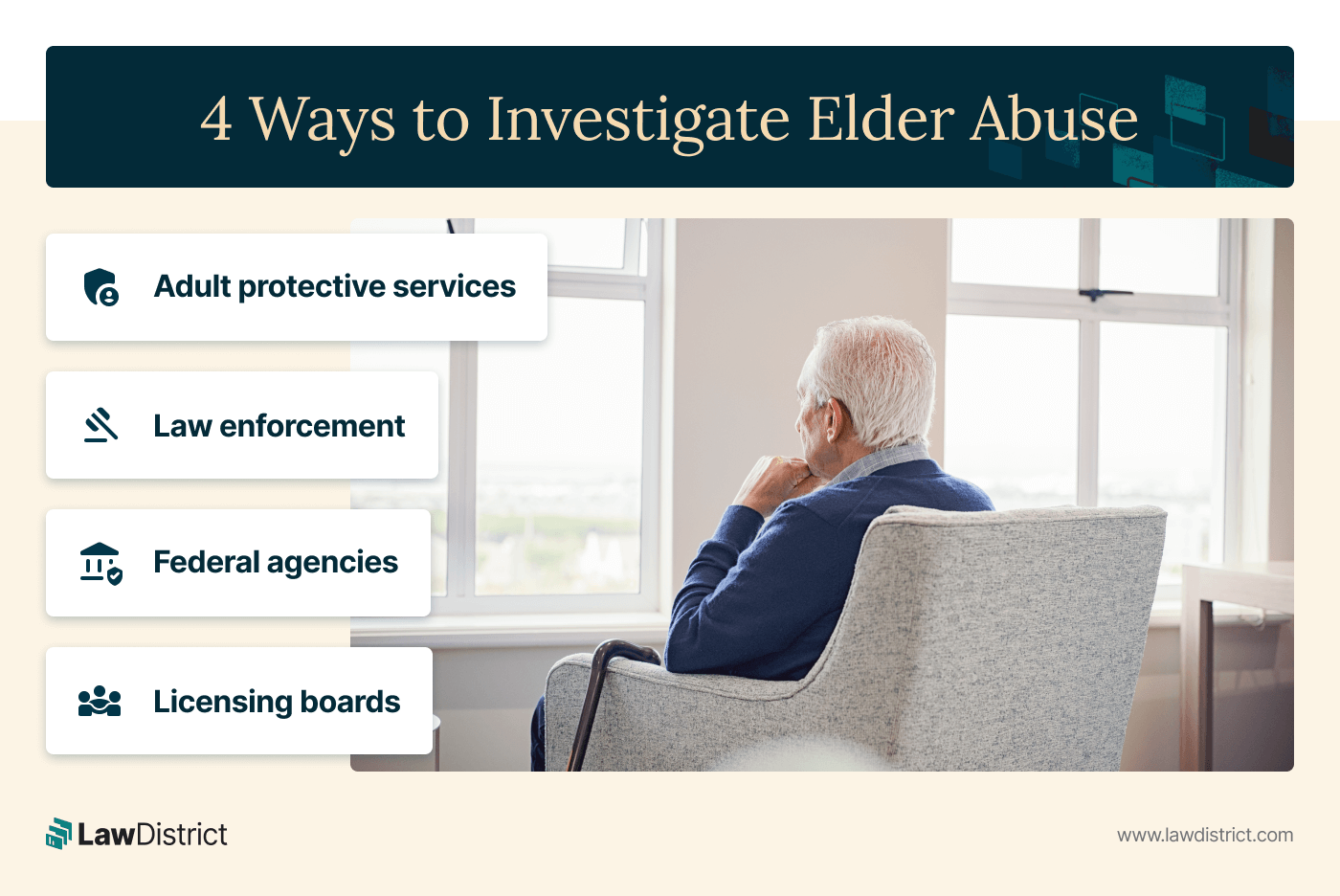
Adult protective services: Find local adult protective services through the eldercare locator. You must enter your zip code/city/state to search for contacts in your area.
-
Law enforcement: Some guardianship abuse cases fit the definition of criminal offenses. You can report these to your local law enforcement agency or the attorney general, or call 911.
-
Federal agencies: Some guardians have access to a ward's public benefits. If they misuse these funds, report them to the Social Security Administration Office of the Inspector General.
-
Licensing boards: If the abusive guardian belongs to a certification, licensing, or registration board, that body should be able to investigate your suspicions.
You may also petition a court to stop the mistreatment of older persons. The court can freeze assets and bank accounts if there is adequate suspicion of abuse or neglect. A court can order compensation for lost assets or property if it ascertains financial abuse. Restoration is more straightforward if the guardian obtains a bond at their appointment.
The court can limit the guardian's powers or appoint a co-guardian to increase accountability. Sometimes, courts replace a guardian with a more suitable person or terminate the guardianship arrangement if it is unnecessary.
How To Prevent Guardianship Abuse
Many elder guardianship abuses can be prevented by proper estate planning. Families who speak openly about the possibility of future guardianship arrangements can foresee dangers and avoid them.
An older person can prepare by signing a Power of Attorney (POA). The document lets them name whoever they wish to care for them if they become incapacitated. The POA can be springing—meaning it comes into effect following an event. For example, they can state that they assign a son as a caregiver in case of incapacitation.
Making durable POAs for aging parents also ensures that fewer people will likely challenge their decision if they later become incapacitated. People can also use irrevocable trusts and wills to ensure their estates go to their preferred heirs.
Helpful Resources:
Key Takeaways
- Guardianship abuse involves guardians exploiting incapacitated individuals
- This abuse may lead to depression, financial loss, and physical harm
- Recognizing signs like rapid health decline and isolation is crucial
- You can prevent abuse through proactive estate planning, such as a Power of Attorney
Older adults are prone to incapacitation resulting from mental and other health problems. When they lose their cognitive abilities or are otherwise unable to make decisions for daily living, the court may appoint someone else to do so for them. This person can be a relative or a professional guardian.
Having a guardianship or a conservatorship is a good thing. It can enable an incapacitated person to live as close to normal as possible. Still, having another person decide where you reside, whether you undergo surgery, and how much you spend can make you feel overly dependent.
Sadly, some legal guardians make the situation worse by manipulating and stealing from those they are entrusted to care for. Elder abuse takes many forms and can last years because guardians have the court's backing. And terminating conservatorship can be a slow and painful process.
Let us explore the consequences of elder abuse. We will also discuss how to detect the signs early and how to report these atrocities. First, what is elder abuse?
What Is Guardianship Abuse?
Guardianship is a legal arrangement in which someone else has the authority to make decisions or act on behalf of an incapable older adult (ward). Legal guardians have a fiduciary duty to work in the ward's best interests. Unfortunately, they don’t always fulfill this duty.
Some individuals manipulate the system to gain control over an older person who is perfectly independent and capable of running their life. They do so to steal from them. The following are examples of elder abuse cases:
- Someone petitions a court of law to appoint them as guardians of an independent older person who does not need guardianship.
- A petitioner seeks control of an older person's assets with the sole purpose of stealing from them.
- A guardian sells an older citizen's property when it is not in their best interest.
- Moving an elder to a nursing home without factoring in the consequences.
- A guardian illegally transfers the ward's money and property to others.
- Manipulating an older adult to alter their Will in the guardian's favor.
- Verbal and emotional abuse.
The above list is not exhaustive, but it gives an idea of what guardianship abuse looks like.
The federal and state governments have been enacting statutes to protect older citizens. However, there is still much to be done. For example, in some states, a single court hearing can result in an older person's life being stripped from them and their independence destroyed.
How to Prevent Guardianship Abuse
Many elder guardianship abuses can be prevented by proper estate planning. Families who speak openly about the possibility of future guardianship arrangements can foresee dangers and avoid them.
An older person can prepare by signing a Power of Attorney (POA). The document lets them name whomever they wish to care for them if they become incapacitated. The POA can be springing—meaning it comes into effect following an event. For example, they can state that they assign a son as a caregiver in case of incapacitation.
Quote block: Make sure to check your state’s guidelines on Power of Attorney and what types are accepted.
Making durable POAs for aging parents also ensures that fewer people will likely challenge their decision if they later become incapacitated. People can also use irrevocable trusts and wills to ensure their estates go to their preferred heirs.
What are the Consequences of Guardianship Abuse?
Older people placed under guardianship already feel too dependent on others. When this is coupled with abuse, the result can be devastating.
Depression
Unfortunately, abuse is a leading cause of depression. When older individuals are in constant contact with their abusers, it can cause mental harm and anguish. On the other hand, if a guardian neglects their ward for long periods, perhaps at a nursing home, their mental health may suffer.
Loss of property and money
Poor financial decisions by court-appointed guardians can cost older persons their life savings and cherished belongings.
Broken family ties
Transferring an older person to a nursing home or a location far from other friends and family can result in broken family ties during a vulnerable time when they need as much support as possible.
Physical harm
Physical abuse, unnecessary restraint, a lack of help with daily tasks, or improper medical care can all result in bodily harm.
Unending court battles
Revoking guardianship can take years. Convincing a court that has already declared you incapacitated to reconsider can take time, energy, and money that an older person may not have.
Death due to poor medical decisions
When a conservator has guardianship of the person, they get to make medical decisions for the ward. If a guardian gives a "do not resuscitate" order, a patient may die when they could have otherwise survived.
A vulnerable person may be placed in a care facility with a poor reputation because it’s the cheapest option available. If they’re not cared for appropriately, this could also lead to their demise.
Guardians may also insist on keeping them at home when they need a higher level of care. However, DNRs, or a desire to remain in their home, could be decisions the older adult makes, and the guardian is simply attempting to respect their final wishes.
Signs of Guardianship Abuse
Staying alert to your loved one's behavior and appearance helps catch abuse before it is too late. Look for the following signs:
- Signs of depression
- A rapid decline in health
- Preventing the ward from meeting or speaking to other people on the phone
- Denying the ward access to a lawyer
- Preventing them from seeing a doctor
- Unexplained spending
- Unexplained withdrawal from activities they enjoy
- Bruises or bedsores
- Poor hygiene
- Constantly moving from one location to another
Act fast by reporting elder abuse to the authorities. There are several elder abuse laws to protect victims.
How to Report Guardianship Abuse
There are many avenues to address suspected elder guardianship abuse.
-
Adult protective services: Find local adult protective services through the eldercare locator. You must enter your zip code/city/state to search for contacts in your area.
-
Law enforcement: Some guardianship abuse cases fit the definition of criminal offenses. You can report these to your local law enforcement agency or the attorney general, or call 911.
-
Federal agencies: Some guardians have access to a ward's public benefits. If they misuse these funds, report them to the Social Security Administration Office of the Inspector General.
-
Licensing boards: If the abusive guardian belongs to a certification, licensing, or registration board, that body should be able to investigate your suspicions.
You may also petition a court to stop the mistreatment of older persons. The court can freeze assets and bank accounts if there is adequate suspicion of abuse or neglect. A court can order compensation for lost assets or property if it ascertains financial abuse. Restoration is more straightforward if the guardian obtains a bond at their appointment.
The court can limit the guardian's powers or appoint a co-guardian to increase accountability. Sometimes, courts replace a guardian with a more suitable person or terminate the guardianship arrangement if it is unnecessary.
How To Prevent Guardianship Abuse
Many elder guardianship abuses can be prevented by proper estate planning. Families who speak openly about the possibility of future guardianship arrangements can foresee dangers and avoid them.
An older person can prepare by signing a Power of Attorney (POA). The document lets them name whoever they wish to care for them if they become incapacitated. The POA can be springing—meaning it comes into effect following an event. For example, they can state that they assign a son as a caregiver in case of incapacitation.
Making durable POAs for aging parents also ensures that fewer people will likely challenge their decision if they later become incapacitated. People can also use irrevocable trusts and wills to ensure their estates go to their preferred heirs.
Helpful Resources:
Most Popular Posts

Some states require a motor vehicle bill of sale form; others do not. Even if only for your personal records, anyone who buys or sells a vehicle needs

If your minor child travels alone in the United States, you will most likely be required to complete documentation through the airline's...