



Key Takeaways
- A comprehensive employee handbook is essential for setting clear expectations and ensuring legal compliance with employment rules and regulations.
- Prioritize key federal regulations like the FLSA and FMLA over listing all 180+ labor laws.
- State and local laws vary significantly and require separate, specific research for compliant employment policies.
- Stay vigilant for constant state-level policy updates on issues like minimum wage and paid leave.
A staff handbook plays a significant role in the smooth running of your business. It allows every new employee to know what is expected of them and what they should expect from you. It also creates uniformity in handling workplace issues while providing an accessible place to express the company's values and commitment to employees.
Here is a common question employers may have: is an employee handbook required by law? While it might not always be strictly mandatory, having one is essential to protect and set clear expectations.
However, many employers struggle with where to begin drafting and what to include. The key is to consider your business's unique makeup. The best policies for your team:
- take into account the nature of the work you do
- possible workplace risks
- your location
- any other needs
Proper research and timely updates protect you from misunderstandings and ensure that everyone feels safe with sufficient guidance.
Selecting what works for you is crucial, as your handbook shouldn’t be so cumbersome that no one reads it. This article discusses policies and federal laws you should include in your employee handbook in 2026.
Major Laws of the Department of Labor
It is unrealistic to include the over 180 federal laws that the Department of Labor enforces. Instead, choose the most crucial for your team by considering its far-reaching effects. Below are examples of federal laws of the Department of Labor.
Laws regarding wages and hours
The Fair Labor Standards Act (FLSA) covers the hourly wage, overtime payment, recordkeeping, and child labor cases, among other things.
Laws affecting leave days
The Family and Medical Leave Act stipulates that employees may be entitled to up to 12 work weeks of leave per year. They can take time away for the birth of a child and the placement of a child for adoption or foster care, among other reasons.
Employees may also be entitled to 26 workweeks of military caregiver leave within a year if they must care for a seriously injured servicemember. That injured servant should be a close relative, such as a spouse, daughter, son, parent, or next of kin.
Start a Leave of Absence Letter now
Workplace safety and workers' health laws
Workplace injuries and health hazards can instantly change a worker's life. The Occupational Safety and Health Act aims to educate employees and employers on ways to stay safe and tackle incidents whenever they occur.
Employee benefits security laws
These laws encompass many acts, including the Affordable Care Act. Your employees must understand whether their position includes benefits such as a health care plan and who and how old their dependents can be. New employees should receive the notice within 14 days. Other matters include retirement benefits to which they are entitled.
Depending on your line of business, you may need to add industry-specific clauses. The full Code of Federal Regulations (Title 29) has all the details on labor laws you may need to reference.
What Is the Difference Between Laws and Policies?
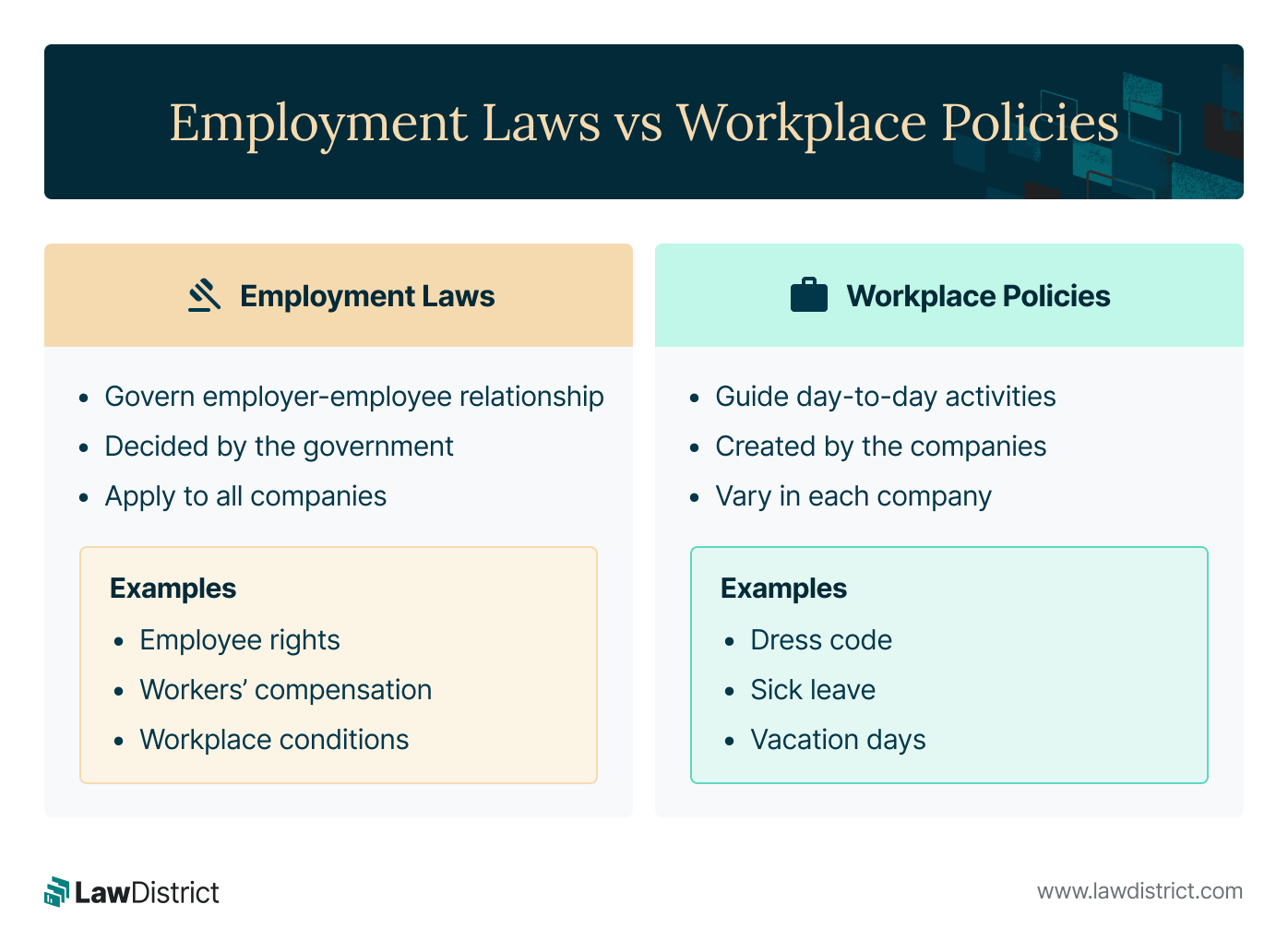
Employment laws differ from workplace policies. They are governed by federal, state, and county governments and are primarily concerned with the employer-employee relationship. These laws address issues such as:
- Workplace conditions
- Employee safety standards
- Employee rights
- Workers’ compensation
Conversely, policies cover issues related to a company's day-to-day activities and may differ from one company to another. These issues include:
- Dress code
- Sick leave
- Vacation days
- Length of breaks
- Employee benefits
Since employers create company policies, they rarely violate federal or state laws unless the violation is stipulated in the employment contract or directly connected to an employment law.
Employment Laws to Include in an Employee Handbook
Every state has specific laws that it enforces more than others. Do not only add the federal laws you consider most crucial but research at the state and county level to know which employment laws to focus on and to what extent.
Additionally, consult other experienced employers and ask for guidance on what to include. Some may be willing to give you an employee handbook template for reference (e.g., an HVAC employee handbook template). Employment law examples you will find in almost every employee handbook are:
- The Equal Employment Act
- Age Discrimination in Employment Act (ADEA)
- National Labor Relations Act (NLRA)
- The Fair Labor Standards Act (FLSA)
- The Family and Medical Leave Act (FMLA)
- The Occupational Safety and Health Act (OSH Act)
Understanding and adding these provisions to your employee handbook will ensure you develop a powerful document. Your employees will feel valued and will likely create loyalty.
Federal Policies to Address in an Employee Handbook
Some federal laws require employers to provide additional workplace guidelines via a written policy. This requirement ensures you capture key expectations every business should address as they handle employees. These federal policies include the following:
- Equal Employment and Non-Discrimination
- Accommodations for People with Disabilities
- Military Leave Policies
- Crime Victim Leave Policies
- Family and Medical Leave
- Worker’s Compensation Policies
- Anti-Harassment Policy
- Communication policies
- Discipline and termination policies
Each state may have variations in how it addresses these laws. For example, some states require employers to provide reasons for terminating an employee, while others require you to give a notice period.
Get Your Employee Handbook Template
2026 Employee Handbook Policy Updates
The local and state authorities keep updating the policies that may make your employee handbook outdated or leave a loophole that an employee can exploit.
The following are examples of some policy changes from various states that you need to have in mind as you craft your employee handbook:
- California: The state minimum wage increases to $16.90/hour in 2026, which will cause not only wages but also overtime calculations to be modified.
- Colorado: a FAMLI expansion adds neonatal care leave for up to 12 weeks for claims on or after January 1, 2026.
- Delaware: 2026 marks the start of Delaware Paid Leave, its new paid family and medical leave insurance program, which will cover leave for parents, family caregiving, and medical and military exigencies.
- Washington: Minimum wage increases to $17.13 on January 1, 2026, making it necessary to update manuals with the new information.
The employee handbook requirements by state vary, so you must be vigilant as you draft your copy. You may also need to check for new updates regularly and implement them as needed.
Helpful Resources:
U.S. Department of Labor - Wages and the Fair Labor Standards Act
U.S. Department of Labor - Family and Medical Leave Act
Key Takeaways
- A comprehensive employee handbook is essential for setting clear expectations and ensuring legal compliance with employment rules and regulations.
- Prioritize key federal regulations like the FLSA and FMLA over listing all 180+ labor laws.
- State and local laws vary significantly and require separate, specific research for compliant employment policies.
- Stay vigilant for constant state-level policy updates on issues like minimum wage and paid leave.
A staff handbook plays a significant role in the smooth running of your business. It allows every new employee to know what is expected of them and what they should expect from you. It also creates uniformity in handling workplace issues while providing an accessible place to express the company's values and commitment to employees.
Here is a common question employers may have: is an employee handbook required by law? While it might not always be strictly mandatory, having one is essential to protect and set clear expectations.
However, many employers struggle with where to begin drafting and what to include. The key is to consider your business's unique makeup. The best policies for your team:
- take into account the nature of the work you do
- possible workplace risks
- your location
- any other needs
Proper research and timely updates protect you from misunderstandings and ensure that everyone feels safe with sufficient guidance.
Selecting what works for you is crucial, as your handbook shouldn’t be so cumbersome that no one reads it. This article discusses policies and federal laws you should include in your employee handbook in 2026.
Major Laws of the Department of Labor
It is unrealistic to include the over 180 federal laws that the Department of Labor enforces. Instead, choose the most crucial for your team by considering its far-reaching effects. Below are examples of federal laws of the Department of Labor.
Laws regarding wages and hours
The Fair Labor Standards Act (FLSA) covers the hourly wage, overtime payment, recordkeeping, and child labor cases, among other things.
Laws affecting leave days
The Family and Medical Leave Act stipulates that employees may be entitled to up to 12 work weeks of leave per year. They can take time away for the birth of a child and the placement of a child for adoption or foster care, among other reasons.
Employees may also be entitled to 26 workweeks of military caregiver leave within a year if they must care for a seriously injured servicemember. That injured servant should be a close relative, such as a spouse, daughter, son, parent, or next of kin.
Start a Leave of Absence Letter now
Workplace safety and workers' health laws
Workplace injuries and health hazards can instantly change a worker's life. The Occupational Safety and Health Act aims to educate employees and employers on ways to stay safe and tackle incidents whenever they occur.
Employee benefits security laws
These laws encompass many acts, including the Affordable Care Act. Your employees must understand whether their position includes benefits such as a health care plan and who and how old their dependents can be. New employees should receive the notice within 14 days. Other matters include retirement benefits to which they are entitled.
Depending on your line of business, you may need to add industry-specific clauses. The full Code of Federal Regulations (Title 29) has all the details on labor laws you may need to reference.
What Is the Difference Between Laws and Policies?
Employment laws differ from workplace policies. They are governed by federal, state, and county governments and are primarily concerned with the employer-employee relationship. These laws address issues such as:
- Workplace conditions
- Employee safety standards
- Employee rights
- Workers’ compensation
Conversely, policies cover issues related to a company's day-to-day activities and may differ from one company to another. These issues include:
- Dress code
- Sick leave
- Vacation days
- Length of breaks
- Employee benefits
Since employers create company policies, they rarely violate federal or state laws unless the violation is stipulated in the employment contract or directly connected to an employment law.
Employment Laws to Include in an Employee Handbook
Every state has specific laws that it enforces more than others. Do not only add the federal laws you consider most crucial but research at the state and county level to know which employment laws to focus on and to what extent.
Additionally, consult other experienced employers and ask for guidance on what to include. Some may be willing to give you an employee handbook template for reference (e.g., an HVAC employee handbook template). Employment law examples you will find in almost every employee handbook are:
- The Equal Employment Act
- Age Discrimination in Employment Act (ADEA)
- National Labor Relations Act (NLRA)
- The Fair Labor Standards Act (FLSA)
- The Family and Medical Leave Act (FMLA)
- The Occupational Safety and Health Act (OSH Act)
Understanding and adding these provisions to your employee handbook will ensure you develop a powerful document. Your employees will feel valued and will likely create loyalty.
Federal Policies to Address in an Employee Handbook
Some federal laws require employers to provide additional workplace guidelines via a written policy. This requirement ensures you capture key expectations every business should address as they handle employees. These federal policies include the following:
- Equal Employment and Non-Discrimination
- Accommodations for People with Disabilities
- Military Leave Policies
- Crime Victim Leave Policies
- Family and Medical Leave
- Worker’s Compensation Policies
- Anti-Harassment Policy
- Communication policies
- Discipline and termination policies
Each state may have variations in how it addresses these laws. For example, some states require employers to provide reasons for terminating an employee, while others require you to give a notice period.
Get Your Employee Handbook Template
2026 Employee Handbook Policy Updates
The local and state authorities keep updating the policies that may make your employee handbook outdated or leave a loophole that an employee can exploit.
The following are examples of some policy changes from various states that you need to have in mind as you craft your employee handbook:
- California: The state minimum wage increases to $16.90/hour in 2026, which will cause not only wages but also overtime calculations to be modified.
- Colorado: a FAMLI expansion adds neonatal care leave for up to 12 weeks for claims on or after January 1, 2026.
- Delaware: 2026 marks the start of Delaware Paid Leave, its new paid family and medical leave insurance program, which will cover leave for parents, family caregiving, and medical and military exigencies.
- Washington: Minimum wage increases to $17.13 on January 1, 2026, making it necessary to update manuals with the new information.
The employee handbook requirements by state vary, so you must be vigilant as you draft your copy. You may also need to check for new updates regularly and implement them as needed.
Helpful Resources:
U.S. Department of Labor - Wages and the Fair Labor Standards Act
U.S. Department of Labor - Family and Medical Leave Act
Most Popular Posts

Some states require a motor vehicle bill of sale form; others do not. Even if only for your personal records, anyone who buys or sells a vehicle needs

If you plan to travel with a minor, whether or not you are their parent, you can minimize inconveniences by carrying a few necessary documents...