
Employee Write-Up Form
An Employee Write-Up Form is a formal document used to record workplace misconduct, performance issues, or policy violations. You can use it to outline the incident, corrective action, and next steps to document concerns and maintain consistent disciplinary records.

Fill forms in a few steps
Save, print & download
Done in 5 minutes
What Is a Write-Up Form?
An Employee Write-Up Form is an employment form that allows employers to formally record workplace issues such as misconduct or poor performance.
It details the incident, sets future expectations, and outlines required corrective actions.
This helps to guarantee consistent disciplinary practices and creates a reliable paper trail, complete with space for employee comments and signatures.
Write-Up Form Sample
To understand how your Work Write-Up Form should be formatted and what it should generally contain, take a look at the following example.
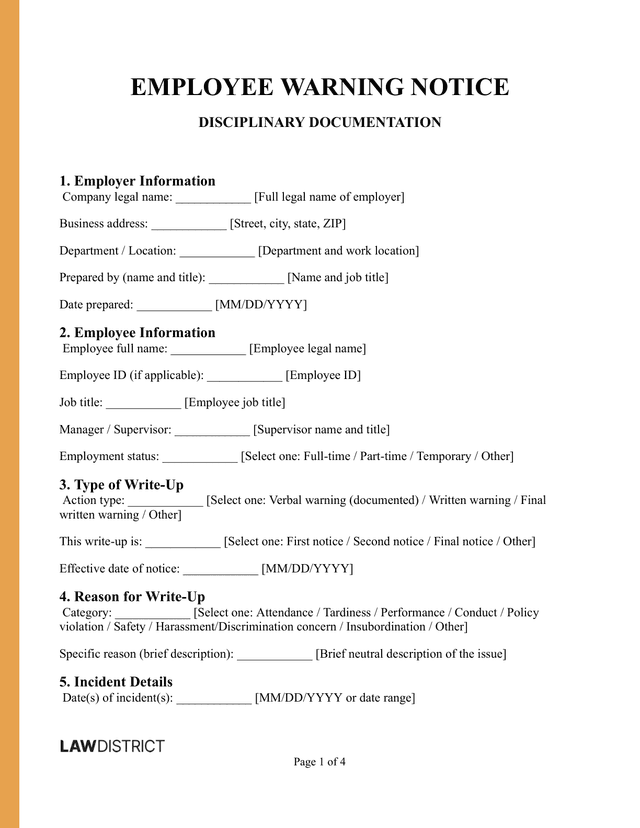
When To Write Up an Employee
An Employee Write-Up should be used when issues persist despite prior feedback or when serious incidents occur.
Some common situations in which you should use this form include the following:
- Repeated violations: When an employee keeps breaking the rules even after being told not to.
- Performance issues: Includes ongoing poor performance issues and missed deadlines.
- Poor attendance: If the worker is frequently late or does not show up for work.
- Serious offenses: When an employee violates safety rules or does not follow orders.
- Lack of improvement: When informal coaching or prior discussions have not resolved the issue.
Using a write-up at the right time helps your whole organization be fair and responsible and can help you avoid legal issues in the long term.
When Not To Use a Write-Up Form
A write-up form should not be used for every workplace issue. In some cases, a conversation, clarification, or HR review is more appropriate. Avoid using a write-up form when:
- The issue is minor: A one-time mistake may only need informal feedback.
- Facts are unclear: You should gather details before creating a formal record.
- Expectations were not explained: Employees should know the rules and standards first; if they were not explained, avoid using a Write-Up form.
- HR involvement is needed: Serious legal or sensitive issues may need a different process.
How To Write an Employee Write-Up Form
To complete an employee write-up form correctly, it is important to follow a clear structure and include all relevant details. Follow these steps to create your form:
- Include employee information: Add the employee's full name, job title, and department
- Add the incident date: Mention when the issue or violation took place
- Describe the issue: Provide an objective summary of the issue or violation
- Reference company policies: Mention any rules or policies that were violated
- Explain previous actions: Note prior warnings or discussions, if applicable
- Outline corrective actions: Specify expectations and next steps for improvement
- Include employee comments: Allow space for the worker's response
- Add signatures: Sign the form along with the worker to formally acknowledge the record
Create your document using our Employee Write-Up Form template to help you make sure all necessary information is included for your specific case. Once it has been created, you can have it looked over by a legal professional.
FAQs About Write-Up Forms
A verbal warning is an informal talk about a problem. A Write-Up form, on the other hand, is written and is usually used for more serious or ongoing problems.
The number of Write-Ups are needed before firing an employee depends on your company policy and the severity of the problem.
Some companies use progressive discipline, while others may fire you right away for serious violations without giving you a written warning first.
In most states, workers have the right to access their personnel files, which include write-ups and records of disciplinary actions.
Laws vary by state, and employers can set reasonable rules for access, such as requiring written copies or scheduling a review.
Try Lawdistrict Now
Instant and complete access to our entire library of legal forms
Edit, download and print in PDF from any device
Save time and money on legal document creation