
Personal Financial Statement Template
A Personal Financial Statement provides a clear overview of your assets, liabilities, income, and expenses. It’s often required for loan applications or legal proceedings, and helps evaluate your financial standing.

Fill forms in a few steps
Save, print & download
Done in 5 minutes
What Is a Personal Financial Statement?
A Personal Financial Statement is a summary of your financial situation at a specific point in time. It includes what you own (assets), what you owe (liabilities), and your overall net worth.
This legal document is commonly used to determine creditworthiness by:
- Banks
- Lenders
- Landlords
You may also need it during legal processes like divorce settlements or estate planning.
In business, it helps partners or investors assess your personal backing.
Completing a Personal Financial Statement form gives you insight into your finances. It gives you an idea of your current situation, and show where you might need to make some adjustments.
The document is especially useful if you’re:
- Applying for a personal loan
- Acting as a guarantor
- Making a large investment
LawDistrict provides a ready-to-use Personal Financial Statement template, so you can quickly make a professional and comprehensive document.
Personal Financial Statement Example
If you’re wondering what a Personal Financial Statement looks like, you should take a look at a completed version of the document. This can give you a better idea of structure, tone, and formatting that’s typically used when writing these statements.
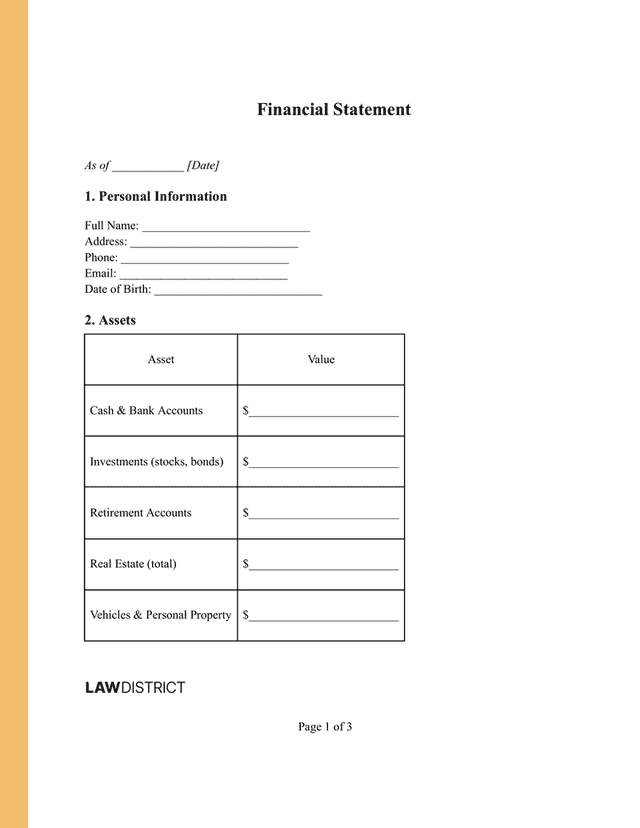
How To Fill Out a Personal Financial Statement?
Wondering how to make a financial statement? Here’s what to include in your form:
Personal Information
Your full name, address, contact info, and social security number. Also include employment status and employer details.
Assets
Give a detailed summary of your personal assets, including:
- Cash on hand
- Bank account balances
- Real estate market values
- Vehicles, jewelry, and other personal property
- Investments in stocks, bonds, mutual funds
- Retirement accounts like IRAs or 401(k)s
Liabilities
Next, mention any of your financial liabilities, such as:
- Mortgage balance
- Credit card debt
- Auto loans
- Student loans
- Other personal debts
Income
Specify any sources of income:
- Salary and wages
- Commissions and bonuses
- Dividends and interest
- Rental income
- Business income
Expenses
List your outgoing expenses:
- Mortgage or rent
- Utility bills
- Insurance premiums
- Loan repayments
- Day-to-day expenses
Net Worth
Calculate total assets minus total liabilities. This figure is your current net worth.
Contingent Liabilities
Any obligations you’re responsible for only if another party fails to pay. For example, a co-signed loan.
FAQs About Personal Financial Statement
Here are the most common questions LawDistrict users have before they begin their draft of a Personal Financial Statement.
“Pledged” refers to any assets that you have promised as collateral for a loan or debt. These assets are tied to a financial obligation, so they’re not freely available.
You can draft your own Personal Financial Statement using our template as a guide. Consider having a legal professional review this document when you’ve finished. They can make sure that it meets all requirements in your jurisdiction.
Financial Statements only reflect your status at a specific point in time.
You should update your document if you're applying for a new loan or if there are any significant changes to your financial situation.
Try Lawdistrict Now
Instant and complete access to our entire library of legal forms
Edit, download and print in PDF from any device
Save time and money on legal document creation