
Personal & Corporate Guarantee Template
A Personal or Corporate Guarantee is a legal document where a person or company agrees to repay a debt if the original borrower fails to do so. Lenders often require this agreement to reduce financial risk.

Guarantee provider:
Fill forms in a few steps
Save, print & download
Done in 5 minutes
What is a Personal Guarantee?
A Personal Guarantee is a legal promise by an individual to repay a debt if the borrower defaults.
This legal document is commonly used in:
- Business loans
- Leases
- Credit agreements
They give lenders a way to recover losses if the borrower cannot pay their debt.
In many cases, lenders typically request a Personal Guarantee when the business or individual has:
- Limited credit history
- Insufficient assets
By signing the guarantee, the individual agrees that their personal assets may be used to cover the unpaid debt if the borrower cannot repay it.
Essential Components of a Personal Guarantee
A Personal Guarantee should contain the following details:
| Component | Description |
|---|---|
| Parties involved | Identifies the lender, borrower, and guarantor. |
| Guaranteed obligation | Specifies the loan, lease, or agreement being guaranteed. |
| Liability terms | Defines whether the guarantee is limited or unlimited. |
| Payment conditions | Explains when the guarantor must repay the debt. |
| Governing law | States which state laws apply to the agreement. |
| Signatures | Requires signatures from the guarantor and often the lender. |
Common Uses of a Personal Guarantee
Personal Guarantees are used in many financial and commercial situations. Some common situations include:
- Small business loans
- Commercial leases
- Credit lines
- Startup financing
- Vendor agreements
What is a Corporate Guarantee?
A Corporate Guarantee is a legal agreement where a company promises to repay a debt owed by another company if the borrower does not pay.
These guarantees are common in:
- Corporate groups
- Parent-subsidiary relationships
For example, a parent company may guarantee a loan taken by its subsidiary.
Corporate Guarantees are often used in:
- Commercial lending
- Project financing
- Large contracts
Key Components of a Corporate Guarantee Form
A Corporate Guarantee should clearly outline the obligations and responsibilities of the company acting as guarantor. It contains similar components to the Personal Guarantee Form:
| Component | Description |
|---|---|
| Parties Identification | Identifies the lender, borrower, and guarantor company involved in the agreement. |
| Guaranteed Obligation | Describes the loan, lease, or financial agreement being guaranteed. |
| Scope of Liability | Specifies whether the guarantee is limited or covers the full obligation. |
| Payment Trigger | Explains the conditions under which the guarantor must repay the debt. |
| Governing Law | States the legal jurisdiction and laws that apply to the agreement. |
| Authorized Signatures | Includes signatures from authorized representatives of the guarantor company. |
Types of Guarantee Agreements
Guarantee agreements can vary depending on the level of responsibility and the type of transaction involved.
Limited Guarantee
A limited guarantee restricts the guarantor’s liability to a specific amount or portion of the debt. This type of agreement reduces financial risk for the guarantor.
Unlimited Guarantee
An unlimited guarantee holds the guarantor responsible for the entire debt. This may include the:
- Principal
- Interest
- Fees
- Legal costs
Business Loan Guarantee
A business loan guarantee is commonly required when a lender finances a company. Business owners or related entities may guarantee repayment if the business cannot meet its loan obligations.
Commercial Lease Guarantee
A commercial lease guarantee ensures rent and other obligations are paid if the tenant fails to fulfill the lease agreement. Landlords frequently require this when leasing space to small or newly established businesses.
Corporate Guarantee vs. Personal Guarantee: Key Differences
Both agreements protect lenders, but they involve different types of guarantors.
A Personal Guarantee involves an individual assuming liability.
In contrast, a Corporate Guarantee involves a company assuming responsibility for another party’s debt.
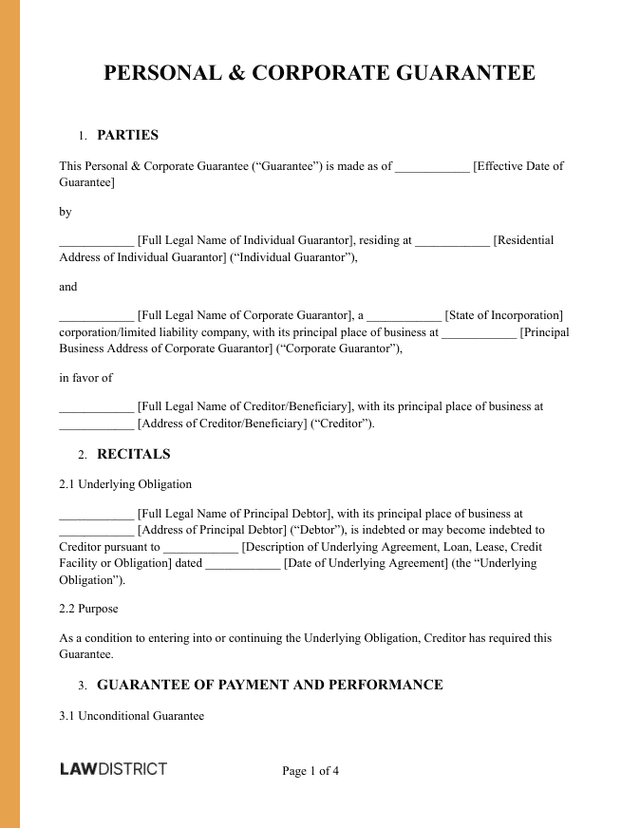
Personal Guarantee Example
Before drafting a guarantee agreement, it helps to understand what the document typically includes. Take a look at the complete Personal Guarantee sample below:
How to Write a Guarantee Form
You can write your own guarantee form by following these steps:
Identify the Parties
Start by listing the:
- Lender
- Borrower
- Guarantor
Include their full legal names and addresses.
Describe the Guaranteed Obligation
Next, specify the loan, lease, or financial agreement covered by the guarantee. Include the amount owed and any relevant contract references.
Define the Scope of Liability
State whether the guarantee is limited or unlimited. Clearly explain the maximum amount the guarantor may be responsible for paying.
Establish Payment Terms
Outline when the guarantor must repay the debt. This usually occurs if the borrower defaults or fails to meet payment obligations.
Sign and Finalize the Agreement
The guarantor must sign the document, and the lender may also sign to confirm the agreement. Some guarantees may require witnesses or notarization depending on state laws.
Personal and Corporate Guarantee FAQs
Here are some frequently asked questions about guarantee agreements.
Yes. Personal Guarantees are enforceable in court. To be enforceable, it needs to be properly written and signed.
Your document must state the:
- Obligations
- Parties involved
- Scope of liability
A guarantor usually needs a signed copy of the guarantee agreement and records related to the original debt. Supporting documents may include the:
- Loan contract
- Payment history
- Default notices
These records help confirm the guarantor’s responsibilities. They also clarify when the repayment obligations begin.
A Personal Guarantee is legally binding once it is signed. The guarantor becomes responsible for the debt if the borrower fails to pay according to the agreement.
Try Lawdistrict Now
Instant and complete access to our entire library of legal forms
Edit, download and print in PDF from any device
Save time and money on legal document creation