



Key Takeaways
- A Power of Attorney gives a person the authority to act on behalf of another person called the principal.
- A living trust is set up during a person's lifetime and permits the trustee to manage or distribute the assets after the grantor's demise.
- A POA and a living trust can be created together, providing more asset management coverage in case of incapacitation.
- Amending a trust is possible if the Power of Attorney form explicitly states that the agent can take this action.
A Power of Attorney can change a living trust if it includes a provision for the POA to execute changes in a specific provision. If the document does not provide this direction, the agent or attorney-in-fact cannot take such an action. For example, California law (Probate Code Section 4264) allows an agent to modify, create, or revoke a trust if the Power of Attorney grants this right.
So, whether you want to change the list of trustees or bank account beneficiaries, the POA must include what you can change and to what extent. In the next section, we will look at what authority a POA gives, who can amend a living trust, and how to do it using examples from several states.
What Does Power of Attorney Give You Authority Over?
A POA gives you, as the attorney-in-fact, extensive or restricted authority to make decisions on behalf of the grantors' finances, property, medical care, and investments. The following table outlines the areas over which an agent can receive authorization.
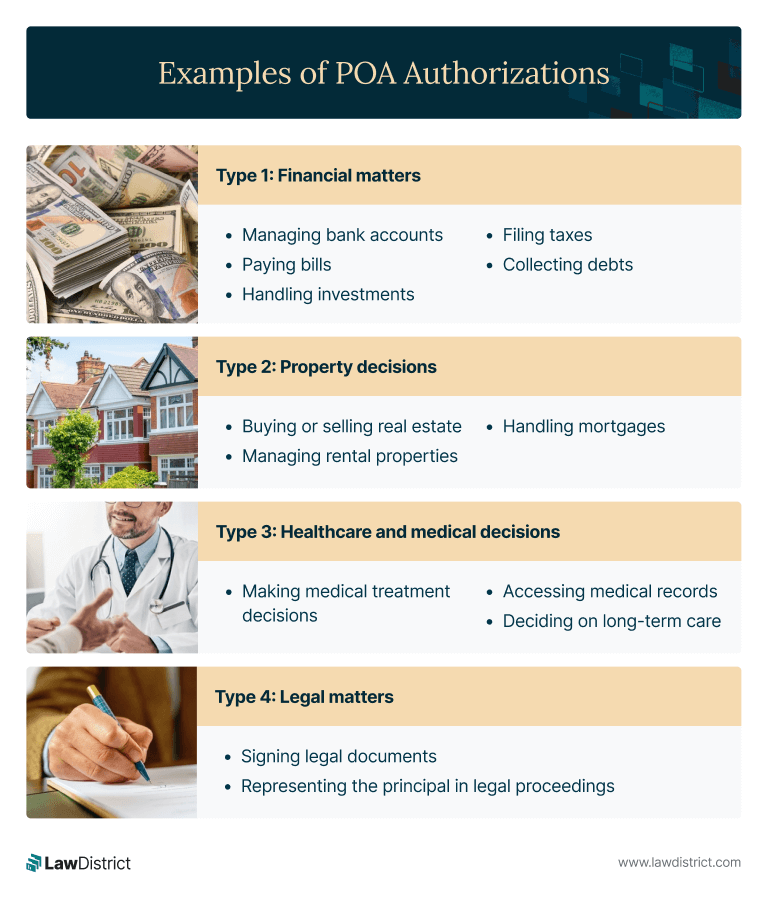
A signed Power of Attorney legally binds the agent and the principal until the document expires. An individual chooses to enter this legal agreement in case they have a temporary or permanent disability or when a situation occurs and they cannot sign documents or handle pressing matters.
This authorization can end when the principal dies or revokes the POA, a court invalidates it, or they can no longer carry out the duties in the POA form.
Start a Power of Attorney Form now
Understanding a Living Trust
A living trust is a lawful arrangement you establish to protect your assets during your lifetime. It also allows you to leave instructions on how you wish the distribution of assets to be carried out after your demise.
This document assists the remaining family members in avoiding a complex, lengthy, costly, and publicized probate process.
As you create a living trust, you will likely also create a POA, and these two work together to make sure your wishes are executed, especially if you become incapacitated.
How the power of attorney and a living trust work together
A POA and living trust fit together in the following ways:
- A POA allows the principal to designate an agent to manage assets not included in the living trust.
- In case of incapacitation, your POA can authorize the agent to transfer assets into the living trust.
- The POA can give the agent authority to change the living trust, but only according to your specifications.
The complementary roles of a trustee and the agent can ensure all your assets and financial matters are addressed, including those within the trust and those not included but awaiting transfer to the trust.
Amending a Trust with a POA
Before amending a trust with a POA, you must ensure the POA grants the agent permission to modify the trust. Check your state laws to ensure you make the amendments according to the legal provisions. The following are the steps to take in amending a trust with a POA:
- Collect all the necessary documents, including the trust agreement, and check for the procedures and limitations of amending a trust.
- Inform all the beneficiaries of the plan to amend the trust and address any concerns raised. For irrevocable trust, all beneficiaries must agree to the amendment.
- Draft the amendment clearly explaining why the changes are being made and stating the rest of the document will remain as it was.
- Sign and notarize the amendment according to the state laws where the trust was created and is governed.
- Notify the relevant authority of the changes made, including beneficiaries and trustees.
- Keep records of all the documents signed and amended for future reference.
Who is authorized to amend a trust?
Amending a trust primarily occurs with the person who created the document-during their lifetime. However, if the trust was created by multiple grantors, such as a married couple, both have to agree on the amendments to be made and as per the agreement terms. A POA can grant the agent permission to make changes in other situations.
A trustee can also have limited authority to make minor administrative changes but not financial or property changes. If the grantor is incapacitated and the POA or trust doesn't give direct authorization, the court can also approve someone to amend the changes.
Examples of How to Change a Trust with a POA
You can change a living trust with a POA by amending, restating, or revoking it and creating a new one. The provision for these changes can vary depending on the state. For instance:
- In Florida, the law (Chapter 709.2201) requires the POA to include details of the specific powers the agent receives to amend or revoke the trust.
- California follows the Uniform Power of Attorney Act requiring the POA to clearly state the agent's authority to revoke, create, or amend a trust (CA Prob Code Section 4264).
- Texas allows an agent to modify or revoke a trust and ensure the changes are in the best interests of the principal and align with the POA terms (Code Section 751.031).
- New York laws have strict requirements for the language and extent of the POA in granting permission to revoke or amend the trust under Section 5-1501.
Make sure you are well informed and find the answers to questions such as how to give someone a power of attorney or how to get a POA for someone incapacitated in order to get your own estate in order.
Helpful Resources:
California Probate Code - Section 4260-4266
Key Takeaways
- A Power of Attorney gives a person the authority to act on behalf of another person called the principal.
- A living trust is set up during a person's lifetime and permits the trustee to manage or distribute the assets after the grantor's demise.
- A POA and a living trust can be created together, providing more asset management coverage in case of incapacitation.
- Amending a trust is possible if the Power of Attorney form explicitly states that the agent can take this action.
A Power of Attorney can change a living trust if it includes a provision for the POA to execute changes in a specific provision. If the document does not provide this direction, the agent or attorney-in-fact cannot take such an action. For example, California law (Probate Code Section 4264) allows an agent to modify, create, or revoke a trust if the Power of Attorney grants this right.
So, whether you want to change the list of trustees or bank account beneficiaries, the POA must include what you can change and to what extent. In the next section, we will look at what authority a POA gives, who can amend a living trust, and how to do it using examples from several states.
What Does Power of Attorney Give You Authority Over?
A POA gives you, as the attorney-in-fact, extensive or restricted authority to make decisions on behalf of the grantors' finances, property, medical care, and investments. The following table outlines the areas over which an agent can receive authorization.
A signed Power of Attorney legally binds the agent and the principal until the document expires. An individual chooses to enter this legal agreement in case they have a temporary or permanent disability or when a situation occurs and they cannot sign documents or handle pressing matters.
This authorization can end when the principal dies or revokes the POA, a court invalidates it, or they can no longer carry out the duties in the POA form.
Start a Power of Attorney Form now
Understanding a Living Trust
A living trust is a lawful arrangement you establish to protect your assets during your lifetime. It also allows you to leave instructions on how you wish the distribution of assets to be carried out after your demise.
This document assists the remaining family members in avoiding a complex, lengthy, costly, and publicized probate process.
As you create a living trust, you will likely also create a POA, and these two work together to make sure your wishes are executed, especially if you become incapacitated.
How the power of attorney and a living trust work together
A POA and living trust fit together in the following ways:
- A POA allows the principal to designate an agent to manage assets not included in the living trust.
- In case of incapacitation, your POA can authorize the agent to transfer assets into the living trust.
- The POA can give the agent authority to change the living trust, but only according to your specifications.
The complementary roles of a trustee and the agent can ensure all your assets and financial matters are addressed, including those within the trust and those not included but awaiting transfer to the trust.
Amending a Trust with a POA
Before amending a trust with a POA, you must ensure the POA grants the agent permission to modify the trust. Check your state laws to ensure you make the amendments according to the legal provisions. The following are the steps to take in amending a trust with a POA:
- Collect all the necessary documents, including the trust agreement, and check for the procedures and limitations of amending a trust.
- Inform all the beneficiaries of the plan to amend the trust and address any concerns raised. For irrevocable trust, all beneficiaries must agree to the amendment.
- Draft the amendment clearly explaining why the changes are being made and stating the rest of the document will remain as it was.
- Sign and notarize the amendment according to the state laws where the trust was created and is governed.
- Notify the relevant authority of the changes made, including beneficiaries and trustees.
- Keep records of all the documents signed and amended for future reference.
Who is authorized to amend a trust?
Amending a trust primarily occurs with the person who created the document-during their lifetime. However, if the trust was created by multiple grantors, such as a married couple, both have to agree on the amendments to be made and as per the agreement terms. A POA can grant the agent permission to make changes in other situations.
A trustee can also have limited authority to make minor administrative changes but not financial or property changes. If the grantor is incapacitated and the POA or trust doesn't give direct authorization, the court can also approve someone to amend the changes.
Examples of How to Change a Trust with a POA
You can change a living trust with a POA by amending, restating, or revoking it and creating a new one. The provision for these changes can vary depending on the state. For instance:
- In Florida, the law (Chapter 709.2201) requires the POA to include details of the specific powers the agent receives to amend or revoke the trust.
- California follows the Uniform Power of Attorney Act requiring the POA to clearly state the agent's authority to revoke, create, or amend a trust (CA Prob Code Section 4264).
- Texas allows an agent to modify or revoke a trust and ensure the changes are in the best interests of the principal and align with the POA terms (Code Section 751.031).
- New York laws have strict requirements for the language and extent of the POA in granting permission to revoke or amend the trust under Section 5-1501.
Make sure you are well informed and find the answers to questions such as how to give someone a power of attorney or how to get a POA for someone incapacitated in order to get your own estate in order.
Helpful Resources:
California Probate Code - Section 4260-4266
Most Popular Posts

Some states require a motor vehicle bill of sale form; others do not. Even if only for your personal records, anyone who buys or sells a vehicle needs

If you plan to travel with a minor, whether or not you are their parent, you can minimize inconveniences by carrying a few necessary documents...