
Free Florida Quitclaim Deed Form
A Florida Quitclaim Deed is used to transfer an ownership interest in real estate from one person to another. It is commonly used for property transfers between family members, business entities, or trusts.

Are you the Buyer or the Seller?
Fill forms in a few steps
Save, print & download
Done in 5 minutes
What Is a Florida Quitclaim Deed?
A Florida Quitclaim Deed is a written legal document that can be used to transfer interest in property to another person or entity.
The person transferring ownership is known as the grantor. Through this form, they are able to release their interest in a piece of real estate to another person or business, called the grantee.
An FL Quitclaim Deed does not provide a guarantee or promise of owning the property, which means that it is best exchanged between parties that trust each other. However, it does enable the grantor and grantee to bypass the title search or discovery process that is typically required with other types of deeds.
It's also important to know that each state has its own legislation about Quitclaim Deeds. Make sure to consult your specific areas' regulations to create a legally valid Quitclaim Deed.
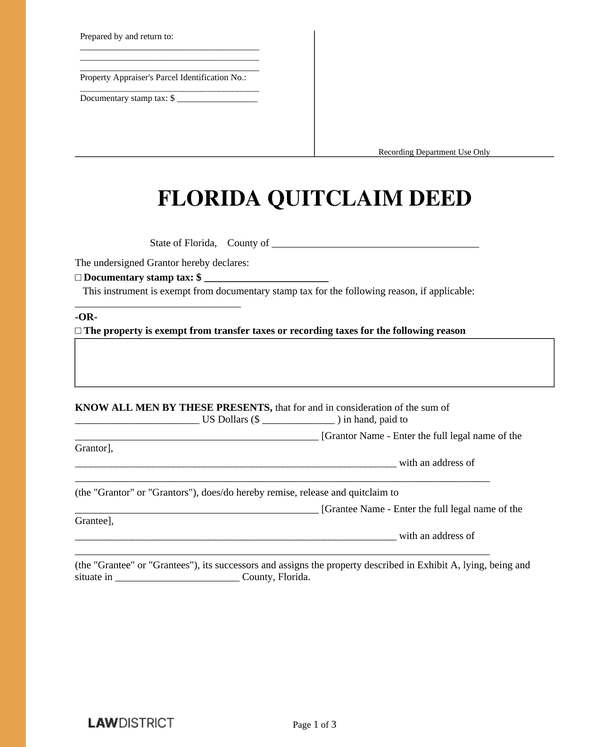
Florida Quitclaim Deed Sample
Before creating a Quitclaim Deed yourself it can be helpful to look over a sample document. Our example below will give you a clear picture of what is included in the form and the information you'll need to complete it.
Florida Quitclaim Deed Requirements
The specific rules and requirements regarding Quitclaim deeds in Florida are governed by state law. Here is a quick explanation of the main requirements to be aware of when drafting your document:
| Requirement | Florida law | What you need to do |
|---|---|---|
| 1. Deed details | Fla. Stat. § 689.025 | Include the parties, consideration, county, legal property description, and parcel ID if available. |
| 2. Two witnesses | Fla. Stat. § 689.01 | Sign the deed in the presence of two subscribing witnesses. |
| 3. Acknowledgment | Fla. Stat. § 695.03 | Have the deed acknowledged before a notary or another authorized officer before recording it. |
| 4. Recording details | Fla. Stat. § 695.26 | Include required names, addresses, preparer details, witness information, and space for the clerk. |
| 5. Recording | Fla. Stat. § 695.01 | Record the deed in the county where the property is located to protect your interest against certain later claims. |
Uses of a Florida Quitclaim Deed
Florida quitclaim are most commonly used to transfer property titles between family or close associates, and to update title information. Nevertheless, they have a number of other uses as well.
Some of the most common FL Quitclaim Deed uses are the following:
- Transferring property to a child, spouse, or another family member.
- To release real estate interest to an ex-spouse following a divorce.
- Transferring an interest in a Florida timeshare to a family member or other person.
- To add someone to the title deed of a property.
- Releasing or transferring an ownership interest as part of an estate plan.
- Transferring real estate into a revocable living trust or LLC that they manage.
How To Get a Florida Quitclaim Deed
You can customize a Quitclaim Deed for Florida entirely online. Here are the steps:
- Enter the grantor's and grantee's names and addresses
- Add the county where the property is located
- Provide the property's legal description
- Enter the consideration, if any
- Add the parcel identification number, if available
- Use the correct legal name of any business or other entity involved
- Review the deed carefully
- Print and sign the deed
With our customizable template, you can enter these details and create a Florida Quitclaim Deed for your property transfer in just a few minutes.
How To File a Quitclaim Deed in Florida
Once you have prepared your Florida Quitclaim Deed, follow these steps:
| Step | What to do |
|---|---|
| 1. Sign the deed | The grantor signs in front of two witnesses and has the deed properly notarized. |
| 2. Know where to file | File the deed with the Clerk of the Circuit Court in the county where the property is located. |
| 3. Pay the fees and tax | Pay the recording fees and any documentary stamp tax that applies to the transfer. |
Florida Quitclaim Deed FAQs
Using a Florida Quitclaim Deed is a formal legal process and understanding how it works is crucial before creating your own. Find out more about Quitclaim Deeds with our FAQs below.
The cost depends on how you prepare the deed, recording fees, and any taxes due. Lawyer-drafted deeds may cost around anywhere from $150 to $2,000. You can usually save some money by using an online template and drafting the document yourself.
A deed can affect Florida property taxes if it changes ownership of the property. In many cases, the property is reassessed at its just value on January 1 following the transfer, which may change the tax bill.
A transfer can also affect homestead exemptions and Save Our Homes benefits. Florida law provides exceptions to reassessment for certain transfers, such as:
- Transfers between spouses
- Certain transfers to a surviving spouse, minor child, or dependent after the owner's death
If a valid Florida quitclaim has been filed, the transfer of property cannot be revoked unless you can legally prove that the request was fraudulent or illegal. However, challenging the deed on these grounds requires formal legal action and it is recommended to consult a lawyer.
Legal counsel is not necessary to create a quitclaim form. However, a lawyer can be helpful for completing and signing the form, especially if your transfer is particularly complex.
A Quitclaim Deed does not remove a mortgage or other debt in your name. If you took out a mortgage on the property and have not paid it off at the time of the transfer, you will still be responsible for paying it back.
Existing liens and unpaid taxes may also remain attached to the property. A quitclaim deed does not clear them.
The main difference between these documents is that a warranty deed provides greater protection to the grantee.
With a Warranty Deed, the grantor makes legal promises about ownership and certain title defects. As Quitclaim Deeds do not offer kind of guarantee, they're more commonly used for transfers involving people who trust each other, such as family members.
Try Lawdistrict Now
Instant and complete access to our entire library of legal forms
Edit, download and print in PDF from any device
Save time and money on legal document creation