



Key Takeaways
- Essential retirement documents include applications for Social Security and pension paperwork.
- Estate planning documents like POA or wills are crucial for any retirement.
- Healthcare coverage forms such as Medicare enrollment are necessary for retirees.
- HR departments and financial advisors can assist with specific retirement paperwork.
It's finally time to start taking steps toward retirement, and you couldn't be more excited about this new chapter in your life. Despite looking forward to stepping back from the workforce, ensuring that you've taken care of all the legal and financial documents you need for a seamless transition can be complex.
From pension paperwork to estate planning documents, there are numerous steps you should complete before or shortly after you retire. We will explore the importance of these documents and how the timing should work with your retirement date.
Some of these documents, such as your social security card or birth certificate, may already be in your possession, while others, like a Last Will and Testament, may need to be completed for the first time or revised to reflect your current life situation.
What Paperwork Is Needed for Retirement
Under federal law, you can apply for Social Security retirement benefits from age 62 if you meet the eligibility requirements.
Your personal financial planning and the type of retirement benefits you are seeking will determine the exact documents you need. Typically, the first step is to apply for Social Security retirement benefits.
The SSA provides a detailed list of the documents needed and the steps to apply for SSA retirement benefits. The most important documents include:
- Social Security Application, which can be completed online at SSA.gov.
- Social Security Card
- Birth Certificate
- W-2s or other tax returns (for history of earnings)
- Proof of Citizenship or Legal Residency
Once the SSA application is completed, it's time to move on to other important legal documents that should be in place for retirement.
Essential Legal Documents for Retirement
Once you've completed your Social Security application, you can focus on other essential legal documents for retirement. The exact documents will depend on the specifics of your situation, such as your employer and personal financial planning.
However, we'll explore the most common documents needed for a smooth transition to retirement.
Employer and pension paperwork
It is crucial to give notice of your upcoming retirement and ensure you've completed the employment and pension paperwork. Use the following list to make sure you haven't overlooked anything.
- Retirement Plan Distribution Forms-These forms are needed if you withdraw from an IRA, a 401(k), or a pension.
- Pension Plan Paperwork-If you will receive benefits from a defined benefit plan, you'll need to complete all the related pension plan paperwork.
- 401(k) or IRA Account Statements-In the months or years leading up to your retirement, you've likely used your 401(k) or IRA account statements to make important financial planning decisions.
- 4. Beneficiary Designation Forms - Request these from your plan administrator or IRA provider and review your designated beneficiaries. Under 29 USC § 1055, certain retirement plans require your spouse's consent to name another beneficiary.
- Severance Package (if applicable)
These documents outline the entitlements you're owed but don't include the steps necessary to claim your benefits. That should be handled by your employer's HR department or with the help of a financial advisor.
Ensuring that all paperwork is accurately completed and submitted in a timely manner will provide a smoother transition into retirement, giving you the financial stability you've earned during your retirement years.
Create an Employment Document now
Healthcare and insurance
Healthcare and insurance concerns are often one of the only things keeping those not old enough to qualify for Medicare in the workforce. Knowing that you have health care options outside of Medicare during your retirement is important.
Other insurance documents you will need to consider include:
- Medicare Enrollment Application: The application is required if you're 65 or older and enrolling in Medicare, Parts A and B. You can apply for Medicare Parts A and B through the SSA. If you have Medicare Part A, use Form CMS-40B to apply for Part B. If you delayed Medicare Part B enrollment due to employment-based health coverage, you may qualify for a Special Enrollment Period when you retire.
- Health Insurance Plan Information: If you plan to continue coverage through an employer or purchase a supplemental plan
- Long-Term Care and Life Insurance Policies: Review your policies through your employer and other sources. Retirement planning is also the right time to thoroughly review your coverage and determine whether changes should be made to accommodate new life changes.
You can also prepare legal documents to record your healthcare wishes and choose who can make medical decisions for you if needed, such as:
- Advance Directive: Records your healthcare wishes. It may include a Living Will to specify your treatment preferences and a Medical Power of Attorney to appoint someone to make medical decisions for you.
- Do Not Resuscitate (DNR) Order: A medical order instructing healthcare personnel not to perform CPR.
- HIPAA Authorization: A Medical Records Release form that meets the requirements of 45 CFR § 164.508 authorizes the sharing of your medical information.
Estate planning documents
We know estate planning can seem daunting. After all, no one wants to think about their ultimate demise, especially when planning their golden retirement years. However, it's essential to make sure your assets are protected and that your final wishes are known and carried out.
Will or Trust Documents - These documents should outline how assets should be managed.
- Will or Trust Documents Review your existing instructions and make any necessary changes. For minor changes to your Will, you can use our Codicil to Will template. If needed, you can also draft a new Will or create a Living Trust.
- Power of Attorney An important legal document that allows a proxy to make financial and healthcare decisions for you if you become incapacitated. If needed, prepare a Durable Power of Attorney. This allows someone you trust to manage your finances if you become incapacitated.
- Beneficiary DesignationsReview and change any beneficiary designations that don't reflect your current wishes for the disbursement of retirement accounts and insurance policies.
Need help getting started with these documents? You can see our Estate Planning Checklist for more guidance.
Create an Estate Planning Document now
Other Financial and Identification Documents for Retirement
When applying for various retirement benefits, gathering specific financial and identification documents is important. Bank account statements are essential for setting up direct deposits for retirement benefits.
If you are applying for spousal benefits, you'll need a certified copy of the marriage certificate to verify your spousal status.
A divorce decree may be necessary when changing retirement documents or if you claim Social Security based on the record of an ex-spouse.
Are you planning to relocate or change your housing arrangements upon retirement? If so, mortgage or lease documents may be required to provide evidence of your living situation. Collecting these documents in advance will help streamline the application process.
Final Thoughts on Retirement Documents
Having the correct legal documents in place is essential for a smooth transition into retirement. Key paperwork includes Social Security applications, pension and retirement plan documents, and healthcare coverage forms like Medicare enrollment.
Here is a visual summary of what documents are needed for retirement:
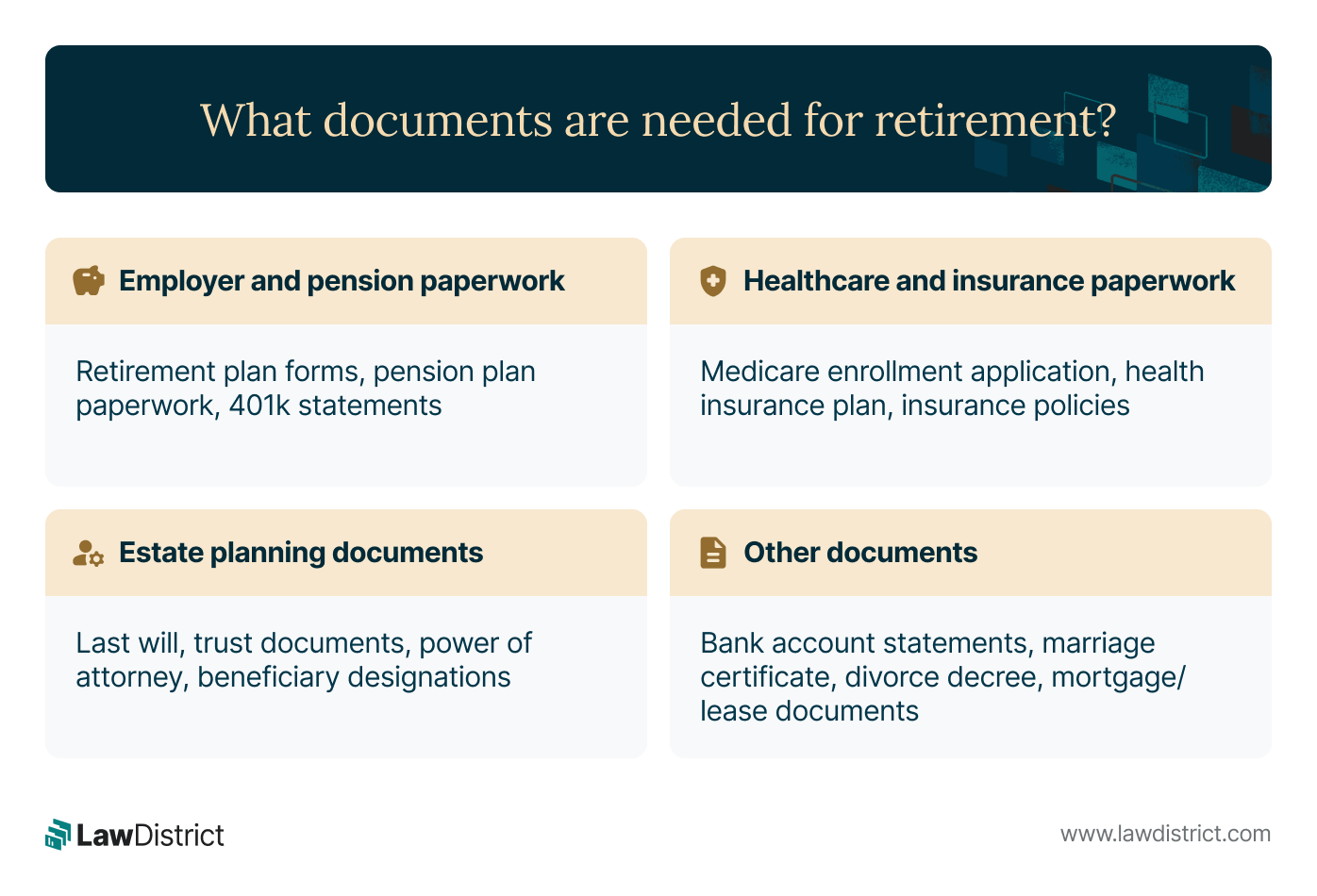
Preparing these documents in advance will help simplify the process and provide peace of mind as you enter this long-awaited new phase of life. It's also a good idea to contact HR or your employer's benefits department for company-specific forms and to speak with a qualified financial advisor to optimize your retirement savings.
Helpful Resources:
SSA - Retirement | What Documents Will You Need When You Apply?
Key Takeaways
- Essential retirement documents include applications for Social Security and pension paperwork.
- Estate planning documents like POA or wills are crucial for any retirement.
- Healthcare coverage forms such as Medicare enrollment are necessary for retirees.
- HR departments and financial advisors can assist with specific retirement paperwork.
It's finally time to start taking steps toward retirement, and you couldn't be more excited about this new chapter in your life. Despite looking forward to stepping back from the workforce, ensuring that you've taken care of all the legal and financial documents you need for a seamless transition can be complex.
From pension paperwork to estate planning documents, there are numerous steps you should complete before or shortly after you retire. We will explore the importance of these documents and how the timing should work with your retirement date.
Some of these documents, such as your social security card or birth certificate, may already be in your possession, while others, like a Last Will and Testament, may need to be completed for the first time or revised to reflect your current life situation.
What Paperwork Is Needed for Retirement
Under federal law, you can apply for Social Security retirement benefits from age 62 if you meet the eligibility requirements.
Your personal financial planning and the type of retirement benefits you are seeking will determine the exact documents you need. Typically, the first step is to apply for Social Security retirement benefits.
The SSA provides a detailed list of the documents needed and the steps to apply for SSA retirement benefits. The most important documents include:
- Social Security Application, which can be completed online at SSA.gov.
- Social Security Card
- Birth Certificate
- W-2s or other tax returns (for history of earnings)
- Proof of Citizenship or Legal Residency
Once the SSA application is completed, it's time to move on to other important legal documents that should be in place for retirement.
Essential Legal Documents for Retirement
Once you've completed your Social Security application, you can focus on other essential legal documents for retirement. The exact documents will depend on the specifics of your situation, such as your employer and personal financial planning.
However, we'll explore the most common documents needed for a smooth transition to retirement.
Employer and pension paperwork
It is crucial to give notice of your upcoming retirement and ensure you've completed the employment and pension paperwork. Use the following list to make sure you haven't overlooked anything.
- Retirement Plan Distribution Forms-These forms are needed if you withdraw from an IRA, a 401(k), or a pension.
- Pension Plan Paperwork-If you will receive benefits from a defined benefit plan, you'll need to complete all the related pension plan paperwork.
- 401(k) or IRA Account Statements-In the months or years leading up to your retirement, you've likely used your 401(k) or IRA account statements to make important financial planning decisions.
- 4. Beneficiary Designation Forms - Request these from your plan administrator or IRA provider and review your designated beneficiaries. Under 29 USC § 1055, certain retirement plans require your spouse's consent to name another beneficiary.
- Severance Package (if applicable)
These documents outline the entitlements you're owed but don't include the steps necessary to claim your benefits. That should be handled by your employer's HR department or with the help of a financial advisor.
Ensuring that all paperwork is accurately completed and submitted in a timely manner will provide a smoother transition into retirement, giving you the financial stability you've earned during your retirement years.
Create an Employment Document now
Healthcare and insurance
Healthcare and insurance concerns are often one of the only things keeping those not old enough to qualify for Medicare in the workforce. Knowing that you have health care options outside of Medicare during your retirement is important.
Other insurance documents you will need to consider include:
- Medicare Enrollment Application: The application is required if you're 65 or older and enrolling in Medicare, Parts A and B. You can apply for Medicare Parts A and B through the SSA. If you have Medicare Part A, use Form CMS-40B to apply for Part B. If you delayed Medicare Part B enrollment due to employment-based health coverage, you may qualify for a Special Enrollment Period when you retire.
- Health Insurance Plan Information: If you plan to continue coverage through an employer or purchase a supplemental plan
- Long-Term Care and Life Insurance Policies: Review your policies through your employer and other sources. Retirement planning is also the right time to thoroughly review your coverage and determine whether changes should be made to accommodate new life changes.
You can also prepare legal documents to record your healthcare wishes and choose who can make medical decisions for you if needed, such as:
- Advance Directive: Records your healthcare wishes. It may include a Living Will to specify your treatment preferences and a Medical Power of Attorney to appoint someone to make medical decisions for you.
- Do Not Resuscitate (DNR) Order: A medical order instructing healthcare personnel not to perform CPR.
- HIPAA Authorization: A Medical Records Release form that meets the requirements of 45 CFR § 164.508 authorizes the sharing of your medical information.
Estate planning documents
We know estate planning can seem daunting. After all, no one wants to think about their ultimate demise, especially when planning their golden retirement years. However, it's essential to make sure your assets are protected and that your final wishes are known and carried out.
Will or Trust Documents - These documents should outline how assets should be managed.
- Will or Trust Documents Review your existing instructions and make any necessary changes. For minor changes to your Will, you can use our Codicil to Will template. If needed, you can also draft a new Will or create a Living Trust.
- Power of Attorney An important legal document that allows a proxy to make financial and healthcare decisions for you if you become incapacitated. If needed, prepare a Durable Power of Attorney. This allows someone you trust to manage your finances if you become incapacitated.
- Beneficiary DesignationsReview and change any beneficiary designations that don't reflect your current wishes for the disbursement of retirement accounts and insurance policies.
Need help getting started with these documents? You can see our Estate Planning Checklist for more guidance.
Create an Estate Planning Document now
Other Financial and Identification Documents for Retirement
When applying for various retirement benefits, gathering specific financial and identification documents is important. Bank account statements are essential for setting up direct deposits for retirement benefits.
If you are applying for spousal benefits, you'll need a certified copy of the marriage certificate to verify your spousal status.
A divorce decree may be necessary when changing retirement documents or if you claim Social Security based on the record of an ex-spouse.
Are you planning to relocate or change your housing arrangements upon retirement? If so, mortgage or lease documents may be required to provide evidence of your living situation. Collecting these documents in advance will help streamline the application process.
Final Thoughts on Retirement Documents
Having the correct legal documents in place is essential for a smooth transition into retirement. Key paperwork includes Social Security applications, pension and retirement plan documents, and healthcare coverage forms like Medicare enrollment.
Here is a visual summary of what documents are needed for retirement:
Preparing these documents in advance will help simplify the process and provide peace of mind as you enter this long-awaited new phase of life. It's also a good idea to contact HR or your employer's benefits department for company-specific forms and to speak with a qualified financial advisor to optimize your retirement savings.
Helpful Resources:
SSA - Retirement | What Documents Will You Need When You Apply?
Most Popular Posts

Some states require a motor vehicle bill of sale form; others do not. Even if only for your personal records, anyone who buys or sells a vehicle needs

If you plan to travel with a minor, whether or not you are their parent, you can minimize inconveniences by carrying a few necessary documents...